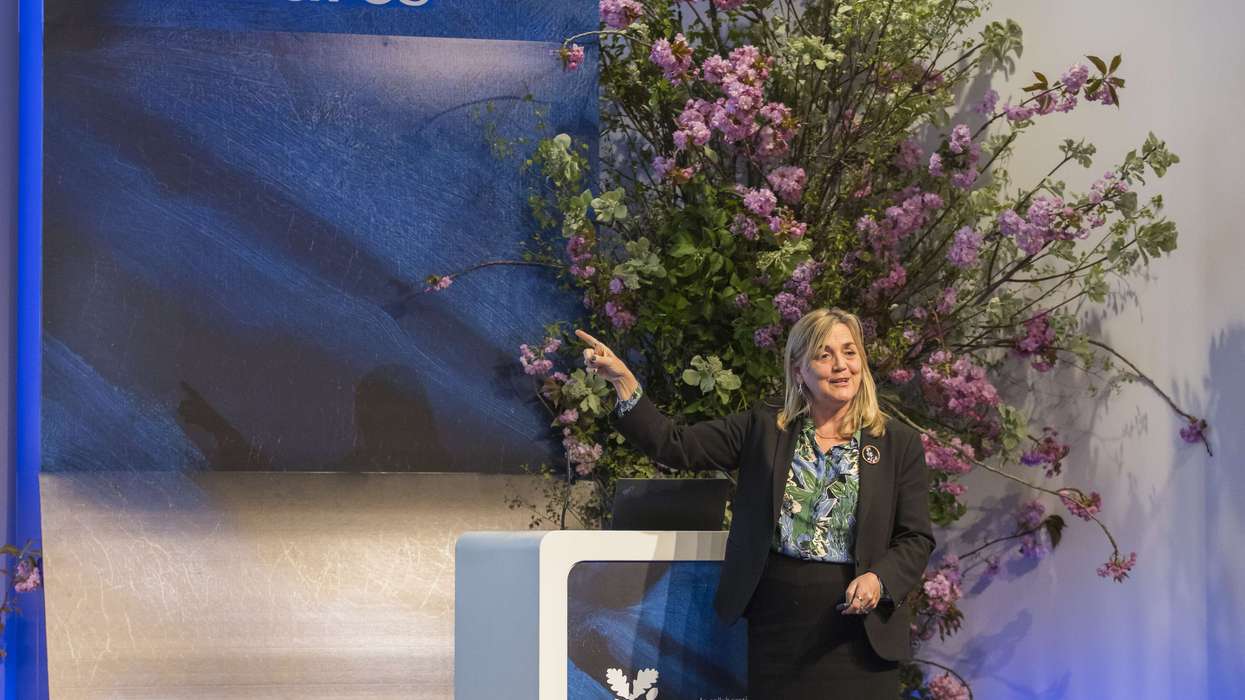

HUMAN health and well-being are “directly related to green space”, according to the leading plant scientist, Baroness Kathy Willis.
She emphasised this relationship while delivering the National Trust’s annual Octavia Hill lecture last Tuesday (14) in the packed auditorium of the Royal Society in Carlton House Terrace in London.
Willis, who is professor of biodiversity in the department of biology at Oxford University, provided the results of several scientific experiments in her lecture, “The Health-Giving Power of Nature”.
This “slightly shocking thing in a good way” is the result of people walking in a forest, preferably coniferous, she said. Breathing in the air can cause “a really big increase in natural killer cells in their bloods”.
“Now, natural killer cells are something we all want elevated in our bloods, because these are the cells that play a major role in seeking out cancer virus cells and killing them,” she explained.
Willis acknowledged: “Although ‘natural killer cells’ sound terrifying, we want them in high numbers in our bloods. We want them activated.”
She gave details of other experiments. A study she first came across in 1984 showed that patients were quicker to recover after gall bladder operations and relied on fewer painkillers if they were able to see trees rather than brick walls from their hospital rooms.
She recalled how astonished she was at the time: “Now, I thought this is crazy. I mean how on earth…. you’re in a hospital room and all you’re doing is looking and it’s having this effect on your physiological and psychological well-being? And that started me on a really different journey.”
Thirty years later, Willis said the Lancet reported on an experiment done on the mental health of 2.3 million people in Wales over a 10-year period. It mapped how far people were from green spaces. “For every 360 meters you are further away, the higher the likelihood of having mental diseases or mental illnesses.”
One experiment looked at the experience of 31,000 residents of Toronto, where every tree had been mapped with a dot. “What they found is that people who live in streets with a higher density of trees have significantly less heart attacks and strokes.”
In 2024, analysis was published on more than 100 million people in 18 countries. “What they found is that in those areas that have greater greenness, there is two-three per cent lower odds of mortality due to heart disease and strokes. You think two-three per cent is not very much. It’s two-three million people. This is significant.”
Willis said there was “a lovely study” done on 3,000 children, aged about eight and a half, in seven schools in Barcelona. “Those children who could see green from their classroom windows did better at their test scores. There seems to be a very strong relationship between how much green you see from your classroom window and how well you do in your cognitive performance.”
Willis said: “So many studies are showing that after a 50-second break looking out of the window, when you come back to the task in hand, you are much better at that task. Your attention focus has had a mental mini-break.”
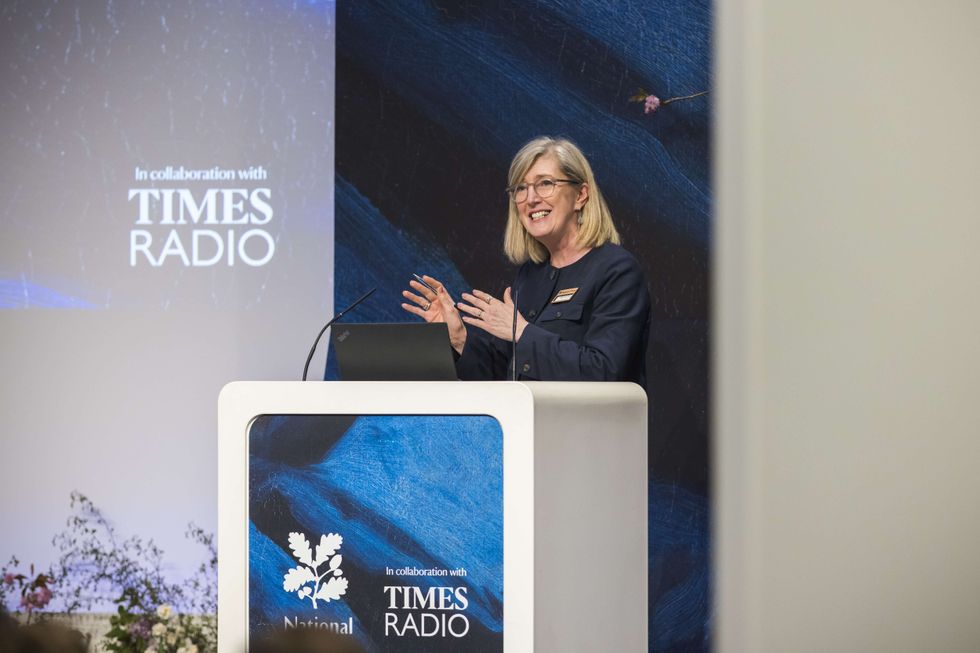 Hilary McGradyNational Trust/Megan Taylor
High school students, office workers and healthcare workers became less stressed and calmer and experienced a drop in their heart rate if they could gaze at pink roses on their desk for perhaps four minutes.
Willis, who is principal of St Edmund Hall, Oxford, admitted she had changed her computer screen after it was shown that those who saw trees rather than an urban landscape or tower blocks for 90 seconds were “physiologically calmer”.
She said when the optic nerve detects green, it passes that information to the brain. “That triggers a number of different pathways to be activated. Our heart rate goes down. We also have a change in our emotional state. We feel happier. We feel calmer. We see a change in our brainwave activity, which directly affects a number of our different emotional responses. And, finally, it also improves our cognitive function. So all of these things are going on just from looking at green outside, and I have to say, I’ve changed my computer screen.”
In her lecture, she developed the main points made in her 2024 book, Good Nature: The New Science of How Nature Improves Our Health.
Willis “dedicated her research to proving this link between the amount of green space in our lives and our better health, mood and longevity”, the book summary says. It adds: “For the first time ever, Good Nature brings together these recent scientific findings and shares the simple changes we can all make in our lives. The book is full of surprising and practical ways that nature can improve our lives, such as: did you know that cedar enhances cancer-fighting cells in our immune system? Or that touching wood makes us feel calmer (the woodier, the knottier, the better)? Or that the scent of roses helps people drive more calmly and safely? Even having a pot plant by your desk can make a difference.
“It shows how nature can help reduce the costs of healthcare and how, by bringing nature into our towns and cities, we can create a better, happier and healthier environment for all.”
Willis was introduced by Hilary McGrady, director-general of the National Trust, who expressed the hope that members of the audience would leave with “the sort of energy or belief that you can make the difference, whether that’s doing something in your own local community, whether that’s supporting the wider campaigns of the trust or maybe others, thinking how you can play a part in nature and people thriving”.
Willis said: “I hope by the end of this lecture, you’ll all agree that there’s a lot more to the relationship between nature and health than just some sort of fluffy bunny, pretty flowers, type of relationship. At least, that’s how it’s often characterised.”
She paid tribute to Octavia Hill, who co-founded the National Trust 131 years ago on January 12, 1895, and after whom the lecture is named.
“If you have not read her biography, I really recommend it because she was an extraordinary person and very much a social reformer,” commented Willis.
In a collection of essays, Our Common Land, published in 1877, Hill outlined her views on environmental preservation and the need for public access to green spaces.
Willis summed up some of Hill’s messages: “We all need space. Unless we have it, we cannot reach that sense of quiet in which whispers of better things come to us gently, but also even more importantly, she acknowledges it’s no good having green space miles away. You need green space on your doorstep.”
Workmen in London could not afford to go to Wimbledon, Epping or Windsor because that would mean the loss of a whole day’s wages. Hill argued what was needed were places “where long summer evenings or Saturday afternoons can be enjoyed without effort or expense”.
After her lecture, Willis did a questionand-answer session with Xand van Tulleken, a doctor and TV presenter who is considered an expert in public health.
He urged people to join the National Trust: “If you’re going to make an investment in your health, then something like a National Trust membership gives you access to these spaces that are extraordinary in a way that almost no other single investment can, whether you spend money on supplements or a gym or any of the other stuff the wellness industry wants to sell you. The complexity of what the National Trust is doing is extraordinary.”


 nationaltrustonline
 nationaltrustonline
 nationaltrustonline