
Highlights:
- Nearly 4 million women in England will be offered free HPV self-testing kits.
- Asian women face major screening gaps, with high non-attendance reported in UK research.
- The home swab takes just minutes and can be completed privately.
- Positive HPV results require follow-up cervical screening with a clinician.
- The NHS aims to eliminate cervical cancer by 2040 through earlier detection and prevention.
For millions of women across England, a cervical screening invitation can be easy to ignore.
It may sit unopened on the kitchen counter, get buried under work and family responsibilities, or be postponed because the thought of a clinical examination feels uncomfortable, embarrassing, or frightening.
For some Asian women, those barriers can be even more complicated.
Now, the NHS is offering a different route.
From August 25, nearly four million women who have not attended cervical screening after previous invitations will be offered an HPV self-testing kit. The programme is being introduced first to women aged 30 to 65 who are overdue for screening. Eligible women will receive invitations through the NHS App, text, email or letter and can order a free kit through their NHS account.
The change is being described by NHS England as a “gamechanger.” But behind the convenience is a painful reality: too many women are reaching the point where a potentially lifesaving test has been repeatedly postponed.
And among Asian women in Britain, the gap is particularly stark.
 The research found that South Asian women were more likely to describe smear tests as embarrassing, with 71 per cent to 91 per cent of South Asian participants agreeing with that description compared with 28 per cent of White British women.iStock
For Pakistani and Bangladeshi women, the screening gap is especially painful
Research has repeatedly shown that ethnic minority women are less likely to attend cervical screening than White British women.
A UCL study published in the British Journal of Cancer, which looked at women from Indian, Pakistani, Bangladeshi, Caribbean, African and White British backgrounds, found striking differences in non-attendance. In the study sample, 61.7 per cent of Pakistani women and 70.6 per cent of Bangladeshi women were non-attenders, compared with 11.8 per cent of White British women. Indian women also had a high non-attendance rate of 66.4 per cent.
The reasons were not simply about forgetting an appointment.
The research found that South Asian women were more likely to describe smear tests as embarrassing, with 71 per cent to 91 per cent of South Asian participants agreeing with that description compared with 28 per cent of White British women. Some women were also more likely to worry about being examined by a male doctor or nurse.
There were also misconceptions about risk.
Women from Indian, Pakistani and Bangladeshi backgrounds were more likely to believe they did not need screening if they had no symptoms. Yet cervical screening is designed to detect high-risk HPV and cell changes before cervical cancer develops, meaning waiting for symptoms can be dangerously late.
That makes the NHS's new home-testing option more than a technological change.
For some women, it could be a chance to overcome years of discomfort, embarrassment, or fear without having to immediately face the part of screening they have found hardest.
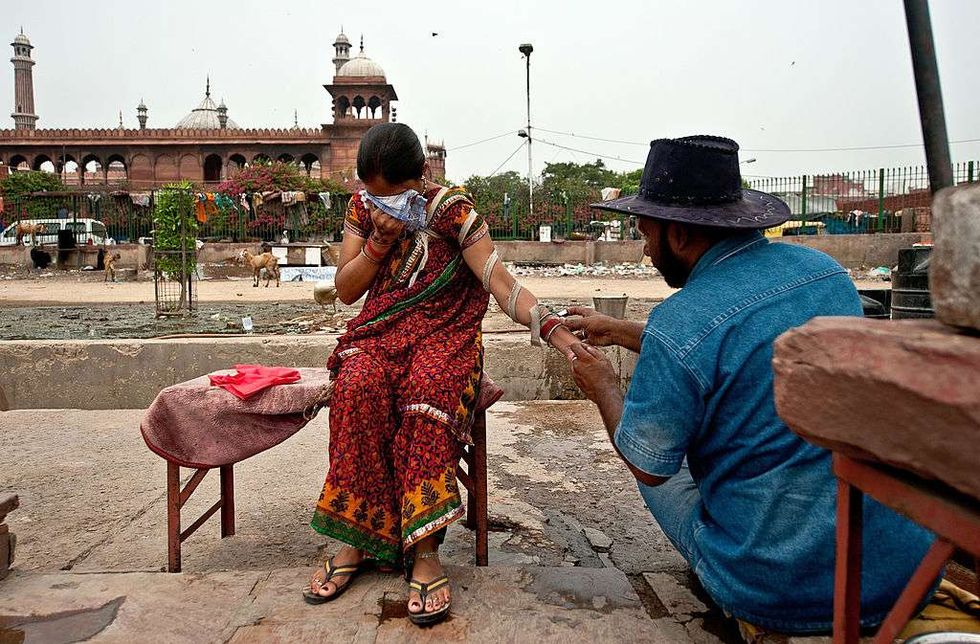 O GO WITH India-therapy-health-doctors,FEATURE by Rupam Nair In this photograph taken on July 2, 2013 an Indian woman covers her face in pain as she is cut on her hand by Mohammed Iqbal, (R), son of elderly doctor Mohammed Gyas, at their open air clinic outside the Jama Masjid in the old quarters of Delhi. Among a handful of poorer, and sometimes remote, communities in India, traditional practices like bloodletting are favoured. About 50 patients queue each day at the open-air clinic in the shadow of India's largest mosque, the Jama Masjid, for the treatment which Gyas says can cure everything from paralysis to diabetes and even cervical cancer. Getty Images
The test is simple, but it does not replace a clinician
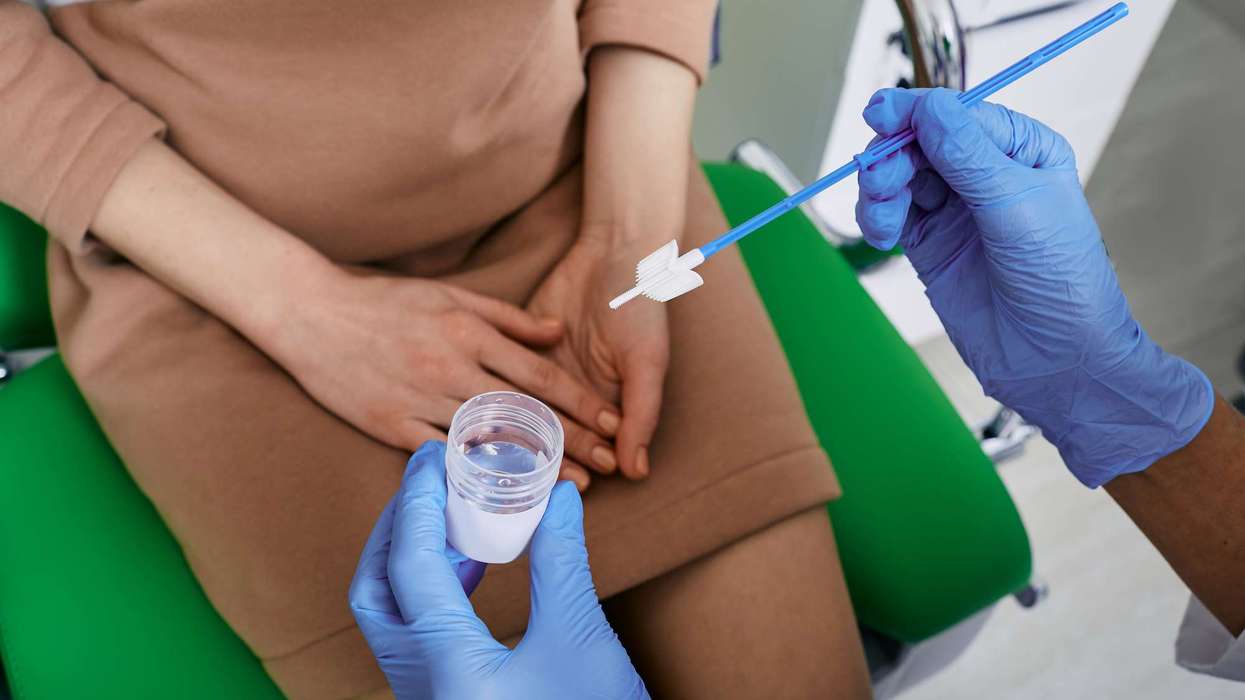
The new kit contains a swab, similar to a long cotton bud, which women use to collect a sample from the vagina at home.
The sample is then posted back to the NHS free of charge and checked for high-risk HPV.
If high-risk HPV is detected, the woman will be asked to attend a follow-up cervical screening appointment at a GP surgery or sexual health clinic. A nurse or doctor will then take a sample from the cervix to look for cell changes.
That distinction matters.
The NHS is not presenting home testing as a complete replacement for traditional cervical screening. Clinician-led screening remains the best-established way to prevent cervical cancer, while self-testing is being offered as an additional option for people who have repeatedly missed invitations.
For women who already attend their appointments, there is no need to change what they are doing.
But for those who have repeatedly avoided screening, the private swab could remove one of the biggest emotional barriers.
London's experience offers some encouragement. As of August 27, self-swab cervical screening is available at every GP practice in the capital, with NHS England London specifically highlighting barriers including discomfort, embarrassment, previous trauma and cultural concerns. The NHS says research found 98 per cent of women rated their self-screening experience as good or excellent.
A small swab against a much bigger fear
The need for change is clear.
Only 68.8 per cent of eligible women in England were up to date with cervical screening, below the NHS England target of 80%. That leaves around four million women behind on routine screening.
The NHS hopes home testing will help close that gap as England works toward its ambition of eliminating cervical cancer by 2040.
Dr Sue Mann, National Clinical Director for Women’s Health at NHS England, said: “There are lots of reasons that may stop women from getting their cervical screening, embarrassment, lack of time, or worries about discomfort, and these kits provide a discreet and convenient option we hope will encourage more women to take up the life-saving test.
“So, if you’re invited to take part, please order a test, it's a simple swab you can do at home in minutes.”
For women such as Dawn Bryant, 62, from Hertfordshire, the importance of not delaying screening is painfully personal.
Bryant had cancerous cells discovered during screening when she was 32. After further testing, she was told she had cancer, but because it was detected early, she was able to have surgery without chemotherapy or radiotherapy.
She remembers the fear, and the possibility of what might have happened if she had waited.
“My nan died of cervical cancer when I was only 11, so I know how difficult it can be and how important cervical screening is.
“A screening test when I was 32 found I had severe high-grade cell changes, and after further testing I was told it was cancer.
“I am so lucky it was found at an early stage and could be easily treated. I had some surgery to remove the cells, but I didn’t have to have chemotherapy, radiotherapy, or anything. It was a very scary time, but who knows what would have happened if I’d delayed having the test.
“Since then, I have been regularly monitored, and had many tests and colposcopies, and although they can be a bit uncomfortable, I would not think twice about having them done again.
“I know lots of women who have put off having screening, and sadly, some who have been diagnosed with advanced cervical cancer after putting it off for years.
“It is so important women go for these check-ups or do the home-testing kit if invited. It doesn’t take very long and if you’re worried or have questions, the staff are excellent and will talk to you and help answer any fears you’ve got.”
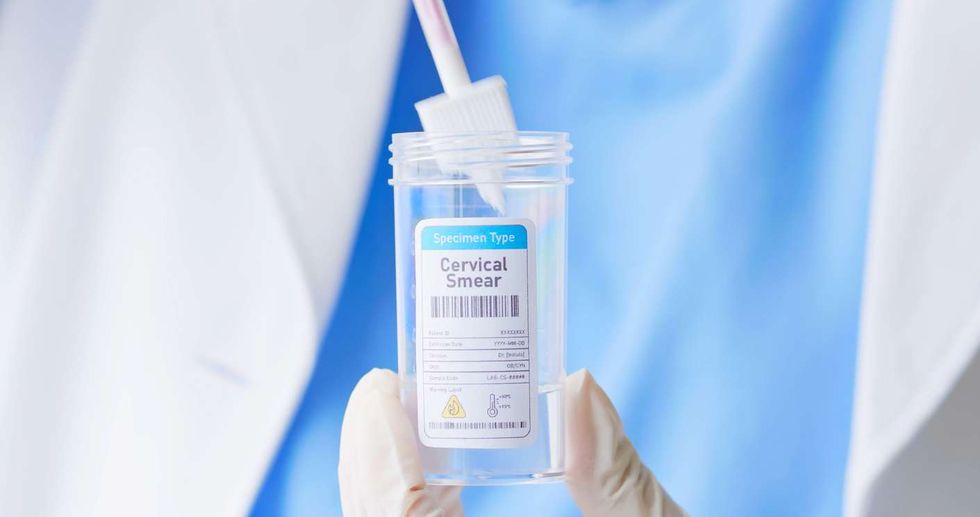 Bryant had cancerous cells discovered during screening when she was 32. iStock
For Asian women in Britain, the message may therefore be particularly important.
A screening invitation should not become another letter that is left for later.
Fear, modesty, cultural concerns, embarrassment, or a busy family life can all be real barriers. Research has documented those barriers, but it has also shown that they can be addressed.
The new NHS program is, in some ways, a second chance.
A woman who has avoided the clinic can now receive a swab at home, take the sample privately, and send it back without having to begin with a face-to-face examination.
It is only a small test.
But for women who have spent years putting screening off, that small test could be the difference between finding dangerous changes early and finding cancer much later.
And for communities where screening attendance has remained painfully low, the hope is that privacy and convenience can finally turn an invitation into action.