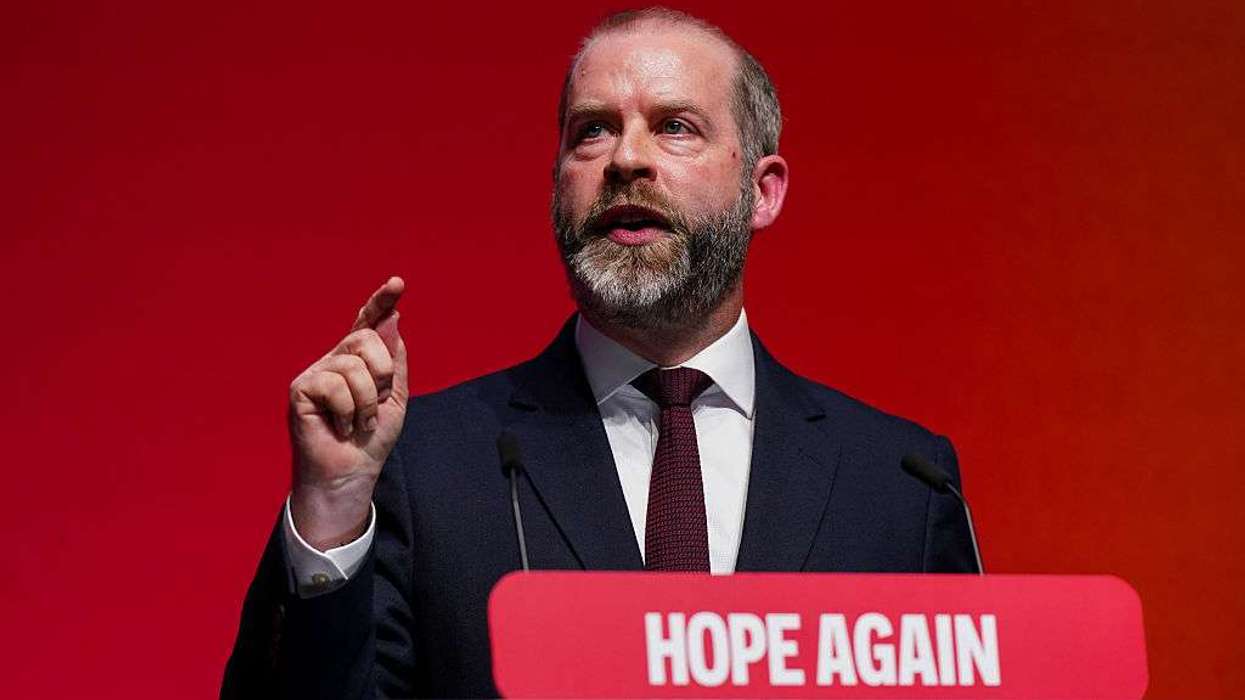
NEWLY elected Tower Hamlets mayor Lutfur Rahman should deliver on his promises, his predecessor John Biggs of the Labour party said while expressing concern over “divisive community politics” in the London borough.
Rahman was stripped of the mayoral position in 2015 and banned from holding political office for five years after an elections court found him guilty of “corrupt and illegal practices” – though he was never found guilty in a criminal court.
His new political party, Aspire, delivered a shock blow to Labour after winning control of Tower Hamlets Council, while Rahman himself won the mayoralty from Biggs.
During the campaigning for the last week’s council election, Aspire apparently focussed on British Bangladeshis who make up nearly a third of Tower Hamlets population, slightly higher than the number of "white British" residents.
"We're potentially quite a divided community. We totally get on quite well together in Tower Hamlets but his campaign was totally focused on one community. His administration is 25 men, all from one community,” Biggs told the BBC.
"I guess that's worrying but it shouldn't be worrying because we're in a multicultural community and everyone should stand up for everyone else, which is what we have tried to do in the Labour Party."
Rahman, who was elected on a manifesto should deliver on his promises, Biggs said, adding that the newly elected mayor would be watched “like a hawk”.
However, Rahman’s spokesman hit back at Biggs, saying his “divisive remarks illustrate why the electorate considered him unfit to lead a multicultural borough…”
Rahman had pledged to scrap controversial Low Traffic Neighbourhoods in Tower Hamlets, freeze council tax in the borough for four years and introduce tough new measures to protect tenants in the private rented sector, according to an LRDS report.
After his victory, Rahman had said in a statement: “As previously, you have rejected the false allegations and embraced my transformative programme, on housing, on education, and the cost of living crisis. Let’s get to work rebuilding our borough and our children’s future.”
The result in Tower Hamlets capped off a mixed bag of results in London for Labour.
Keir Starmer’s party had been elated after winning control of the Tory strongholds of Westminster, Wandsworth and Barnet in the early hours of May 6. But over the weekend Labour went on to lose control of Harrow to the Conservatives and Tower Hamlets to Aspire.
Site Navigation
Search
Latest Stories
Start your day right!
Get latest updates and insights delivered to your inbox.
Related News
News
Teachers, nurses warn of strikes over 2.8 per cent pay rise proposal
EasternEye
11 December 2024
More For You
Black and mixed ethnicity children face systemic bias in UK youth justice system, says YJB chair
Dec 19, 2025
Highlights
- Black children 37.2 percentage points more likely to be assessed as high risk of reoffending than White children.
- Black Caribbean pupils face permanent school exclusion rates three times higher than White British pupils.
- 62 per cent of children remanded in custody do not go on to receive custodial sentences, disproportionately affecting ethnic minority children.
Black and Mixed ethnicity children continue to be over-represented at almost every stage of the youth justice system due to systemic biases and structural inequality, according to Youth Justice Board chair Keith Fraser.
Fraser highlighted the practice of "adultification", where Black children are viewed as older, less innocent and less vulnerable than their peers as a key factor driving disproportionality throughout the system.
Independently commissioned research on pre-sentence reports revealed that language used differed depending on a child's ethnicity, with Black children referred to using more formal terminology expected in adult courts. This potentially minimises their vulnerability and circumstances.
Analysis shows practitioner assessments of reoffending likelihood are inflated for Black children by 37.2 percentage points almost double that of White children. "This is adultification in action," Fraser stated.
Disparities begin early in children's lives and persist throughout the system. In 2022, 21 per cent of Black children and 32 per cent of Asian children lived in persistent low-income households compared with 17 per cent of White children.
Black Caribbean pupils face permanent school exclusion rates three times higher than White British pupils, while the child death rate for Black children is 55.4 per 100,000—more than double the rate for White British children at 22.9 per 100,000.
Custody and reform
Remand outcomes reveal significant bias. Black and Mixed ethnicity children are more likely to receive custodial remand, with Black children's likelihood remaining seven percentage points higher even after accounting for offence severity.
In the year ending March 2024, 62 per cent of children remanded in custody did not subsequently receive custodial sentences.
This unnecessary detention is actively detrimental, explaining that higher remand rates for ethnic minority children actively disadvantage them more than their White peers.
The Youth Justice Board is investing in community-based alternatives and promoting culturally sensitive programmes.
The Ether Programme has achieved an 86 per cent reduction in reoffending amongst ethnic minority boys, while Islington's revised pre-sentence reports have reduced over-representation of Black and Mixed ethnicity children in remand and sentencing outcomes.
Fraser acknowledged that "despite progress being made, it is too slow." He concluded "This is systemic racism. We must actively choose to reduce it."
Keep ReadingShow less
Most Popular
Current Issue
×
Terms and Conditions
By clicking the 'Subscribe’, you agree to receive our newsletter, marketing communications and industry
partners/sponsors sharing promotional product information via email and print communication from Garavi Gujarat
Publications Ltd and subsidiaries. You have the right to withdraw your consent at any time by clicking the
unsubscribe link in our emails. We will use your email address to personalize our communications and send you
relevant offers. Your data will be stored up to 30 days after unsubscribing.
Contact us at data@amg.biz to see how we manage and store your data.
© Copyright 2025 Garavi Gujarat Publications Ltd & Asian Media Group USA Inc