
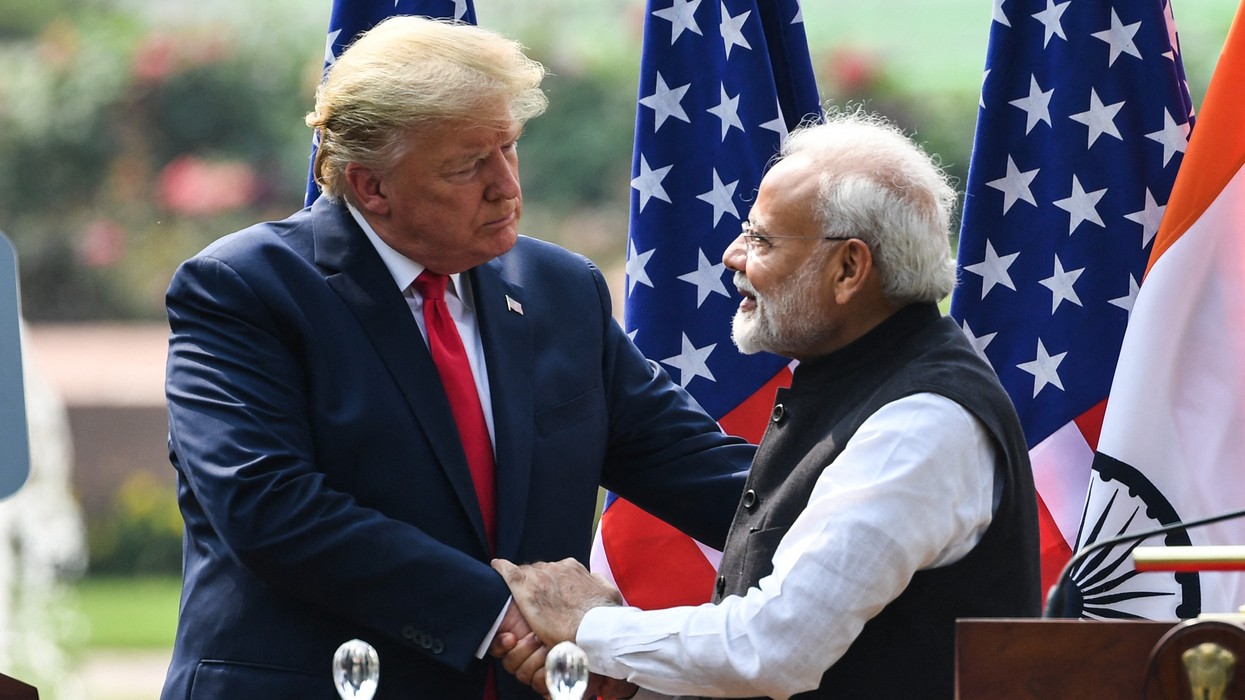
Lord Jitesh Gadhia and former Director of the US Central Intelligence Agency (CIA), General David Petraeus, have called on India and Pakistan to look beyond Kashmir to focus on internal challenges and resume their bilateral economic ties.
Lord Gadhia and General Petraeus have written a joint column for The Daily Telegraph, the newspaper which counted UK prime minister Boris Johnson among its columnists, to urge the two nuclear powers to open dialogue to address their differences.
They note: “At this time of heightened tension between the two important nuclear powers of South Asia, both countries would best serve their respective citizens by following Winston Churchill’s advice that ‘jaw-jaw is better than war-war’ – and then focusing on internal challenges rather than on those posed by their neighbours.
“And, dare we offer, resuming trade and recognising the benefits of opening each of their economies to the other.”
They adviced Pakistan to focus on the country's precarious economic situation rather than expending precious time and money on the dispute over Kashmir.
“The prime minister of Pakistan, Imran Khan, would be well advised to stop expending precious diplomatic and financial capital on the Kashmir issue in order to focus instead on the development of his country, which stands on the verge of bankruptcy, as it negotiates yet another multibillion-dollar bailout from the IMF,” they said.
“What Pakistan has long resisted accepting is that the country's most serious existential threat is not India; it is internal extremists – together with inadequately developed economic opportunities,” they note.
Gadhia, an investment banker, and Petraeus, retired US Army General, believe the calculation behind prime minister Narendra Modi revoking Article 370 appears to be that by fully integrating Kashmir into India he can effect a “reverse triple talaq" by improving security, enhancing prosperity, and unifying the nation state.
“As with any high stakes strategy, much will depend on the quality of the execution. But though India’s tactics may be questioned, its strategy of equalising the rights of all its citizens is difficult to fault,” they add.
Gadhia and Petraeus also flag the limited appetite among the permanent members of the UN Security Council appear to interfere in the issue. And according to them, one of the reasons for this caution is serious misgivings about Pakistan’s motivations, particularly the concern that Islamabad is trying to internationalise the issue of Kashmir to distract attention from its domestic failings.
“Beyond averting conflict, there is a big prize that awaits both nations if they can unlock their human and economic potential. The huge talents of the global Indian and Pakistani diaspora are evident the world over from Silicon Valley to the City of London,” they conclude.
The Indian government last week revoked Article 370 of the Constitution that gave special status to Jammu and Kashmir, a move which has had ripple effects in the UK, including violent clashes during an anti-India protest outside the Indian High Commission in London by British Pakistani and Kashmiri separatist outfits.
While members of the Indian diaspora complained about being locked in by aggressive protestors during Indian Independence Day celebrations on Thursday, the UK authorities have maintained the protest had been "overwhelmingly peaceful".
"We were in close contact with the our colleagues at the Indian High Commission throughout the day,” said a spokesperson for the Foreign and Commonwealth Office (FCO).
The office of the Mayor of London, Sadiq Khan, who had also came under fire on social media over a perceived lack of police preparedness, stressed that policing response is an operational matter for the Metropolitan Police.
“The Mayor supports the right to peaceful and lawful protest and condemns the violence from a small minority that took place outside the Indian High Commission in London,” said a spokesperson for the Mayor.
The Met Police said it had a proportionate team in place, who made four arrests during the demonstration on public order offences of affray, obstruction of police and possession of an offensive weapon.








 Kulsuma Aktergetty images