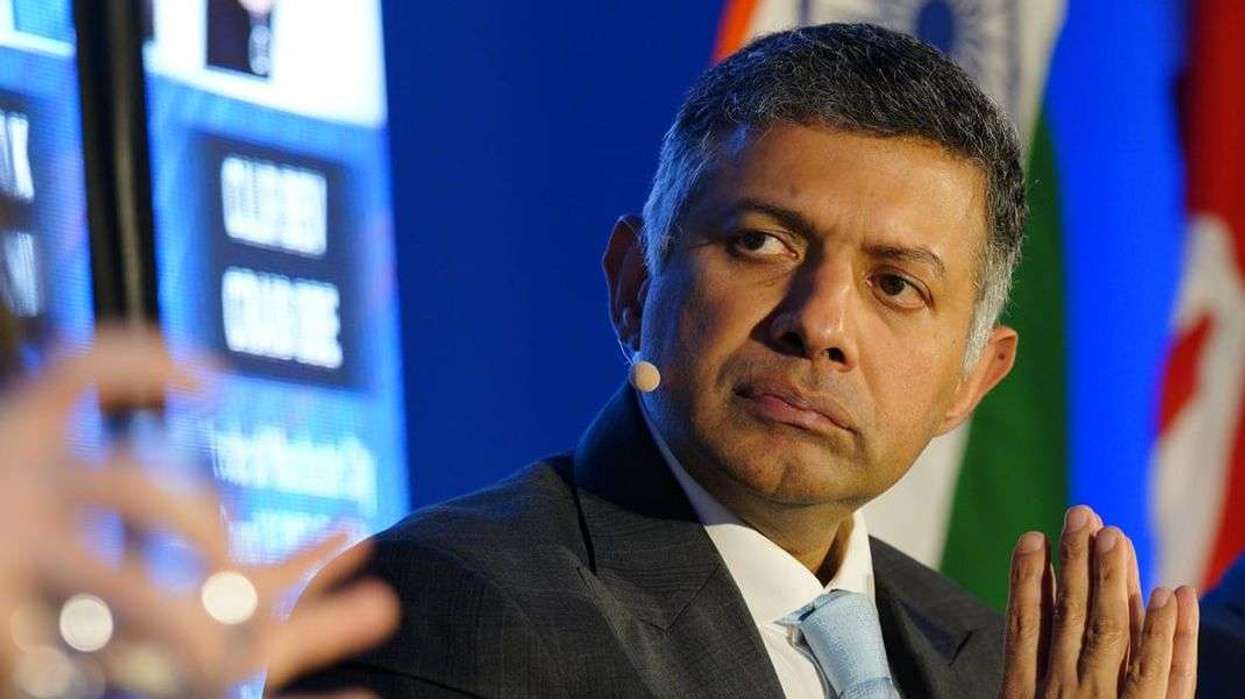

HIGH COMMISSIONERS come and high commissioners go. But Vikram Doraiswami will be missed. Vikram arrived in London in September 2022, but the death of the Queen meant he was unable to present his letter of commission to King Charles until December 2022.
He has been Indian high commissioner in London for slightly longer than the normal three-year term and so he was due to move on. That he is becoming Indian ambassador in China means Narendra Modi’s government is confident he can be trusted with this key appointment.
China is the second largest economy in the world, India the fifth largest. India, with 1.4 billion people, has overtaken China as the most populous nation on earth.
Between them, India and China make up a third of the world’s population. Their bilateral trade was worth $155 billion (£115.5bn) in 2025.
But the two countries are also rivals who have fought one war and had a number of bloody border skirmishes. The world’s geopolitics has changed, however, since US president Donald Trump overturned the old order.
That makes Vikram’s new role a critical one from India’s point of view.
As a young man, Vikram was posted to the Indian high commission in Hong Kong in May 1994 as third secretary. He learned Mandarin, and was posted at the Indian embassy in Beijing in September 1996 for nearly four years.
Having served as Indian high commissioner in Bangladesh, and as ambassador in South Korea and Uzbekistan, he is returning to China at the age of 56 as head of mission.
He was in London during an important phase in India-UK relations.
India was very happy dealing with a succession of Conservative prime ministers, especially Rishi Sunak, but the transition under Sir Keir Starner has proved to be relatively smooth. The high point was the signing of the Free Trade Agreement by Starmer and Modi at Chequers last July.
It is in the nature of diplomacy that friendship with high commissioners resemble ships that pass in the night. What Vikram will miss is the cultural side of British life. He is a member of the PG Wodehouse Society UK, which has made him an honorary patron.
Maybe Britain and India are two countries united by a love of Wodehouse.
As fellow members, Vikram and I would regularly attend meetings of the PG Wodehouse Society in London.
In one of his keynote speeches to the society, Vikram said: “I am convinced that Jeeves was actually Indian. Yes, really. Sift the evidence: in Right Ho Jeeves, we hear from Bertie that: Jeeves doesn’t have to open doors. He’s like one of those birds in India who bung their astral bodies about – the chaps, I mean, who having gone into thin air in Bombay, reassemble the parts and appear two minutes later in Calcutta.
“Hence, my final conclusion,” declared Vikram. “Frankly, we love Wodehouse because of course, his smartest and most celebrated character was a carefully disguised Indian, after whom even dry-cleaning services have been named here in London!”
He also said: “You are already well aware of the peculiar phenomenon that India presents in the world of Wodehouse: it is possibly the largest continuing markets for his books, with singularly devoted fans, even though the country and its outsize place in the empire is conspicuous by its absence in his books.
“Wodehouse societies apart, India is still a country where one might find Wodehouse fans in the oddest of places – not just in prisons, as the Master gloomily assumed his fan base festered, in a delightful short piece in Plum Pie, although there is curiously that story too in India’s social-media driven era of political angst. These include the not-so-gently-decaying Raj-era halls, libraries and tea-planters clubs, where one might expect to find well-thumbed copies of his books. The Master is also to be found in swish bookshops of Lutyens’s Delhi, the malls of Bangalore and the Raj-era streets of Kolkata. Collected sets and new prints are still sold at India’s teeming airports at bookstalls whose product range otherwise barely justifies the appellation of ‘bookseller’; and at railway stations, and the vast jumble of second-hand booksellers that dot most old areas of our cities.”
Vikram is an experienced diplomat, but even he might find it challenging to explain Bertie Wooster and Jeeves to the Chinese

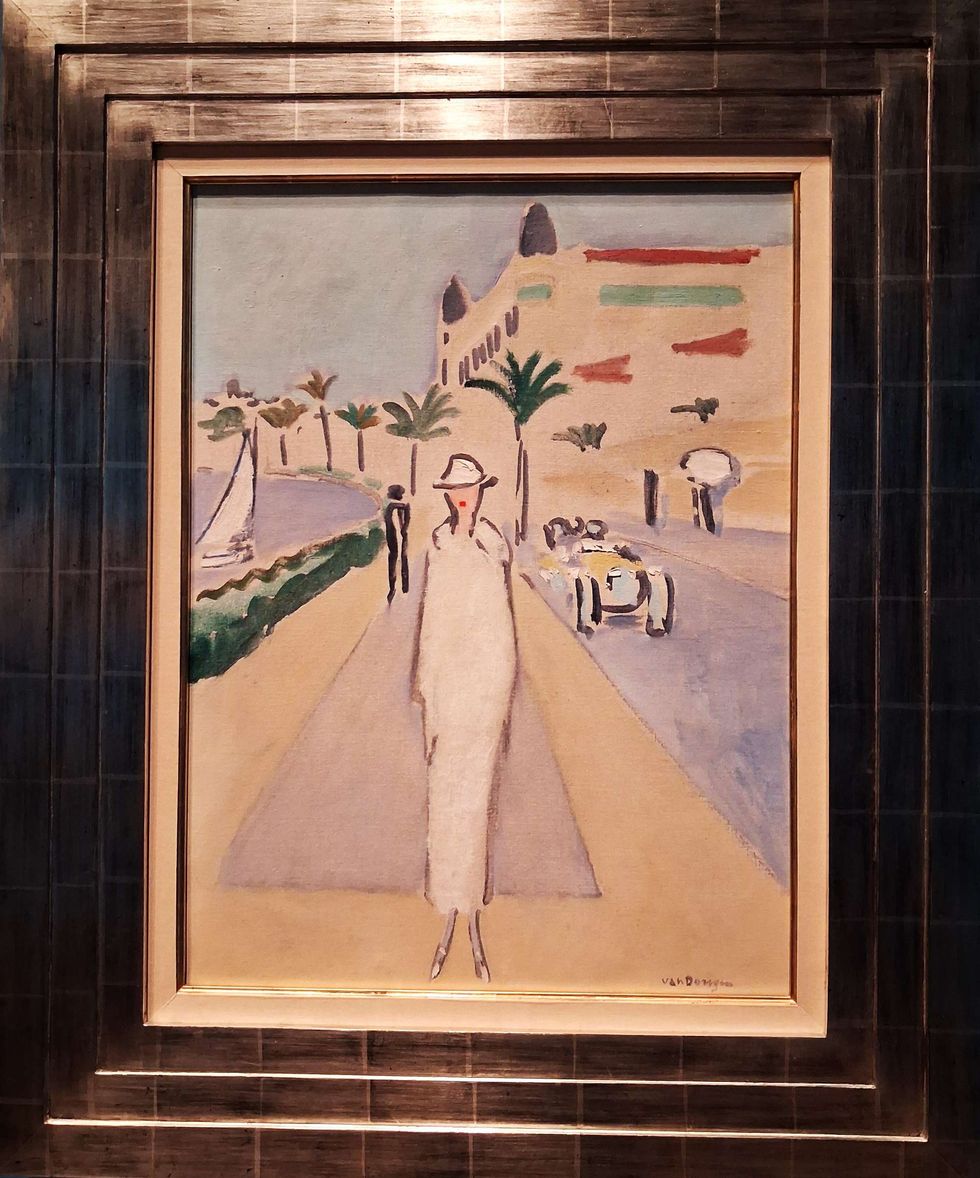 Kees Van Dongen’s The White LadyAmit Roy