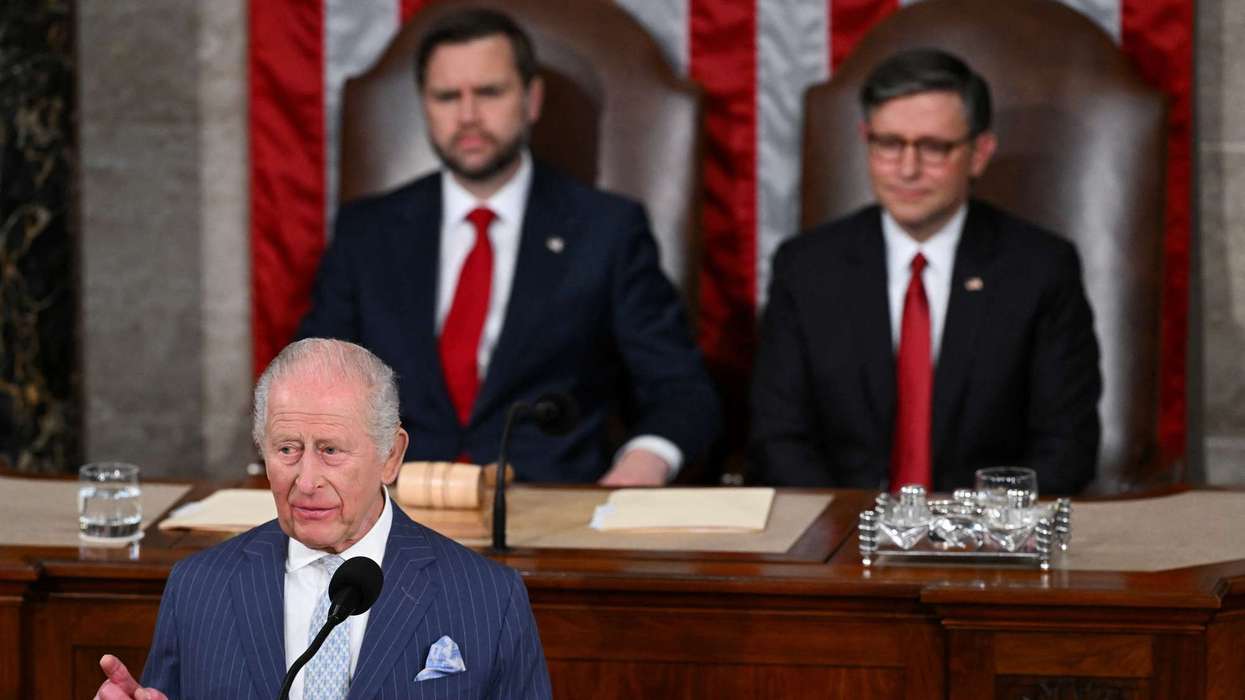

WHEN King Charles addressed both houses of the US Congress in Washington on April 28, he quoted Oscar Wilde: “We have really everything in common with America nowadays, except, of course, language.”
US president Donald Trump apparently loved the reference to Wilde: “Great supporter of MAGA, agrees with me we should bomb Iran back into the stone age.”
King Charles was on a four-day state visit to the US to mark the 250th anniversary of American independence from Britain.
It might be helpful, therefore, to decode the King’s words and set out what he really meant.
What the King said: 250 years ago, or, as we say in the United Kingdom ‘just the other day’, they declared independence.
What he meant: American “culture” is work in progress. It still has a touch of the wild west, where disputes are settled by the gun.
What he said: The US Supreme Court Historical Society has calculated that the Magna Carta is cited in at least 160 Supreme Court cases since 1789, not least as the foundation of the principle that executive power is subject to checks and balances.
What he meant: Members of Congress, you’ve got to lock up Trump before he wrecks the global economy. The man is clearly unhinged.
What he said: In both of our countries, it is the very fact of our vibrant, diverse and free societies that give us our collective strength, including to support victims of some of the ills that, so tragically, exist in both our societies today.
What he meant: There’s a lot more to come out about Trump and Jeffrey Epstein.
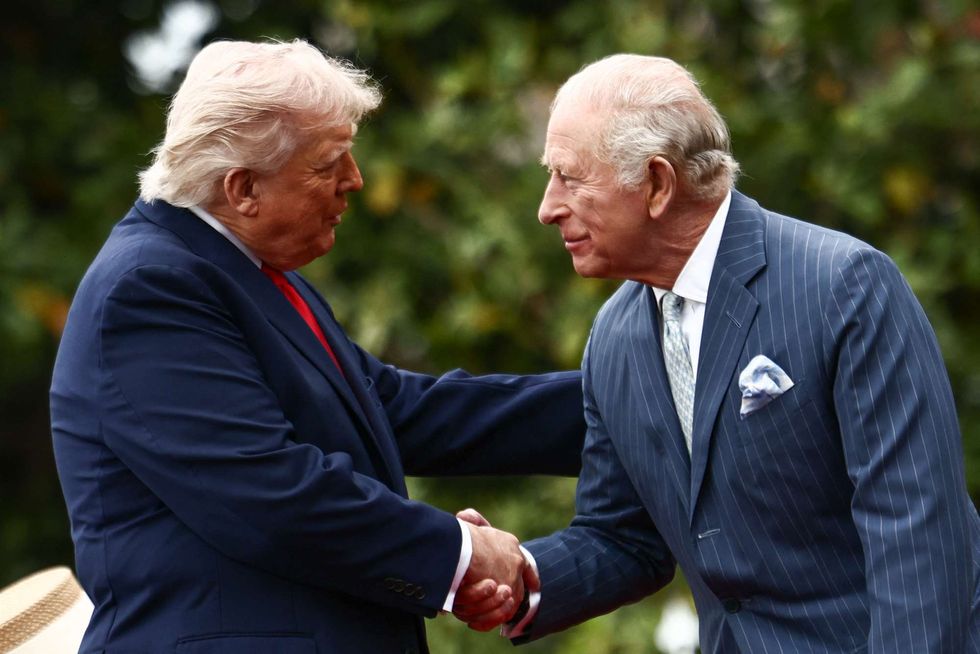 Greets Donald Trump at the White HouseHenry Nicholls/Getty Images
What he said: Having devoted a large part of my life to interfaith relationships and greater understanding, it is that faith in the triumph of light over darkness which I have found confirmed countless times.
What he meant: Trump’s a bigot.
What he said: The forces of fascism in Europe were on the march (when my grandfather, King George VI, visited the US in 1939), and some time before the United States had joined us in the defence of freedom. Our shared values prevailed. Today, we find ourselves in a new era, but those values remain.
What he meant: Fascism is on the march in America – under Trump.
What he said: Today, Mr Speaker, that same, unyielding resolve is needed for the defence of Ukraine and her most courageous people. It is needed in order to secure a truly just and lasting peace.
What he meant: Trump and JD Vance were boorish in attacking Volodymyr Zelensky in the Oval Office and criminal in blaming the Ukrainian president, the victim, for starting the war with Russia.
What he said: More broadly, we celebrate the $430 billion in annual trade that continues to grow, the $1.7 trillion in mutual investment that fuels that innovation, and the millions of jobs on both sides of the Atlantic supported across both economies. These are strong foundations on which to continue to build, for generations yet unborn.
What he meant: Trump is crazy to impose tariffs on the UK and on countless other countries.
What he said: The natural wonders of the United States of America are indeed a unique asset… Yet even as we celebrate the beauty that surrounds us, our generation must decide how to address the collapse of critical natural systems which threatens far more than the harmony and essential diversity of nature.
What he meant: There is nothing more stupid and dangerous than Trump’s “Drill, baby, drill”. Members of Congress, you’ve got to send in the men in the white coats.
Postscript
The King gifted the president a bell from his second world war submarine namesake, HMS Trump. Perhaps this was a reference to the famous 17th-century phrase by John Donne: “Never send to know for whom the bell tolls; it tolls for thee.”


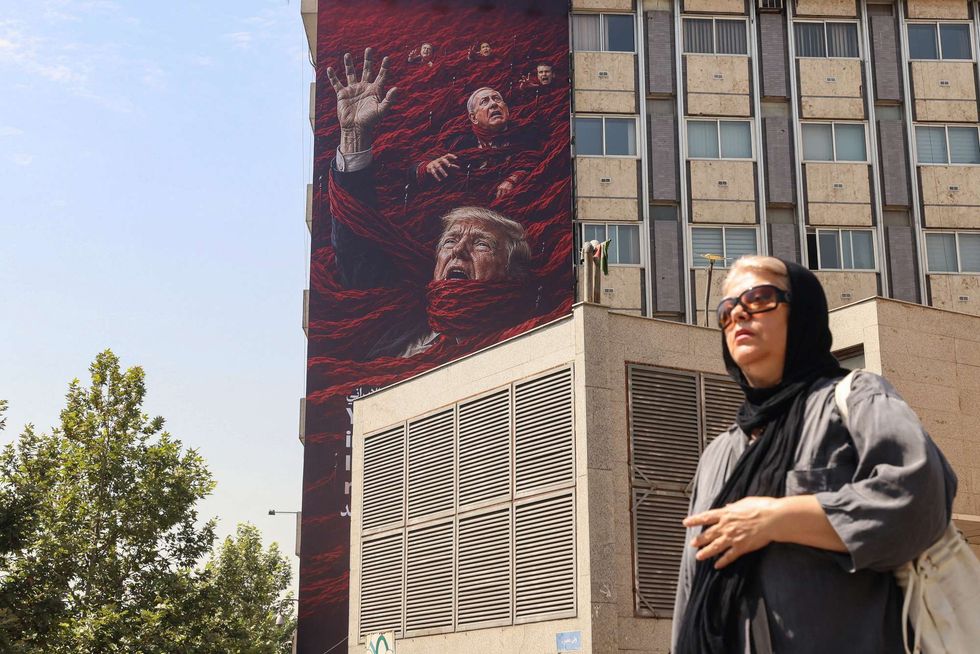 An Iranian woman walks past an anti-US and Israel billboard featuring Donald Trump in TehranAtta Kenare/ AFP via Getty Images