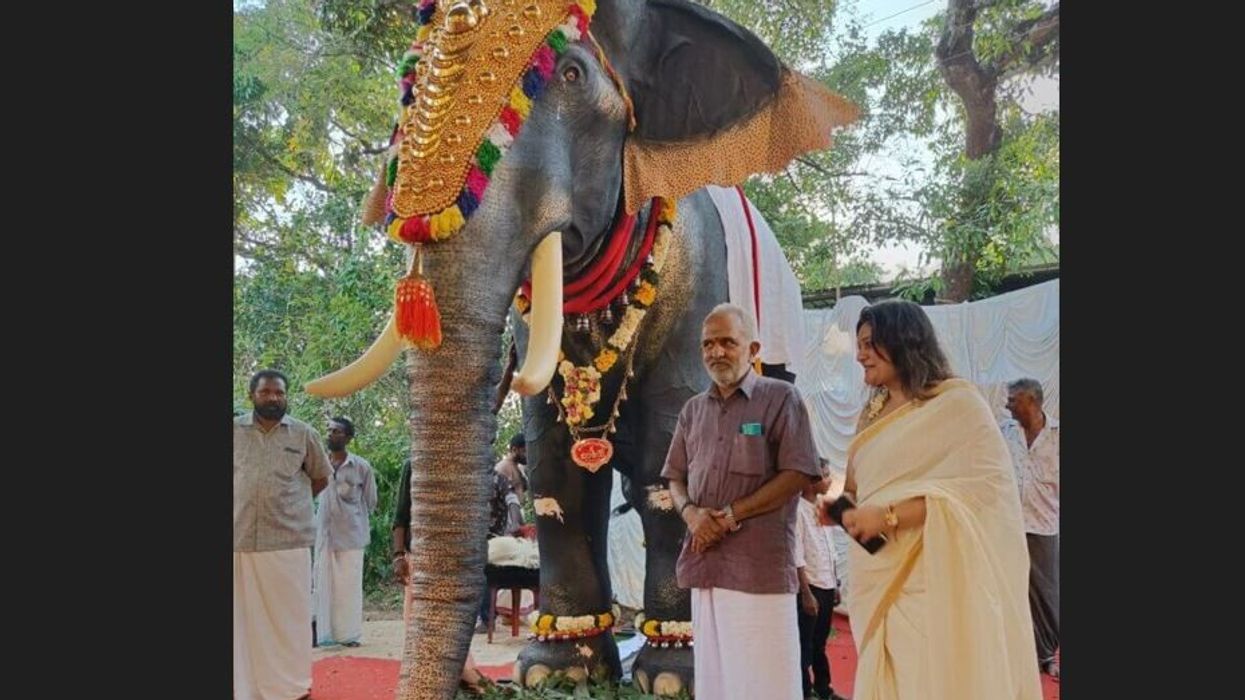

A temple in southern India introduced a life-size robotic elephant last week to conduct rituals in a first-of-its-kind move in the country, according to reports.
The initiative by Irinjadappilly Sree Krishna Temple in Thrissur, Kerala, was part of their pledge to stop using live animals for any festivities.
According to reports, the mechanic elephant was donated by People for Ethical Treatment of Animals (PETA) India and actress Parvathy Thiruvothu.
The 10 feet 6 inches (3.2 meters) tall robotic elephant, which was named Irinjadappilly Raman, will take part in ceremonies at the temple, authorities said.
Rajkumar Namboothiri, head priest of the temple, has said that he was 'extremely happy and grateful' for the donation.
Chained, saddled and decorated, elephants are major attractions in temple festivals in the state, which is home to about a fifth of the country's roughly 2,500 captive elephants.
In a statement, PETA urged all temples in the state to switch to lifelike mechanical elephants.
"It's high time we made stronger and more impactful strides towards stopping such abuse and letting animals have respectful and dignified lives," it said.
"Most elephants in captivity in the country, including in Kerala, are being held illegally or have been transported to a different state without permission. Because elephants are wild animals who would not willingly obey human commands, when used for rides, ceremonies, tricks, and other purposes, they are trained and controlled through severe punishments, beatings, and the use of weapons with a metal-tipped hook," PETA said in a statement.
"Many have extremely painful foot ailments and leg wounds from being chained to concrete for hours on end, and most do not get adequate food, water, or veterinary care, let alone any semblance of a natural life.
"The frustration of captivity leads elephants to develop and display abnormal behaviour. At their wit’s end, frustrated elephants often snap and try to break free, running amok and so harming humans, other animals, and property."
Actor Thiruvothu said: “In this day and age, we have access to understanding what animals are forced to endure when humans use them for entertainment. It’s high time we made stronger and more impactful strides towards stopping such abuse and letting animals have respectful and dignified lives.”
According to PETA India, captive elephants killed 526 people in the southern state from 1997 to 2012.