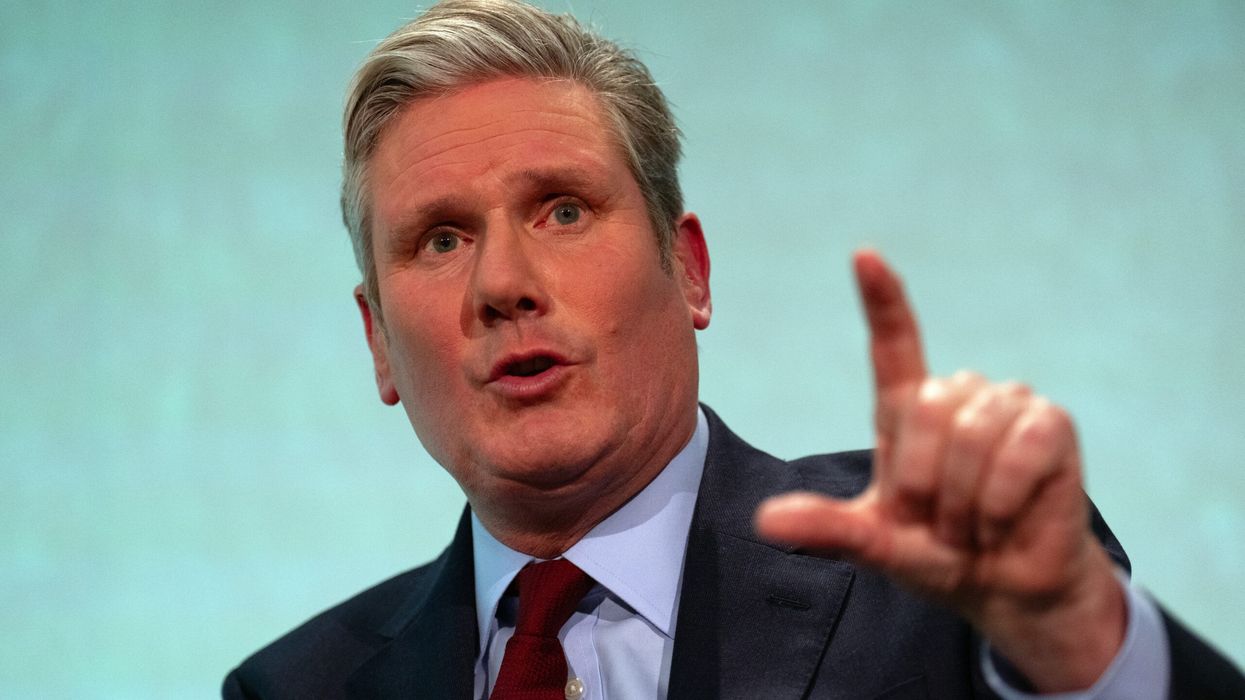

LABOUR leader Sir Keir Starmer on Monday (4) said his government would not “turn on the spending taps” if he becomes prime minister next year, an increasingly likely outcome according to the polls.
Sir Keir said a Labour government would be “ruthless” on public spending, as he seeks to wrestle the reputation for economic competence from the Conservatives, with the country still facing a cost-of-living crisis.
Labour would have an “obsession” with economic growth, he told a conference hosted by the Resolution Foundation thinktank. It recently published a report saying the UK had 15 years of relative economic decline.
Sir Keir added that Labour was having “quite detailed discussions with business” and he reiterated the party would seek a closer trading relationship with the European Union.
The Tories have been in power since 2010, but are languishing around 20 points behind in the polls with a general election expected next year.
“This parliament is on track to be the first in modern history where living standards in this country have actually contracted,” said Sir Keir.
“Anyone who expects an incoming Labour government to quickly turn on the spending taps is going to be disappointed.
“It’s already clear that the decisions the government are taking, not to mention their record over the past 13 years, will constrain what a future Labour government can do,” he added.
Sir Keir said he would attempt to boost the economy by easing planning laws and introducing a “competitive” tax regime.
“The defining purpose of the next Labour government... will be raising Britain’s productivity growth,” the party leader said.
“That’s a big change for us. Having wealth creation as your number one priority, that’s not always been the Labour Party’s comfort zone.”
Conservative Party chairman Richard Holden responded that “the largest ‘constraint’ to growing the economy would be Labour’s £28 billion a year borrowing plan, which independent economists warn would see inflation, interest rates and people’s taxes rise”.
Chancellor Jeremy Hunt said at the same event that he hoped in future to reverse the decline in public investment which is forecast in the government’s latest budget plans. “I don’t think you want declining public investment. And I very much hope we’ll be able to get back into a place where we don’t have to do that,” Hunt said on Monday.
In government budget forecasts published last month, British public sector net investment is forecast to fall steadily from 2.6 per cent of gross domestic product in the current financial year to 1.8 per cent in the 2028-2029 financial year.
The Resolution Foundation, a think tank focused on living standards for low- and middleearners, blamed weak investment for much of Britain’s weak productivity growth since the global financial crisis in 2008, in a report released on Monday.
Hunt said his decision last year to freeze the level of capital spending in cash terms came after the government had previously raised its annual capital budget to around £100 billion from £70bn.
“It was an incredibly difficult situation. But it was necessary for the markets and it was necessary for the battle against inflation,” he said. “I hope as soon as we can afford to we can get back to real-terms growth,”