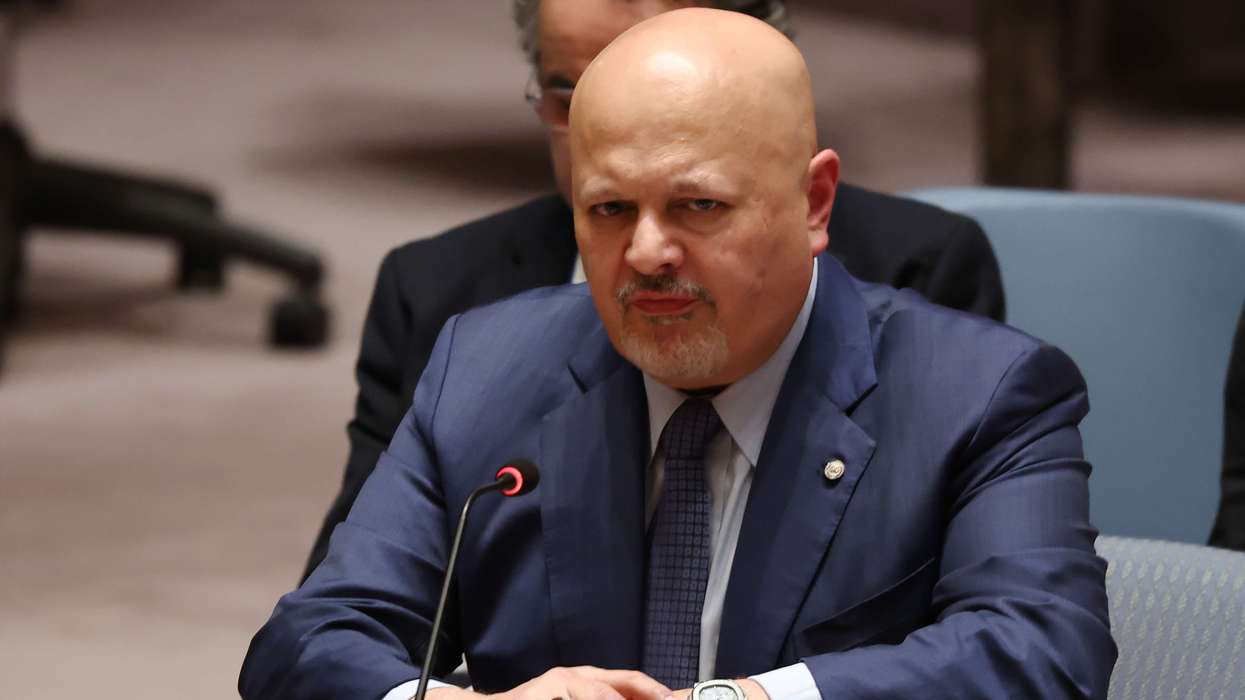

MEMBER states of the International Criminal Court voted to dismiss prosecutor Karim Khan for serious misconduct, the ICC said last Friday (24).
Diplomats on the executive bureau of the court’s governing body said last month the British barrister had an inappropriate sexual relationship with a junior ICC lawyer and should be removed, according to documents seen by Reuters.
A large majority of the ICC’s 125 member states backed the recommendation. “The assembly decided by a majority of 82 states parties that the elected official, prosecutor Karim Khan, committed serious misconduct and a serious breach of duty ... and to remove ... Karim Khan from office,” said Paivi Kaukoranta, president of the court’s governing body.
Khan, 56, denies any wrongdoing. “Mr Khan will challenge the lawfulness and fairness of the decision through all available legal mechanisms,” his lawyer, Tayab Ali, said. His dismissal immediately starts the process of electing a new ICC prosecutor, although a successor is not expected to be chosen before next year.
“Members of the court acted swiftly and decisively to remove an embattled and discredited official so that the court can move forward with its important work,” said Leila Sadat, professor of international criminal law at Washington University.
Khan’s accuser spoke publicly for the first time last week in an interview with CNN, repeating allegations that he subjected her to a non-consensual sexual relationship. His lawyers told Reuters he denied “any sexual relationship of any kind” with the junior lawyer.
Any existing ICC arrest warrants remain in force because only the court’s judges have the authority to withdraw them.
Born in Edinburgh to a Pakistani father and a British mother, Khan studied law in London before working in the UK prosecution service and later at the UN war crimes tribunals for the former Yugoslavia and Rwanda.
He joined the ICC after leading a UN team investigating Islamic State crimes in Iraq and was elected prosecutor in 2021 following a campaign marked by political lobbying by the UK and African states.
Khan drew global attention in May 2024 when he sought arrest warrants for Israeli prime minister Benjamin Netanyahu and former defence minister Yoav Gallant over alleged war crimes and crimes against humanity in Gaza. The warrants, later approved by ICC judges, prompted strong opposition from Israel, the US and some ICC member states.
The US has since imposed sanctions on 11 ICC officials, including Khan, and pledged to intensify efforts to dismantle the court.
During a visit to the Philippines last Thursday (23), US secretary of state Marco Rubio described those at the ICC as “lunatics and crazies” and ruled out any possibility of US officials standing trial there.
State Department spokesperson Tommy Pigott welcomed Khan’s removal, but said, “he is only one small cog in this irredeemably corrupt institution. Today’s outcome will have no impact on the US’ plans to dismantle the ICC.”
The US, which is not a member, has imposed sanctions on 11 ICC judges and prosecutors, including Khan, citing the ICC’s arrest warrants against Israeli prime minister Benjamin Netanyahu and former defence minister Yoav Gallant, and a past probe into US troops in Afghanistan.
While removing Khan helps the ICC’s credibility by showing it has accountability for its own leadership, the court has more hurdles to overcome, said Kyra Wigard, assistant professor of law at Utrecht University.
“The bigger challenge going forward is whether the court can restore confidence internally and externally while maintaining the perception of independence amid intense geopolitical pressure,” she said.