
Skip to content
Search

Latest Stories

Submit Guest Post

Junior doctors to strike for five days after rejecting government offer

The British Medical Association (BMA) confirmed that junior doctors will strike for five days from 7am on November 14 to 7am on November 19.

Junior doctors

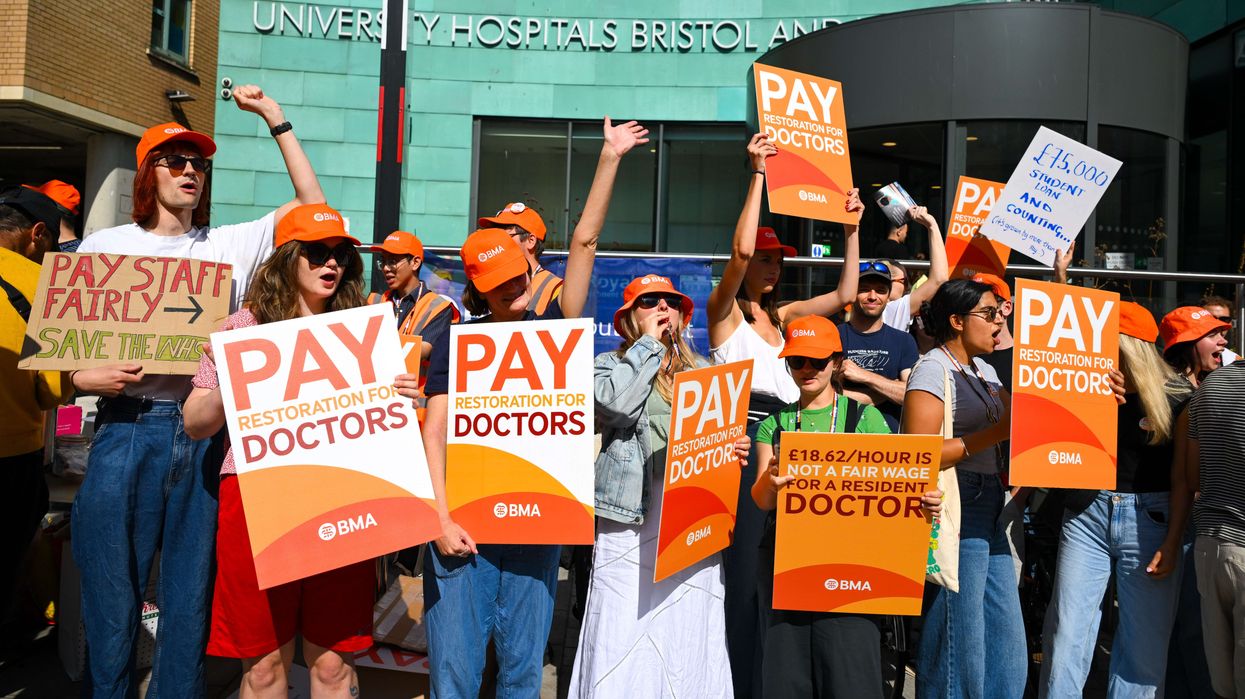
Striking doctors protest outside Bristol Royal Infirmary hospital on July 25, 2025 in Bristol. (Photo: Getty Images)

Getty Images

JUNIOR doctors in England have rejected a new government offer aimed at ending the dispute over jobs and pay, saying it “does not go far enough.”

The British Medical Association (BMA) confirmed that junior doctors will strike for five days from 7am on November 14 to 7am on November 19, reported The Times.


Health secretary Wes Streeting had offered to cover junior doctors’ exam fees and “put more money in their pockets” to avoid the walkout. He wrote to the union on Wednesday with the offer and gave 24 hours to accept and call off the strikes.

Streeting said the rejection was a “missed opportunity”. He warned that if strikes go ahead, he would have to withdraw the offer as the government “won’t be able to afford it” because each round of strikes costs about £240 million.

His offer included funding exam and medical royal college membership fees, and boosting NHS speciality training places by 2,000 over three years. Ministers also proposed a consultation to prioritise UK doctors over foreign-trained medics when applying for NHS jobs, The Times reported.

Dr Jack Fletcher, chair of the BMA’s resident doctors committee (RDC), said: “This does not go far enough. Even with this offer, thousands of doctors would still be unable to find a job — 30,000 doctors applied for 10,000 places this year. A thousand more is not going to fix this crisis nor come anywhere near doing so.”

He added that strikes could still be avoided but only with “a pay deal and a genuine solution on jobs”.


Add EasternEye As Your Trusted Source
preferred source on google news

More For You

Fruits and vegetables

Britain’s reliance on imported fruit and vegetables could make food prices more vulnerable to climate shocks

iStock

Britain’s fruit bowl could be at risk as climate change hits the countries it relies on

  • Around 40 per cent of Britain’s food is imported, including 80 per cent of its fruit.
  • The UK is already seeing domestic crops affected by heatwaves, drought and wildfires.
  • Researchers warn climate pressures could make fresh food more expensive and harder to secure.

Britain is increasingly exposed to that risk because it relies heavily on imported fruit and vegetables, including from countries that are themselves facing growing pressure from rising temperatures, drought and extreme weather.

Around 40 per cent of the UK's food is imported, according to a new report from the Food Foundation. The figure rises to 80 per cent for fruit and 47 per cent for vegetables, leaving Britain particularly dependent on overseas growers for some of the fresh foods people buy most often.

Keep ReadingShow less