
Highlights
- Iran launches fresh strikes across West Asia after Trump deadline warning
- Missile and drone attacks reported in Israel, Kuwait and UAE
- Strait of Hormuz tensions push oil prices higher
- Casualties reported in Israel and Lebanon as conflict expands
IRAN launched fresh attacks across West Asia on Monday and warned of “much more devastating” retaliation, after US president Donald Trump demanded that Tehran reopen the Strait of Hormuz by a set deadline.
Missile and drone strikes were reported in Israel, Kuwait and the United Arab Emirates. Air defences were activated in Kuwait and the UAE, while Israel said it detected a new wave of missiles launched from Iran.
The escalation followed Trump’s warning that Iran must reopen the Strait or face attacks on its infrastructure. In a social media post, he said: “Open the Fuckin' Strait, you crazy bastards, or you'll be living in Hell.” He later set a deadline, writing: “Tuesday, 8:00 P.M. Eastern Time! (Wednesday 0000 GMT)”.
ALSO READ: Trump sets Monday deadline for Iran: Make a deal or face hell
Iran’s central military command said any further attacks on civilian targets would lead to stronger retaliation. “If attacks on civilian targets are repeated, the next stages of our offensive and retaliatory operations will be much more devastating and widespread,” a spokesman said.
Iran’s deputy foreign minister Kazem Gharibabadi said Trump’s threats could amount to war crimes. “The American president, as the highest official of his country, has publicly threatened to commit war crimes,” he said.
The conflict began on February 28 with US and Israeli strikes on Iran and has since spread across the region. Iran has targeted Israel, US bases and Gulf infrastructure, and has effectively blocked the Strait of Hormuz, a key route for global energy supplies.
Strikes across region, casualties reported
In Israel, two people were killed after an Iranian missile hit a residential building in Haifa. The Fire and Rescue Service said firefighters were searching for two others missing in the rubble. The military said the seven-storey building was hit by a “direct impact of a missile”. Four others were reported wounded in a separate strike.
Israel’s army said it carried out strikes on “regime targets” in Tehran. Iranian media reported attacks on residential areas in the capital, while the state broadcaster said gas outages followed a strike on a university.
ALSO READ: West Asia war: US jet downed in Iran as strikes continue across region
In the Gulf, Kuwait said it intercepted missiles and drones, while the UAE said its air defences responded to attacks, with falling debris injuring one person in Abu Dhabi. Authorities in Sharjah reported an “incident” at the port of Khor Fakkan following an Iranian strike.
UAE presidential adviser Anwar Gargash said targeting Gulf countries would “concretize the American role” and said the UAE was ready to “join any American-led effort, international effort to secure navigation in the Strait of Hormuz.”
Lebanon front expands
The conflict has also intensified in Lebanon. Hezbollah said it fired rockets at northern Israel.
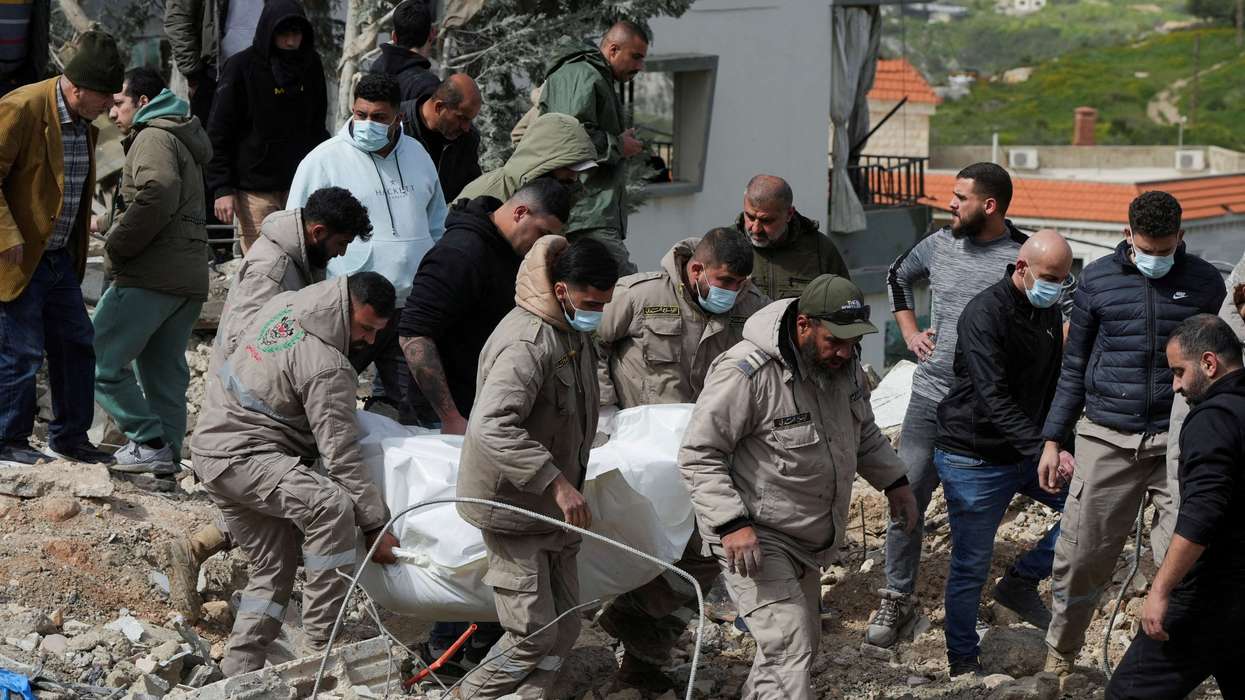
Israeli strikes in Lebanon killed at least 15 people and wounded 39 on Sunday, according to Lebanese officials. A strike in Beirut’s Jnah area killed at least five people and wounded 52. Another strike in Ain Saadeh killed three people and injured three others. In Kfar Hatta, seven people were killed, including a four-year-old girl.
ALSO READ: Iran fires missiles at Israel; Trump says US has not started 'destroying what’s left'
Israel’s army chief Lieutenant General Eyal Zamir said operations against Hezbollah would intensify.
US airman rescue operation
Trump said a US airman from a downed F-15 fighter jet had been rescued in a “daring” and “miraculous” operation. He said “dozens” of US aircraft took part and the crew member was “seriously wounded”.
US media reported the airman used a beacon and secure communication device while sheltering in mountainous terrain. Aircraft involved in the rescue were destroyed to prevent them falling into Iranian hands.
Iran’s military said it destroyed four US aircraft and that the operation had been “completely foiled”. Iranian media reported five people were killed in strikes linked to the operation.
ALSO READ: Iran threatens further attacks after Trump warning
Iran said it shot down the jet, while US reports said only the aircraft was downed. Washington has not confirmed the cause.
Oil prices rise, economy affected
Oil prices rose as the conflict continued. Brent crude increased 1.16 per cent to $110.30 a barrel, while West Texas Intermediate rose 1.86 per cent to $113.62.
The Strait of Hormuz carries about a fifth of global oil and gas supply. Its closure has raised concerns over global energy markets.
Peace proposal under discussion
The United States and Iran have received a framework proposal to end the conflict. The plan includes an immediate ceasefire followed by a final agreement within 15 to 20 days, according to a source.
Pakistan’s army chief Asim Munir was in contact with US and Iranian officials regarding the proposal.
ALSO READ: Tehran rocked by blasts as Trump says war may end soon
Iran said it would not reopen the Strait as part of a temporary ceasefire and would not accept deadlines while reviewing the proposal. A senior Iranian official said Washington was not ready for a permanent ceasefire.
A possible 45-day ceasefire is also being discussed, according to reports.
War toll and wider impact
Iranian strikes have targeted petrochemical facilities and vessels in Kuwait, Bahrain and the UAE.
Iranian state media said Revolutionary Guards intelligence chief Majid Khademi has died. Strikes have also killed senior Iranian figures, including Supreme Leader Ayatollah Ali Khamenei, who has been replaced by Mojtaba.
ALSO READ: Trump tells UK and other countries to 'go get your own oil'
A US-based group said about 3,540 people have been killed in Iran since the war began, including at least 244 children.
Lebanese authorities said 1,461 people have been killed in Lebanon, including at least 124 children.
Russia criticised Trump’s threats and called for negotiations. Iran’s parliament speaker Mohammad Bagher Ghalibaf said: “our whole region is going to burn because you insist on following Netanyahu's commands.”
(With inputs from agencies)