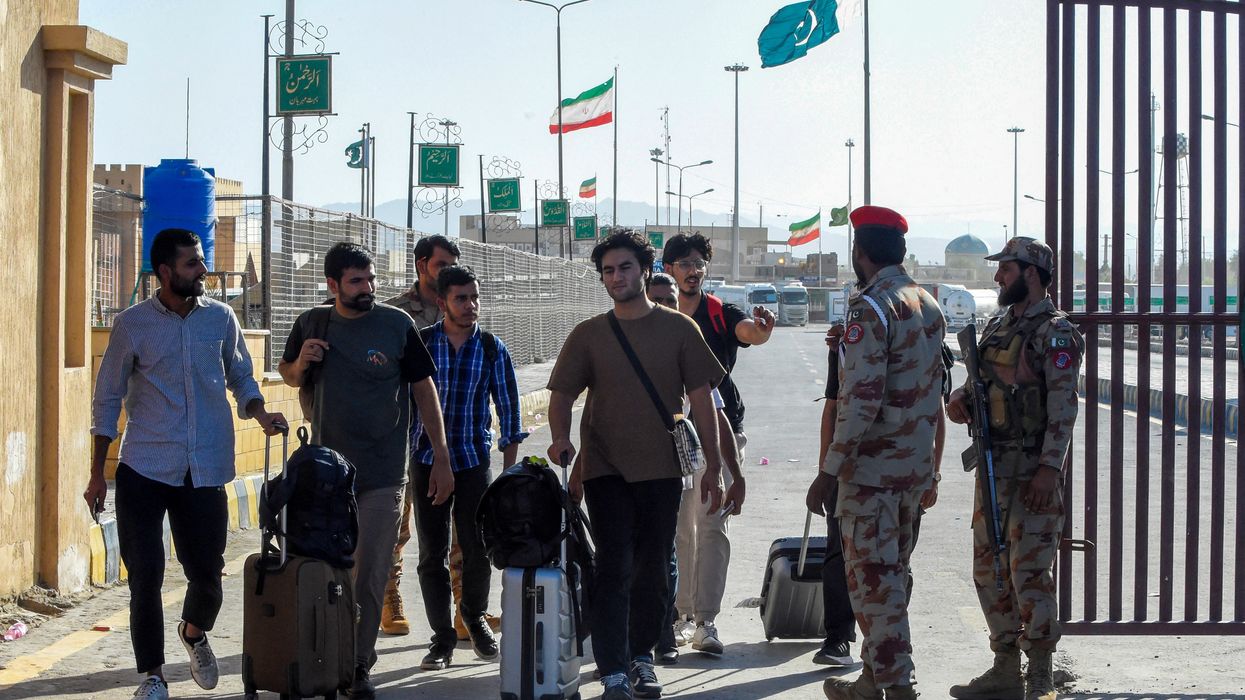

SOME 3,000 Pakistanis have returned home since Israel launched its aerial war against Iran last week, as governments around the world are scrambling to evacuate their nationals caught up in the rapidly spiralling conflict in the region.
Pakistan and Iran have a shaky diplomatic relationship. They bombed each other’s territory little more than a year ago, both claiming to target rebels using their neighbour’s land to launch attacks.
Yet they have never suspended trade, tourism and academic ties and Iranian consulates have stepped up efforts to promote their universities.
Mohammad Hassan anxiously returned to Pakistan from Iran last week after witnessing drones, missiles, and explosions tear through Tehran’s sky during what he called long, “horrifying nights”.
The 35-year-old University of Tehran student said, “I was in the city centre where most of the strikes took place and even one of the student dormitories was attacked and luckily no one was dead, but students were injured.” There are more than 500 Pakistani students at his university alone, he said, all of them on their way “back home”.
“Those days and nights were very horrifying... hearing sirens, the wailing, the danger of being hit by missiles. As one peeped out the window in the night, you could see drones, missiles with fire tails,” he said. Mohammad Khalil, a 41-year-old petroleum engineer, left Tehran three days ago, the capital of the Islamic Republic looking like a ghost town as residents sheltered indoors and families fled. “In the last two days, I saw people moving out of the city in different vehicles with necessary commodities,” Khalil said.
Pakistan is in a difficult position as the only Muslim-majority country with nuclear weapons. It, like Iran, does not recognise Israel, but is also a major ally of the United States.
Between 25 million and 35 million Pakistani Shiite Muslims hope to make at least one pilgrimage in their lifetime to holy sites in Iran, foremost among them the sacred city of Qom.
Abdul Ghani Khan sells medical equipment in his hometown of Peshawar in northwest Pakistan and travels to Iran regularly for supplies.
He had been in Tehran for a week when the first Israeli missiles fell last Friday (20). Iran and Israel traded heavy missile fire in the days since, raising fears of a wider regional conflict.
Khan made the journey home by road because the airspace is now closed. Pakistan has also shut its border crossings with Iran to all except Pakistanis wanting to return home.
“We saw drones, red lights of anti-aircraft guns and I spotted one building catch fire,” Khan said.