

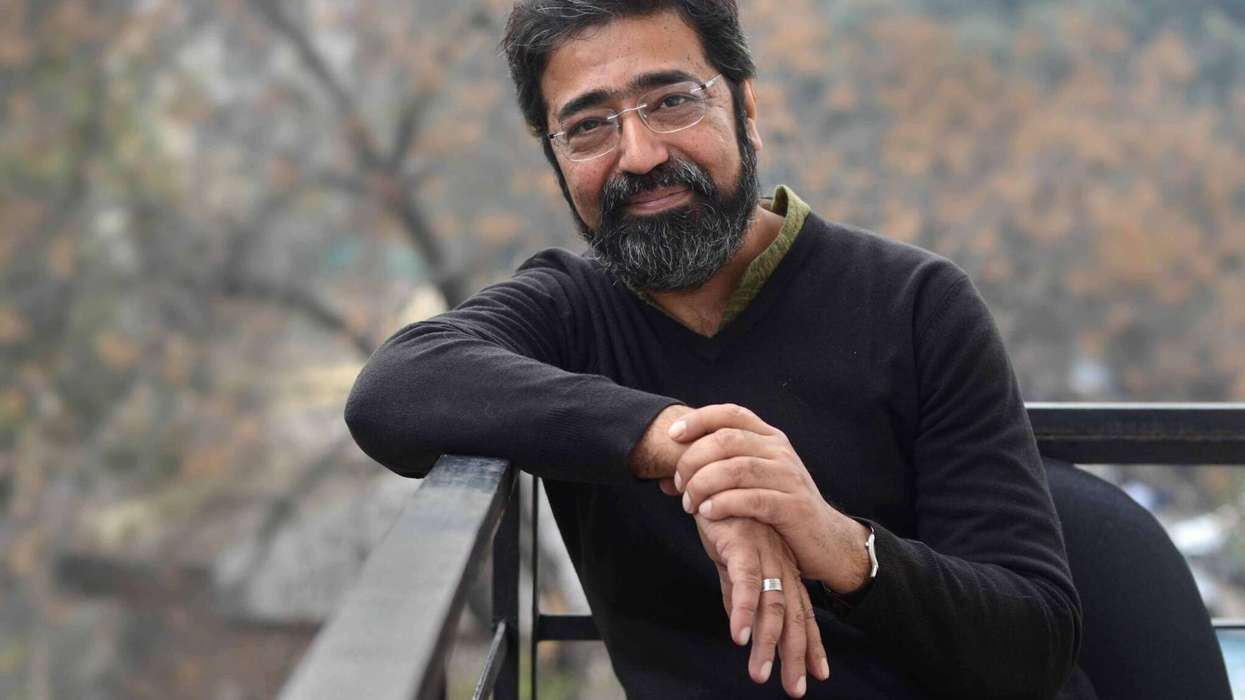
INDIAN writer, activist, and lawyer Banu Mushtaq’s short story collection Heart Lamp, translated from Kannada to English by Deepa Bhasthi, has been longlisted for the International Booker Prize 2025.
It is among 13 titles chosen globally.
Judges praised Heart Lamp for its “witty, vivid, moving, and excoriating” portrayal of family and community tensions.
This marks the first time a Kannada title has made it to the longlist of the prestigious £50,000 prize, which is split equally between the author and the translator.
Mushtaq is based in Karnataka state in south India.
“Exploring the lives of those often on the periphery of society, these vivid stories hold immense emotional and moral weight,” the judges said of Heart Lamp. It is a collection of 12 stories set in the Muslim communities of southern India, originally published between 1990 and 2023.
It will now compete against works from across the globe for a place on the shortlist.
Mushtaq emerged as a powerful literary voice within the progressive protest movements of southwestern India during the 1970s and 1980s.
As part of the Bandaya Sahitya movement – a radical literary wave that challenged caste and class hierarchies – she was among the few women who carved a space for themselves alongside influential dalit (so called untouchables) and Muslim writers.
Writing primarily in Kannada, Mushtaq has authored six short story collections, a novel, an essay collection, and a poetry collection. Her work has earned accolades, including the Karnataka Sahitya Academy Award.
Her stories were previously translated into Urdu, Hindi, Tamil, and Malayalam.
The International Booker Prize celebrates the finest longform fiction and short story collections translated into English and published in the UK or Ireland between May 2024 and April 2025. The shortlist will be revealed on April 8, with each shortlisted title receiving £5,000, shared between the author and translator. The winner will be announced on May 20 at a ceremony at Tate Modern in London.
In 2022, Geetanjali Shree and translator Daisy Rockwell made history by winning the award for the Hindi novel, Tomb of Sand. Perumal Murugan’s Tamil novel Pyre, translated by Aniruddhan Vasudevan, was longlisted in 2023.
Max Porter, chair of the 2025 judging panel, highlighted the universal appeal of translated fiction, “Translated fiction is not an elite or rarefied cultural space requiring expert knowledge; it is the exact opposite. It tells stories of every conceivable kind from everywhere, for everyone. It is a miraculous way for us to meet one another in all our strangeness and sameness, defying the borders erected between us.”
Others on the list are The Book of Disappearance by Ibtisam Azem, translated from Arabic by Sinan Antoon; On the Calculation of Volume I by Solvej Balle, translated from Danish by Barbara J Haveland; There’s a Monster Behind the Door by Gaëlle Bélem, translated from French by Karen Fleetwood and Laëtitia Saint-Loubert; Solenoid by Mircea Cartarescu, translated from Romanian by Sean Cotter; and Reservoir Bitches by Dahlia de la Cerda, translated from Spanish by Heather Cleary and Julia Sanches.



 Everyman Book coverMita Mistry