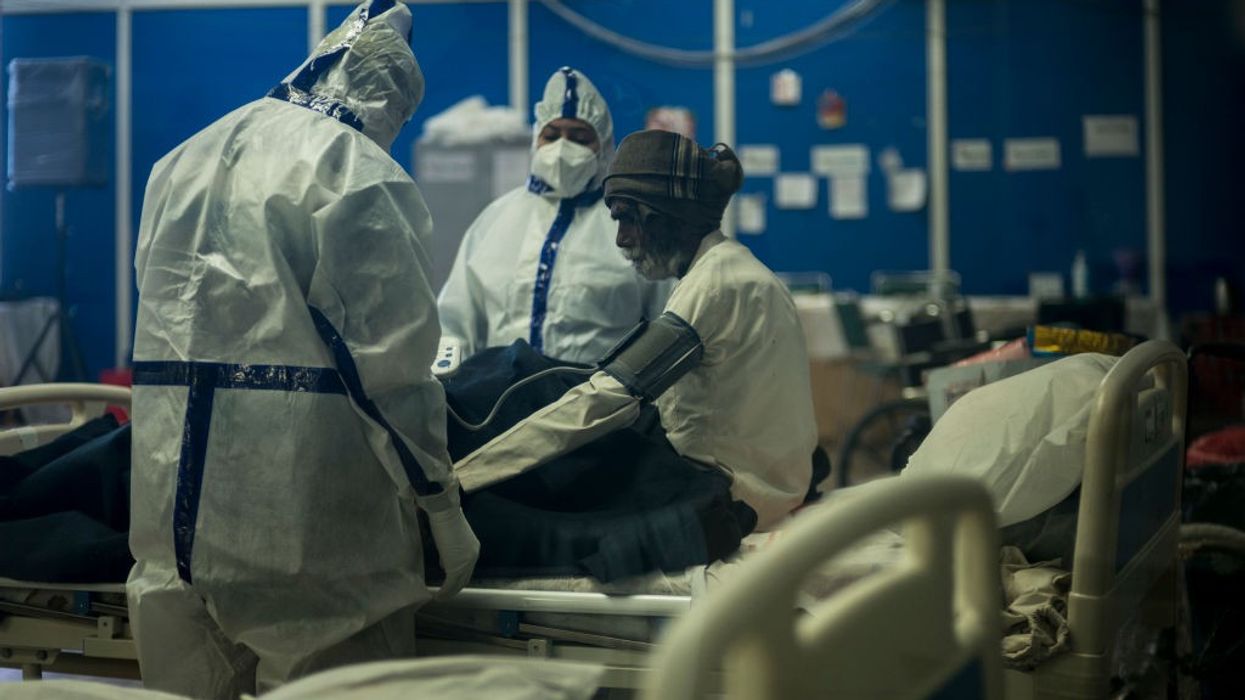

INDIA's capital Delhi will remain under curfew over the weekend and overnight to help curb the spread of the Omicron variant of coronavirus, the city's disaster management authority said, rejecting calls from businesses to ease restrictions.
The authorities, however, said private offices will be allowed to be partially staffed but people are advised to work from home as much as possible.
"It is also clarified that 'Night Curfew' from 10 pm to 5 am everyday and 'Weekend Curfew'...shall also remain in force...till further order," the authority said.
Exemptions include people needing to travel for medical reasons including getting vaccinations, going to and from train stations and airports, or delivering food.
Earlier on Friday (21), New Delhi's deputy chief minister said the local government had proposed easing restrictions as cases in the sprawling capital of some 20 million people were "declining considerably".
Frustrated Delhi shopkeepers protested on the streets this week, demanding that curbs be removed.
"Now that the cases are coming down, it would be wrong to restrict people from moving out to earn for their survival," Manish Sisodia, Delhi's deputy chief minister, said in a webcast.
Local officials have said that most recent coronavirus infections have been mild, with most people recovering at home.
The number of new cases in Delhi has more than halved from a peak of 28,867 on Jan. 13 and more than 80 per cent of Covid beds across the city's hospitals are unoccupied, government data show.
Delhi has been one of the centres of India's coronavirus pandemic for the past two years and has endured various lockdowns and curfews over different waves of infection.
The city imposed the curfew on Jan. 4 and ordered schools and restaurants to close as infections caused by highly transmissible Omicron surged.
Maharashtra to reopen schools
India's wealthiest state will reopen schools next week, its education minister said, as new cases of the Omicron variant of coronavirus fell sharply, even though it had the highest tally of infections nationwide.
India added 337,704 new coronavirus infections, which includes 10,050 cases of the Omicron variant, according to health ministry data updated on Saturday (22). There has been a 3.69 per cent increase in Omicron cases since Friday (21), the ministry said.
In Mumbai, the financial capital, daily new infections fell on Wednesday (19) to 6,032, down from an all-time high of 20,971 on Jan. 7, municipal figures showed.
"We were getting demands that schools should start," state education minister Varsha Gaikwad told reporters. "We have decided to reopen schools from Grade 1 to Grade 12 from Monday (24)."
The spike in infections had prompted the closures early in January, after most grades resumed temporarily last month.
Capital Delhi has shut schools, private offices, restaurants and has imposed weekend curfew.
Authorities say India's rates of hospital admissions and deaths in its third wave of disease, caused this time by the milder Omicron variant, are lower than last year's figures, when the Delta variant killed hundreds of thousands.
(Agencies)