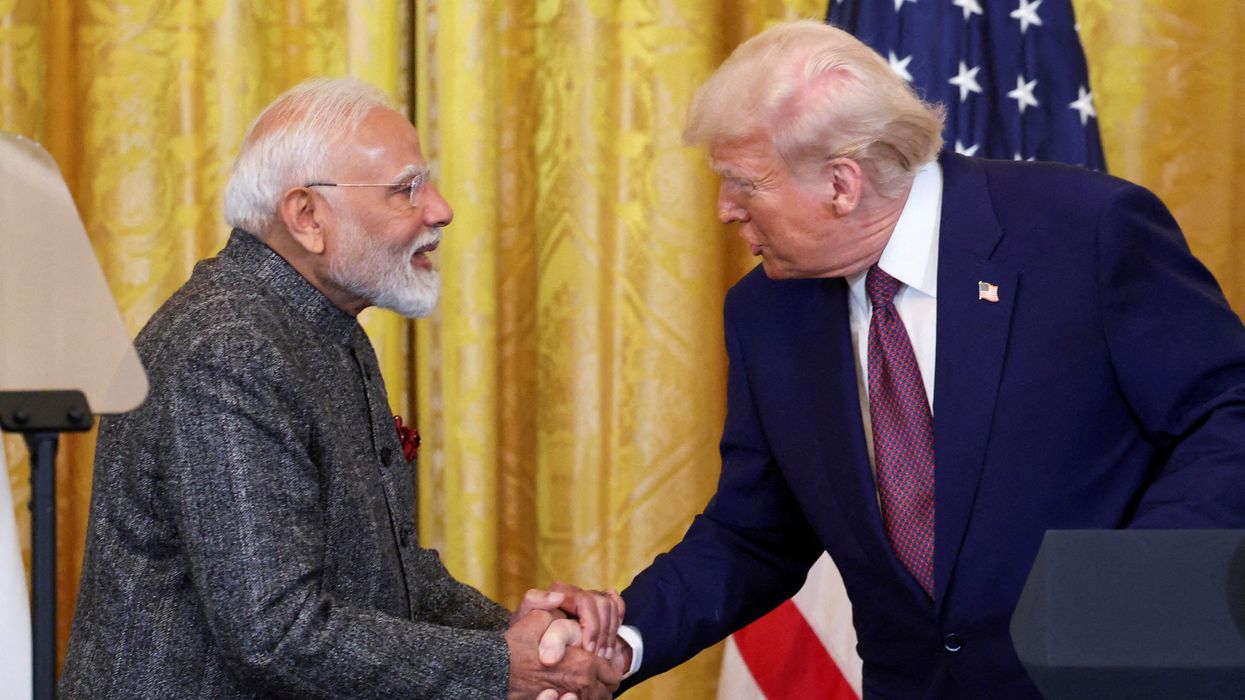

INDIAN prime minister Narendra Modi said he spoke by phone with US president Donald Trump on Thursday, as India continues to seek relief from US tariffs of up to 50 per cent on some key exports imposed over its Russian oil purchases.
Modi said in a post on X that “We reviewed the progress in our bilateral relations and discussed regional and international developments.” A White House official confirmed the call but did not provide details of the discussion.
This was the third conversation between Modi and Trump since the US decision to double tariffs on imports from India to as much as 50 per cent, hitting shipments of textiles, chemicals and food items such as shrimp.
Modi described the call as “warm and engaging” and said both countries would continue to work together for global peace, stability and prosperity.
Trade negotiations stalled in late July after India declined to open its market for US farm products and did not acknowledge Trump’s role in mediating during an India-Pakistan conflict.
Talks have continued, with signs that Indian refiners are reducing Russian oil purchases after US sanctions on Rosneft and Lukoil LKOH.MM aimed at pressuring Moscow over the war in Ukraine.
US deputy trade representative Rick Switzer met Indian officials during a two-day visit to New Delhi this week, as India seeks relief from the punitive tariffs. The US Trade Representative’s office had no immediate comment.
It remained unclear whether a trade deal could be reached before the end of the year, according to one administration official who spoke on condition of anonymity.
Ryan Majerus, a former senior US Commerce Department official now with the King & Spalding law firm, said he expected a deal with India at some stage given its role in the global economy.
Russian president Vladimir Putin visited New Delhi last week and offered uninterrupted fuel supplies, challenging US pressure on India to reduce Russian fuel imports.
Indian government data showed exports to the US fell nearly 9 per cent year-on-year in October to $6.31 billion from $6.91 billion, though up from $5.47 billion in September.
Washington is also pressing India to lower tariffs and non-tariff barriers on US goods and open its market to American farm products, including soybean and grain sorghum.