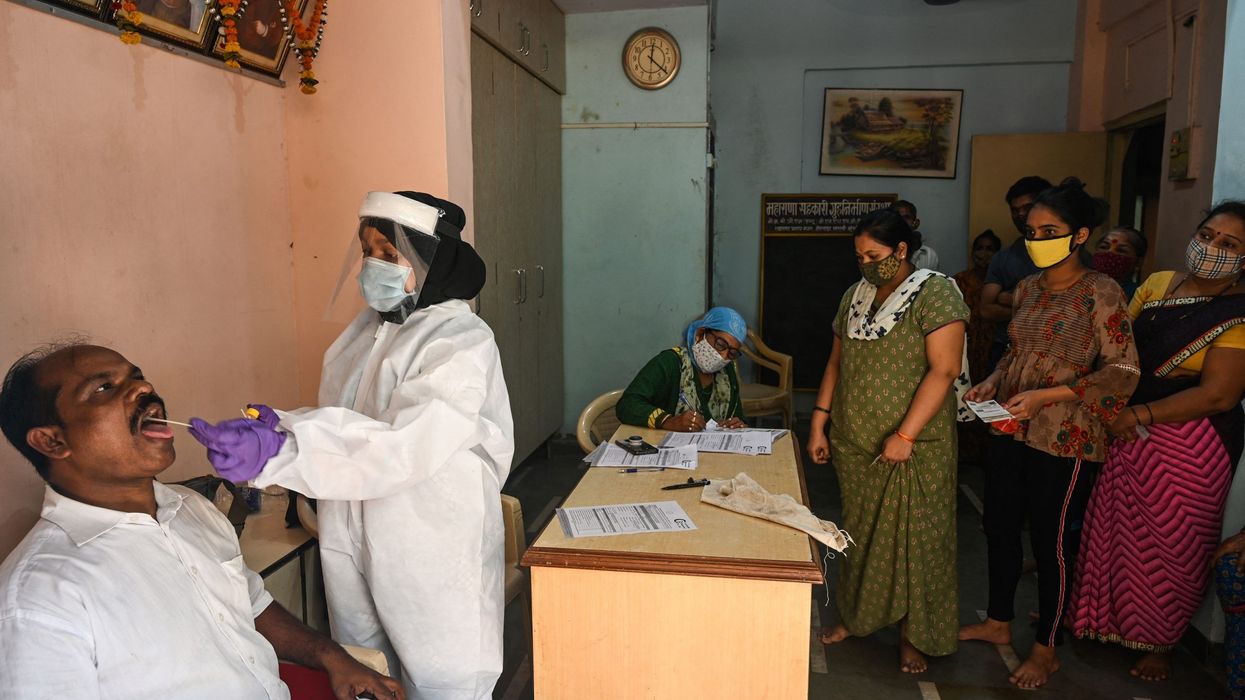

INDIA reported 81,466 new Covid-19 cases on Friday (2), the highest daily number in six months, as several states are hit by a second wave of the pandemic.
The total number of cases have now surged to 12.3 million, making India the third-most hit country from the virus after the United States and Brazil. The number of death rose by 469 to 163,396.
The health ministry stressed that more than 70 per cent of the deaths occurred due to comorbidities. "Our figures are being reconciled with the Indian Council of Medical Research," the ministry said on its website.
Vaccination programme has been intensified in the country amid the recent surge, with many states considering to impose fresh restrictions.
Maharashtra, the western state of the country that has been worst-hit from Covid-19 so far, reported as many as 43,183 new cases on Friday - its highest since the pandemic outbreak in March 2020. A night curfew over the weekend has been imposed but the state is considering more stricter measures, including shutting down religious places and restricting train travel.
India imposed one of the world's harshest lockdowns to control the spread early last year, but it was eased to salvage the economy, and cases gradually fell later in the year. However, the new surge in cases this year presents a challenge to the government.
Infection numbers were also up on Friday (2) in the states of Chhattisgarh, Karnataka, Punjab, Kerala, Tamil Nadu, Gujarat and Madhya Pradesh.