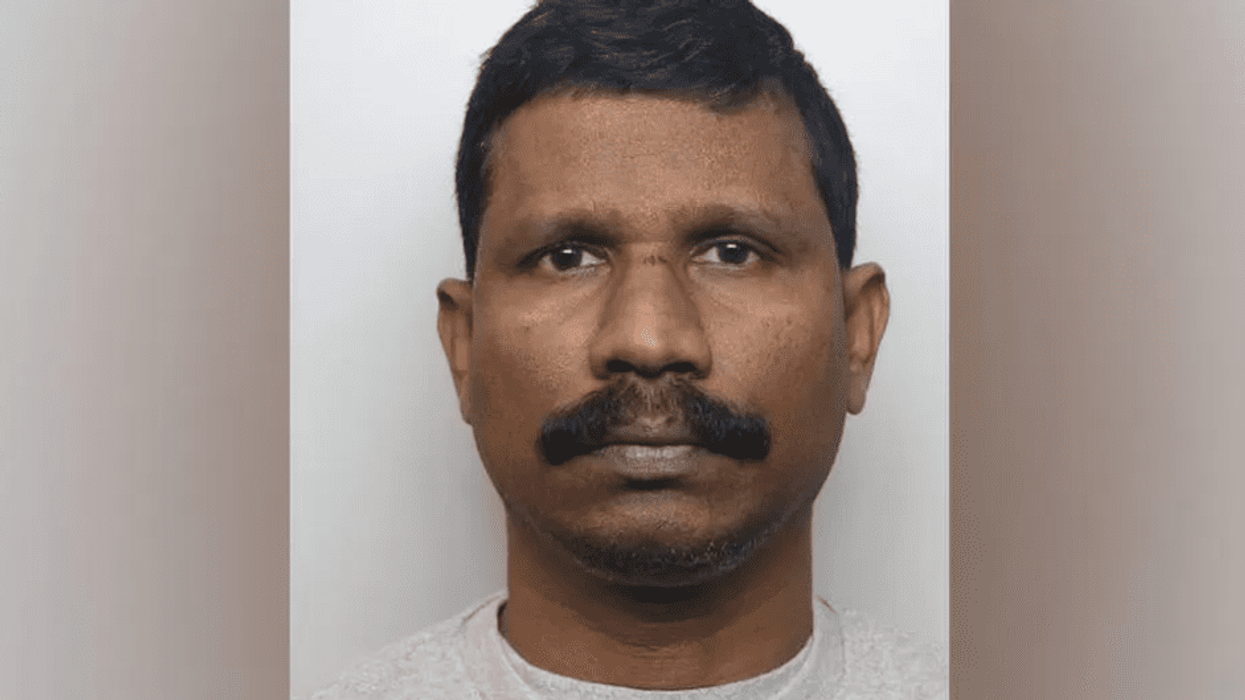
A SUSPECT charged with the triple murder of an Indian nurse and her two children has pleaded guilty at a court hearing in eastern England.
Saju Chelavalel, 52, on Wednesday (5) appeared at Northampton Crown Court, where he admitted to killing wife Anju Asok, 35, and children Jeeva Saju, 6, and Janvi Saju, 4.
He has been remanded in judicial custody until his sentencing in July.
All three victims were found in December last year when emergency services were called to their home in Kettering to reports that they had suffered serious injuries.
Forensic post-mortem examinations, which took place at Leicester Royal Infirmary following their deaths, concluded that all three died as a result of asphyxiation.
"This was an absolutely tragic case and there are no words to articulate the devastation Saju Chelavalel caused when he chose to end the lives of Anju, Jeeva and Janvi,” said Detective Inspector Simon Barnes, Senior Investigating Officer from the Northamptonshire Police.
"I am pleased that he has pleaded guilty and spared Anju's family and friends the pain of a trial. He will have to live with what he has done forever and I hope one day, he truly comprehends the pain his actions have caused,” he said.
The officer said that Anju Asok will be remembered as “so much more” than his victim as he described her as a dedicated nurse, loving mother, and loyal friend.
"My thoughts remain with her loved-ones and will continue to do so long into the future," he said, extending his gratitude to all the officers involved in the case.
"This was a case that affected many people and it was through sheer dedication and professionalism that Chelavalel has been brought to justice so quickly," he noted.
Chelavalel pleaded guilty to three counts of murder. The judge has indicated that he would be handed a life sentence, with the minimum term before parole to be determined by the sentencing judge.
Anju Asok, originally from Viakom in Kottayam district of Kerala, had been employed at the local hospital in Kettering since 2021.
She worked as a nurse in the orthopaedic department of Kettering General Hospital, which has since paid tributes to her as a “committed and compassionate” staff nurse.
The local police have also shared information about a remembrance ceremony held last month in memory of the deceased family at Kettering Park Infant Academy, where Jeeva and Janvi were enrolled.
The children in their respective classes were given a balloon – either pink, blue or silver, to represent Janvi, Jeeva and Anju. The children then gathered outside and were joined by the rest of the school as the song ‘Somewhere over the rainbow' played and the balloons were released.
A poem was read and a minute's silence was held.
(PTI)
Husband pleads guilty to murder of Indian nurse, 2 kids in UK