Skip to content
Search

Latest Stories

Harrow Council rejects Hindu temple plans over security and landscaping issues

The proposed Shree Kunj Bihari Temple on Station Road was rejected over insufficient landscaping details and security concerns

Harrow Council rejects Hindu temple plans over security and landscaping issues

The proposed temple was planned for the first floor of 45–47 Station Road in North Harrow

Facebook

Highlights

  • Harrow Council refused plans to convert first-floor office space at 45–47 Station Road, North Harrow into a Hindu temple with a maximum capacity of 45 people.
  • Planning officers raised concerns about insufficient landscaping information for a proposed roof garden.
  • Security concerns were raised about the temple's only access being through a solicitor's office and an unsecured rear fire escape.
Harrow Council has refused a planning application to convert vacant office space above shops in North Harrow into a Hindu temple.
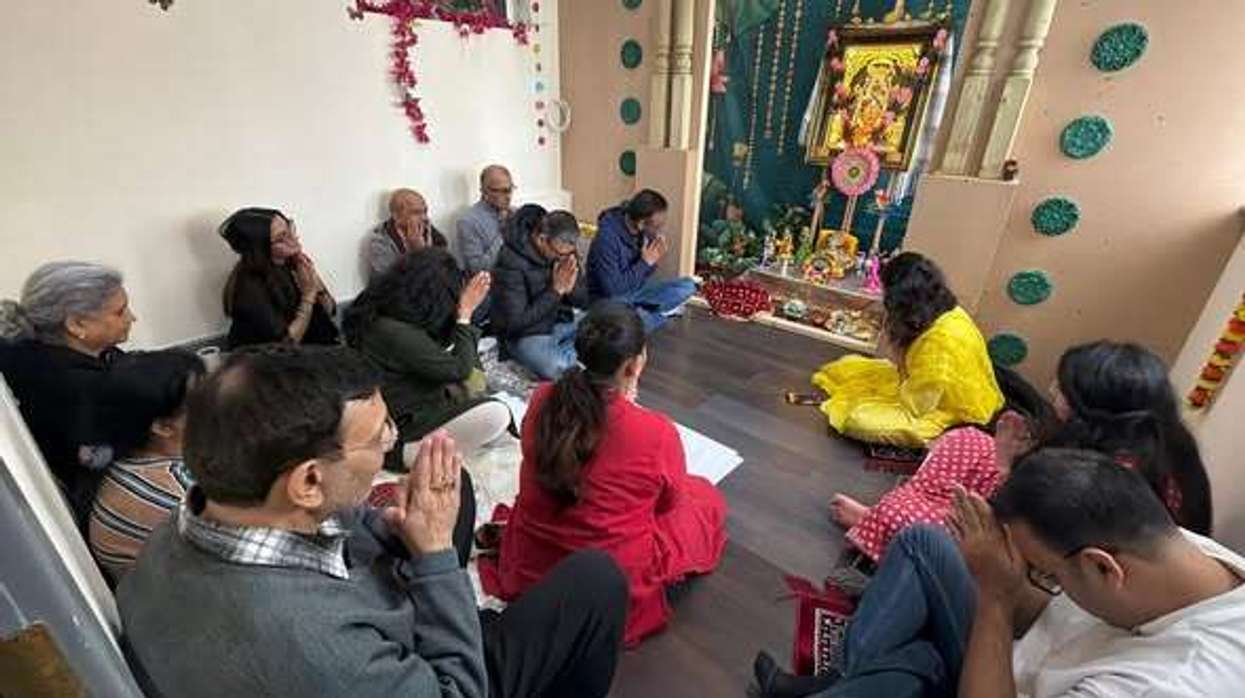
The application related to the first floor of 45–47 Station Road, close to the junction with Pinner Road, where plans proposed changing the use of the space into the Shree Kunj Bihari Temple , a small temple and assembly hall with a maximum capacity of 45 people.
The building would have remained mixed-use, with a solicitor's office on the ground floor, the temple on the first floor and office space continuing on the second floor.
The application was refused on 5 March 2026.The applicant argued the first-floor office space, measuring around 83 square metres, had been vacant for a prolonged period and was no longer suitable for modern office use due to its layout and declining demand for small office units in the area.
The temple was intended to serve the local community, with most visitors expected to arrive on foot or by public transport given the building's proximity to North Harrow Underground station.

Landscaping details missing

Planning officers said there was insufficient information about the landscaping of a proposed first-floor roof garden included in the application.

Officers stated: "No detailed information has been provided in relation to the design, layout, planting, surfacing or overall landscape treatment of the proposed roof garden.


In the absence of such information, it is not possible to provide meaningful comments on its visual impact, functionality, or contribution to biodiversity."

Significant security concerns were also raised about access arrangements to the proposed temple.

Planning documents noted the only access to the temple would be via the solicitor's office on the ground floor and a narrow metal fire escape staircase at the rear with no access control.

A submission from a Secured by Design perspective stated: "The risk of crime and ASB to all types of religious premises is high, and any new religious premises should have full SBD approval.

This development is not a suitable location for a temple as it cannot be made secure with the submitted plans."

Safety concerns were also raised about the space adjacent to the external steps, with officers stating it "would need to be made safe to ensure there is no risk."


More For You

Rental insurance

Prime Minister Keir Starmer said the government is “putting that right” after years of insecurity in renting

iStock

Renters’ Rights Act kicks in across England: What changes for money, access and daily renting

  • Section 21 evictions are scrapped, ending sudden removals without reason.
  • Rent hikes capped, upfront payments limited and bidding wars banned.
  • New enforcement powers and fines of up to £40,000 come into force.

From May 1, renting in England is operating under a completely new rulebook. The Renters’ Rights Act has come into force, bringing what is being described as the biggest overhaul of tenant protections in nearly 40 years.

Around 11 million private renters are now covered under the new law. The changes are not limited to one area. They cut across evictions, rent increases, discrimination, contracts and even day-to-day living conditions, marking a structural shift in how the rental market functions.

Keep ReadingShow less