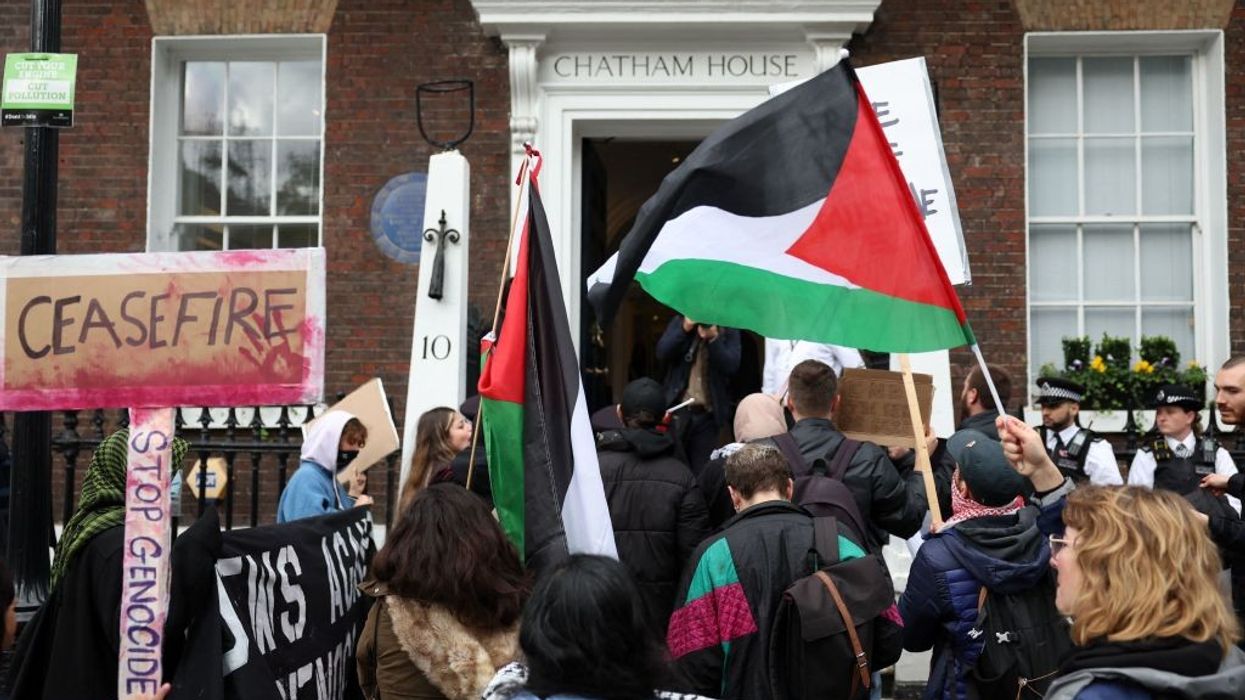
MORE than a hundred pro-Palestinian protesters gathered at London's Liverpool Street station on Tuesday (31), hanging banners from balconies and occupying the main concourse while demanding a ceasefire in the Israel-Hamas conflict.
Videos posted online by the "Sisters Uncut" protest group showed a large group of demonstrators inside the station during rush hour, chanting and waving pro-Palestinian flags and banners.
British Transport Police (BTP) said they attended Liverpool Street station shortly after 5 pm following reports of a protest on the station concourse.
"Officers worked to safely disperse the crowd and ensure passengers could access the station," a statement from BTP said.
One video showed the group chanting "From the river to the sea, Palestine will be free" - a chant which home secretary Suella Braverman has previously criticised as an antisemitic demand for the destruction of Israel. Other groups dispute that interpretation of the chant.
Sisters Uncut describes itself as a feminist group against domestic violence, but held a similar pro-Palestinian demonstration at Waterloo station on Saturday (28).
(Reuters)
Protesters pack out London station demanding Gaza ceasefire
One video shows the Sisters Uncut group chanting ‘From the river to the sea, Palestine will be free'