
IN AN AGE when misinformation travels at the speed of a click and public confidence in institutions is repeatedly tested, the responsibility carried by communications professionals has rarely been greater. It is into this fraught landscape that Farzana Baduel stepped this year as president of the Chartered Institute of Public Relations (CIPR), the world’s only Royal Chartered professional body for public relations practitioners, representing more than 11,000 members.
Baduel never completed her university degree. Yet today she leads one of London’s most respected strategic communications consultancies while also serving as an entrepreneurship expert at the University of Oxford’s Saïd Business School. The path between those two points was shaped less by careful planning than by entrepreneurial instinct, intellectual curiosity and a willingness to enter rooms where she did not always feel expected.
Born in London in 1977 to immigrant parents from Kashmir, Baduel grew up in a household defined by enterprise. Her parents had arrived in Britain seeking opportunity and quickly built businesses spanning property, beauty consumer goods and professional services. Hard work was not merely encouraged; it was assumed.
“We were a family of workaholics,” she has recalled. “My childhood revolved around school and, when I wasn’t there, I was in my parents’ offices and factories watching them navigate relationships with suppliers, employees, customers and other stakeholders.”
Her academic path, however, took an unexpected turn. After beginning a degree in economics and mathematics, Baduel left in her second year to take what she thought would be a temporary break. She never returned. Instead, at just 20 years old, she launched a taxation firm specialising in services for people arriving in or leaving the UK – a niche business that she would run successfully for a decade.
That early venture revealed a pattern that would later define her career: when the conventional route seemed closed, she created her own.
“I entered the [public relations] industry through an unconventional route, coming from business, politics and entrepreneurship rather than a traditional agency background,” she told the GG2 Power List. “In hindsight, that difference became one of my greatest strengths.”
Without agency experience or industry connections, even securing an internship felt unlikely. So Baduel took a different approach. In 2009, in the aftermath of the global financial crisis, she co-founded Curzon PR with James Ollerenshaw.
Baduel brought deep connections across international business and British political circles; Ollerenshaw contributed creative industry relationships rooted in the north of England. Between them, those networks translated into trusted access across sectors.
“What began as an entrepreneurial leap became, over time, far more defined,” she says. “We became known for strategy, discretion and an ability to operate in complex and high-stakes environments where reputation matters.”
Curzon PR expanded rapidly in its early years, at one stage opening offices in London, New York and Dubai. Yet Baduel eventually came to question whether geographic expansion truly reflected the firm’s strengths.
“We were at our strongest with governments, global corporates and institutions – clients where there was a shared sense of purpose and where the stakes were high,” she explains. “So we consolidated back to London, stayed true to our expertise, and continued to service international clients through travel rather than permanent offices.”
The decision ran against the typical logic of agency growth. But for Baduel it became an important lesson in leadership.
“We could have continued building offices and becoming broader. Or we could refine, focus on the work we genuinely loved, and serve the clients we were truly best suited for. That moment taught me that leadership is not always about growth. Sometimes it is about clarity – choosing purpose over prestige and depth over breadth.”
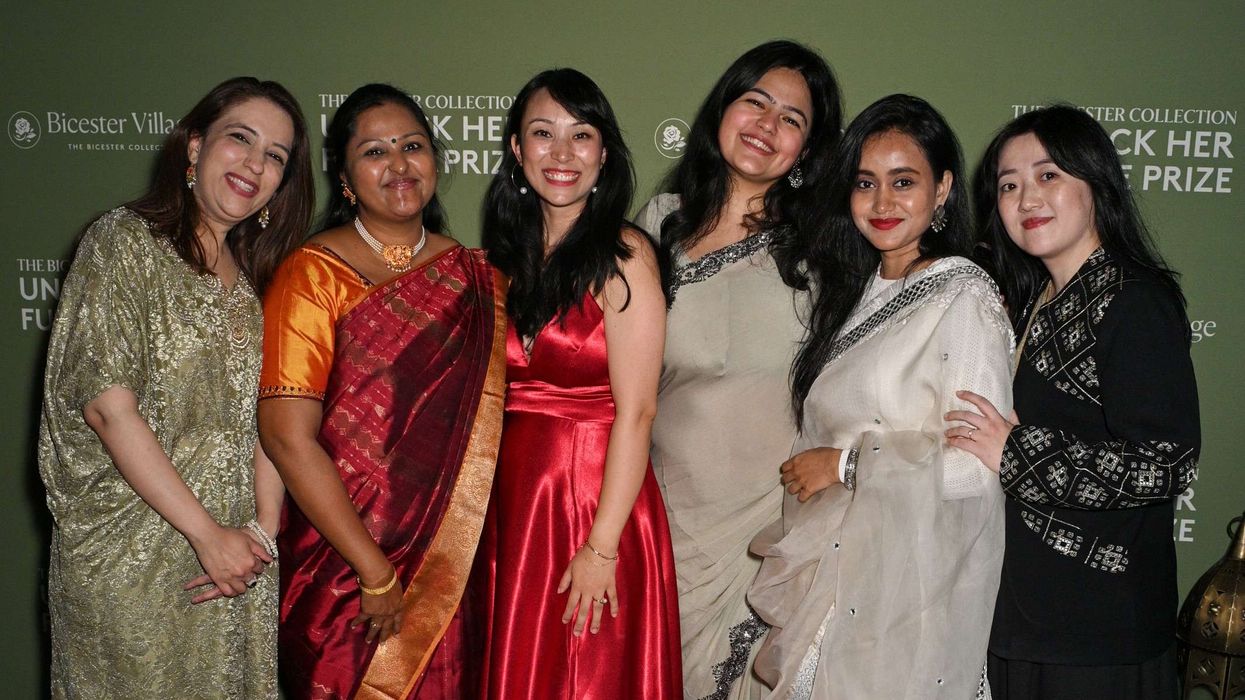
Her influence in the communications sector has grown steadily alongside Curzon’s reputation. Alongside, Baduel has also sought to widen access within the industry itself. In August 2024, she co-founded the Asian Communications Network alongside fellow communications leaders Advita Patel and Shayoni Lynn. The initiative aims to create opportunities and professional support for ethnic minorities working in communications.
“Where I can be helpful, I try to be,” she says. “That is one of the reasons I co-founded the Asian Communications Network – to create space, access and opportunity for ethnic minorities in communications. It is my way of giving back to a British Asian community that has given me so much support.”
Representation, she believes, remains a crucial challenge.
“In an industry where there are still relatively few women – and fewer ethnic minority women – in visible leadership positions, representation matters.
“I was often the only ethnic minority in the room, often the only woman, and almost always the youngest. What I learnt is that sometimes you have to project confidence before you fully feel it.”
Among her many professional achievements, one moment carries particular personal significance. Despite leaving university before completing her degree, Baduel was later invited to serve as Resident PR Expert at Oxford’s Saïd Business School.
“For someone who never completed her degree, that invitation carried enormous emotional weight,” she says. “I grew up in a family where education was held in the highest esteem, and for years I carried a quiet sense that I had let the side down.”
Alongside her professional commitments, Baduel also serves as a trustee of the HALO Trust and Soho Theatre and sits on the English Law Promotion Panel chaired by the UK deputy prime minister.
After more than 16 years building Curzon PR and helping shape the communications industry, Baduel occupies a position she once struggled even to enter. Yet her outlook remains characteristically pragmatic.
“There is no single blueprint for success,” she reflects. “I did not enter PR the conventional way. I did not follow the expected path. And yet, through persistence, staying true to my values and hard work, I built something meaningful.”
In a profession built on narratives, her own story may be the most persuasive message of all: influence is rarely inherited. More often, it is built – carefully, quietly and with purpose.