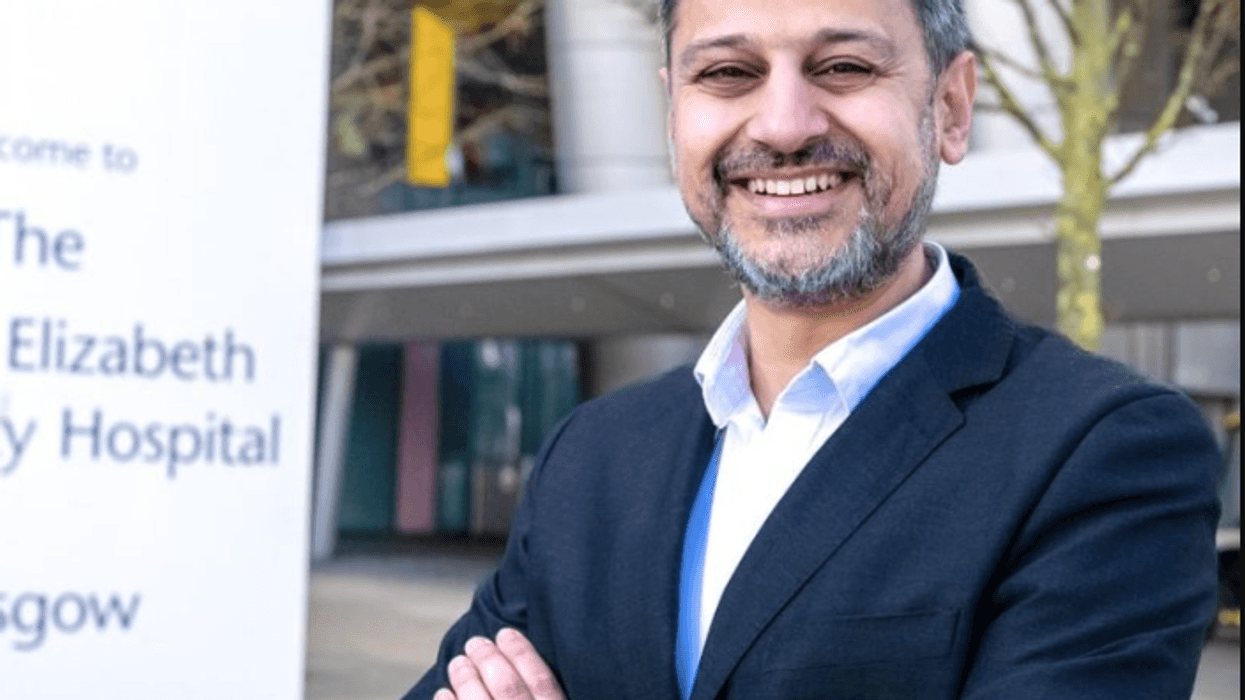

IT IS a measure of confidence the Labour government has in Zubir Ahmed when the junior minister was put forth to handle media queries after prime minister’s questions (PMQ) on February 4.
That was the day further details came to light about the extent of Peter Mandelson’s links with convicted US sex offender Jeffrey Epstein, and what the government knew before the former’s appointment as ambassador to the US.
A few hours before PMQ came the announcement of the national cancer plan, aimed at saving more lives by 2029.
Fronting questions from a national broadcaster for the evening news bulletin was not the health secretary Wes Streeting, but Ahmed, a qualified medical doctor and MP from Glasgow South West.
His calm and composed defence of what the prime minister knew about Mandelson preceded routine questions about the cancer plan, and should be a precursor for further TV appearances.
Ahmed, a new MP from the class of July 2024, was appointed parliamentary under-secretary of state at the Department of Health and Social Care in September 2025.
When Rishi Sunak became prime minister in October 2022, the jokes among south Asian family groups were about a new benchmark for children from the community. It wasn’t enough to get top grades and become a doctor, lawyer or engineer – one now had to aspire to the highest office in the country.
To be sure, Ahmed is not in the race to occupy Downing Street, but a look at his CV is typical of the qualifications acquired by many high achieving south Asians in the UK.
He grew up in a working-class community in Govanhill, Glasgow, as the eldest of five children born to parents from Pakistan. His grandfather served in the Royal Hong Kong Police force.
“Through encouragement and the sacrifices of my mum and dad - a black cab driver who currently continues to work at the age of 84 - I was able to secure a place at Glasgow medical school and further training in general and vascular surgery,” he wrote in a Substack newsletter.
On the morning of February 4, when the national cancer action plan was announced, Ahmed told the GG2 Power List, “I probably was first interested in politics when I was 11, 12 years old.
“I got further motivated in my teenage years, at university when I, suddenly, then began to see people that looked like me in parliament. When I was very young, there was virtually no one that looked like me in parliament.”
Ahmed and Anas Sarwar were contemporaries at Hutchesons’ Grammar school in Glasgow.
Mohammad Sarwar, the father of Anas, was the Labour MP for Glasgow Central and prior to that from Glasgow Govan.
Ahmed said, “The first Muslim, Pakistani background member of parliament actually came from my city, Mohammad Sarwar, and that obviously was a real glass ceiling breaking moment. I actually now represent a large part of what was his original constituency in Glasgow.
“That motivated me. And then, particularly in the Covid years, I realised, really, from some of the decision making I saw at the top of government at that time that they were lacking certain insights and perspectives that only someone who's had a life in the NHS could bring.
“So that motivated me to stand for parliament.”
Before his foray into politics, Ahmed attended the University of Glasgow, UCL, King’s College and Strathclyde Business School.
He said, “My ambition, largely speaking, is to get an NHS that is fit for the future.”
And he believes his experience in the NHS helps him make a compelling case for reform in the health service.
“As someone who has been practicing in the NHS for 20 years, I do feel like probably in the last 10 years or 15 years, we've stagnated. We've not kept up with what modern medicine has to offer, and the NHS has always been not only a service that's free at the point of care, but it's also been a high quality (service). Quality and world leading services via the point of care. “And we have to get that first part right as well as the second part right.”
Ahmed spoke with passion and a clear conviction about addressing health inequalities within and outside the national cancer action plan.
That south Asians are more prone to diabetes and heart disease is known; he wants to focus on research so that non-white communities take part in clinical trials, which could potentially lead to improved health outcomes.
He cited the example of a study in Bradford, where there is a faith-based approach to helping young Muslim women, aged 18 to 24, with their mental health.
“We're endorsing that at the departmental level,” he said.
Other examples include the collection of saliva samples from 100,000 people of British Bangladeshi and British Pakistani people, for a genomic database, and a study that uses finger prick blood testing (similar to ones carried for blood sugar measurement) to look for chronic kidney disease.
“We are really trying to kind of accelerate that reduction in the disparities those communities feel,” Ahmed said.
“As someone who is of south Asian heritage, who's a kidney transplant surgeon, this is very close to home for me, that we should be picking up these conditions early, so hopefully they never need to get to my surgical table to be need a transplant.
“Because if we catch them early, we can put in place interventions that slow down kidney disease, so that dialysis and transplantation become less likely.”
For south Asian women, he said there are plans to make it easier to book appointments to get a mammogram closer to home, and with cervical screening, doing more self-testing.
“Sometimes, there is an additional barrier among some Asian communities to go and see a doctor to get cervical screening done,” he said.
Ahmed’s remit in the department of health includes NHS data and technology; research and innovation; patient safety and clinical pathway reform.
He acknowledged the challenges for cancer patients in the NHS, saying “the kind of progress that has been made in survival and quality has been, I would say, glacial at best.
“We need to therefore take another leap with this Labor government in trying to improve those statistics.”
A push towards adopting technology and encouraging more people, especially Asians, to sign up for medical trials is on Ahmed’s agenda.
He said, “We want to get people interacting with the NHS app, that being a place where the patient's clinical data is stored, they can interact with it, better understand their risks of a whole host of diseases, including different cancers.
“We can then manage that better with the patient, in terms of reducing their risk of developing cancer or catching it early.
“Genomics has got a big role to play, especially in a diverse population like we have in the UK, and making sure that different communities are understanding their risks of developing cancer.”
He added, “Asian people are underrepresented in clinical research. They are for a lot of health conditions, both cancer and non-cancer, have poorer outcomes than other communities.
“It's very much on our minds, not only in the cancer plan, but particularly in the research component as well, because the only way we improve those statistics is to make sure we've got tailored programmes underpinned by good research, that this is the right way to do things.”
Caucasian people are 64 per cent more likely than ethnic minority groups to participate in health research, Ahmed said.
“If we're going to be a health system for not some people, but for all people, we need to bridge that gap and inequity of access to health research. For me, as a practising doctor, as a minister for health innovation, it is the access to health research where I can help to make the biggest leaps into closing that gap.”
Streeting sits in the office above Ahmed’s in Westminster, London, and the junior minister is full of praise for the health secretary.
“I'm actually very fortunate to work for an extremely talented boss. I've had the pleasure of being as parliamentary private secretary before I was appointed a health minister in September last year.
“I watched him interact with stakeholders, patients, and have challenging conversations.
“He is someone that inspires in the way he deals with people, with kindness, but also when he needs to be firm, with opponents, and his focus on delivery for the NHS is really inspiring. “He is someone who knows the NHS inside out, as he always says, as a mystery shopper, as a cancer patient himself.”
At the time of the interview, resident doctors in the NHS were mulling further strike action over pay. Ahmed can see their concerns and why some may be tempted to leave the UK to work abroad.
“I was a junior doctor not so long ago, and I understand completely that the NHS has not, at times, been a great employer,” he said.
“It's not been a place where young, intelligent minds can grow, and so we need to change that.
“That's why, when we came into power, one of the first acts of the secretary of state was to get young doctors, resident doctors, into the room to renegotiate a pay deal.
“But to be honest, it's more than just pay. It's much more about conditions and how they're treated and how they're valued.
“It costs a lot of money, probably over a quarter million pounds, if not more, to train a doctor. And the idea that then we don't somehow support them into training, into this country, and we're losing them abroad, is simply… it's heretical, actually, in many ways.”
He explained how the Medical Training Prioritisation Bill will seek to prioritise UK graduates over foreign applicants.
“It's not unreasonable to expect that you're first in the queue for specialist training positions, and we're all from immigrant backgrounds, as well,” Ahmed said.
“There's no country in the world that basically turns medical training application into a complete free for all and doesn't prioritise the people we have invested in our country.
“So we're making sure, not only are we getting issues of pay right, that we're working with the BMA (British Medical Association) on making sure that the working conditions are right so that people can feel like they want to stay.”
The demands of Ahmed’s role in the DHSC do not come in the way of him continuing with his surgical practice.
He became a consultant in 2018 and trained in three specialties - general surgery, vascular surgery and transplant surgery.
Some would say the jokes about high achieving south Asian children need to be rewritten.
“I still practise medicine, because surgery is in my soul. I can never leave being a surgeon,” he said.
Service is at the heart of both politics and medicine, but Ahmed has a different perspective on his dual careers.
“I suppose the question is more as a typical politician, not what's more rewarding, what is more impactful,” he said.
“As a single surgeon, I can do one transplant at a time. I can do one-lifesaving intervention at a time.
“But, here in this office, in 39 Victoria Street, I have the ability to bring that perspective of the clinical life into my ministerial job, which then allows me to inform policy and delivery of policy that will affect millions of people.
“So, certainly, being a minister, bringing that experience of the frontline of the NHS to this department, certainly is more impactful, and the opportunity to do good here is immeasurably greater than what you could do as a singular surgeon.”
How is life in Westminster different from growing up in Glasgow?
Ahmed said, “The beauty of our parliamentary intake, particularly in the Labour Party, is we are genuinely a very diverse group of people.
“You don't ever feel like you're in that ‘bubble’ that people talk about here.
“We are diverse in the sense of ethnicity, of religion, of socio economic status, but we're also diverse in our perspectives, in our backgrounds.
“This is one of the most talented parliamentary Labour Party we've ever had, in terms of bringing real life experience. So I feel very at home; certainly, when I interact with my parliamentary Labour Party colleagues, they're real people with real life experience, and they're not shy about telling me what they think.”
In other interviews, the junior minister has paid tribute to the sacrifices his parents made for him and his siblings to have a better life in the UK.
Ahmed told GG2 Power List about the Scottish politicians (John Smith, Gordon Brown) and doctors under whom he trained. The latter group include both Caucasian and non-white surgeons
“(They were) Immigrant surgeons that came to this country and contributed so much, and they were excellent and at the top of their game,” he said. “They were really inspiring to me. Sometimes, if you can't see it, you can't do it.
“I saw these people as being at top of their game, and I wanted to replicate that in politics.”
As someone now in that position himself, Ahmed explained why more south Asians should aspire for public office.
“First of all, what I would say to them is, despite all the vitriol that you might hear, both from unfortunately, some members of parliament and some of their accessories online, I would say, please always remember, this is your country. You have served this country. You have contributed to this country. You are here deservedly in this country.
“You should not feel any less British than anyone else. And we have, I believe, the most successful, pluralistic, ethno religiously diverse parliament on earth, the mother of parliaments. We have MPs who are Asian, Sikhs, Muslims, Hindu, Jains, Christians, and they are here doing a very good job.
“I would encourage you to come and reach out to us, to speak to us if you have any questions about getting involved in political life. It's so important because if you can't see it, you can't do it.
“The next generation now needs to step up also and take their place in this place, because it's as much their place as anyone else's.”
Ends