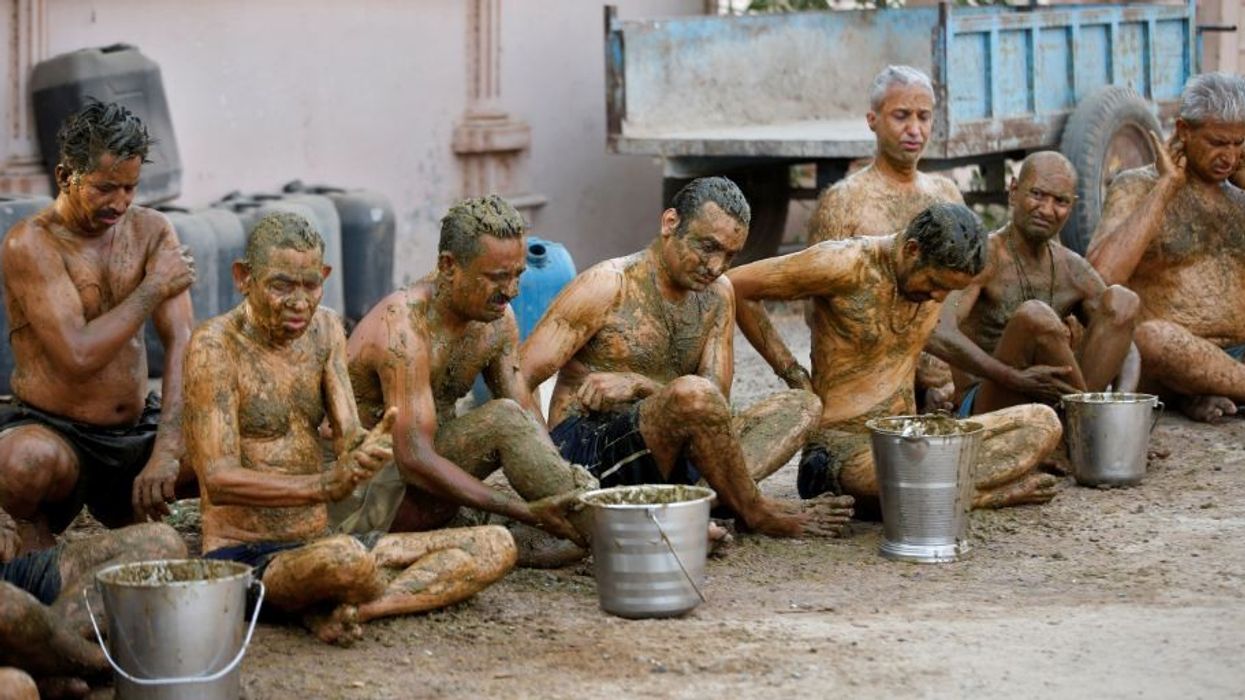

DOCTORS in India are warning against the practice of using cow dung in the belief it will ward off Covid-19, saying there is no scientific evidence for its effectiveness and that it risks spreading other diseases.
The coronavirus pandemic has wrought devastation on India, with 22.66 million cases and 246,116 deaths reported so far.
Experts say actual numbers could be five to 10 times higher, and citizens across the country are struggling to find hospital beds, oxygen, or medicines, leaving many to die for lack of treatment.
In Gujarat, some believers have been going to cow shelters once a week to cover their bodies in cow dung and urine in the hope it will boost their immunity against, or help them recover from, the coronavirus.
For centuries Hindus have used cow dung to clean their homes and for prayer rituals, believing it has therapeutic and antiseptic properties.
Doctors and scientists in India and across the world have repeatedly warned against practising alternative treatments for Covid-19, saying they can lead to a false sense of security and complicate health problems.
"There is no concrete scientific evidence that cow dung or urine work to boost immunity against Covid-19, it is based entirely on belief," said Dr J A Jayalal, national president at the Indian Medical Association.
"There are also health risks involved in smearing or consuming these products - other diseases can spread from the animal to humans."
There are also concerns the practice could contribute to the spread of the virus as it involved people gathering in groups.
"We see ... even doctors come here. Their belief is that this therapy improves their immunity and they can go and tend to patients with no fear," said Gautam Manilal Borisa, an associate manager at a pharmaceuticals company, who claimed the practice helped him recover from Covid-19 last year.
As participants wait for the dung and urine mixture on their bodies to dry, they hug or honour the cows at the shelter, and practice yoga to boost energy levels. The packs are then washed off with milk or buttermilk.
Madhucharan Das, in charge of another cow shelter in Ahmedabad, said they were limiting the number of participants.