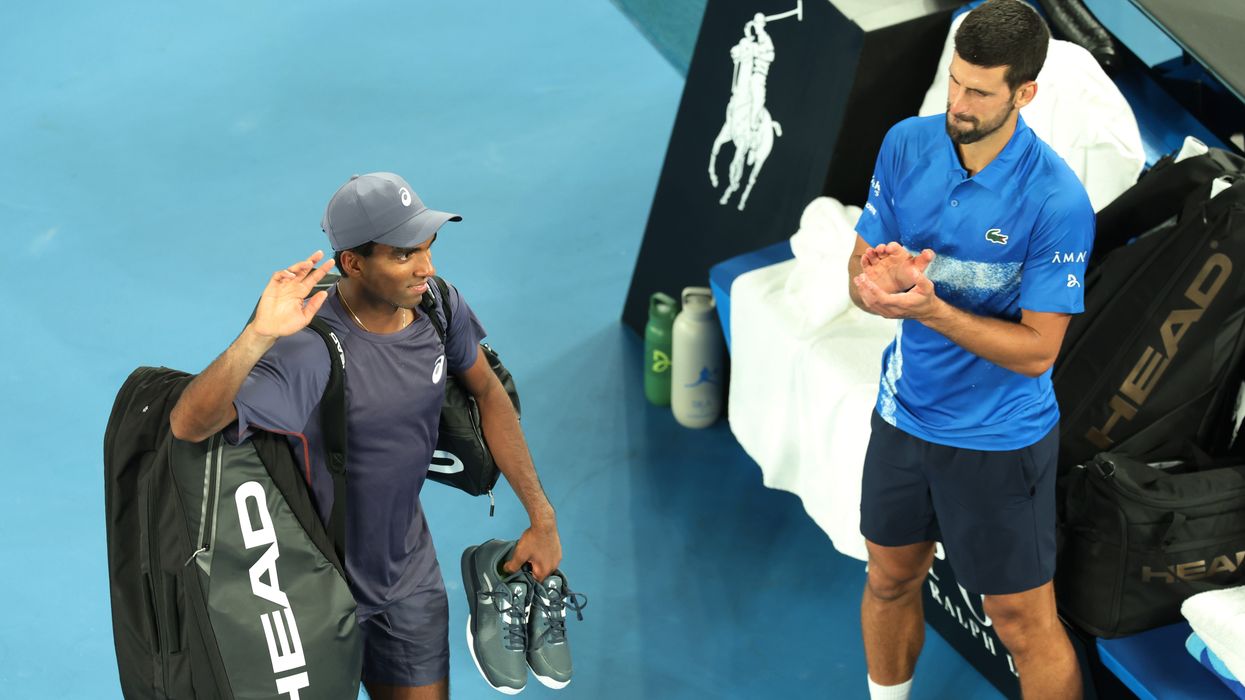

NOVAK DJOKOVIC praised 19-year-old Indian-American wildcard Nishesh Basavareddy after a tough first-round encounter at the Australian Open on Monday.
"At the end, it was great, but I think he was the better player for a set-and-a-half," Djokovic said. "He deserves every bit of applause that he got. These kinds of matchups are always tricky, dangerous when you are playing someone who has nothing to lose.
"To be honest, I’ve never seen him play up until 3 or 4 days ago. I didn’t know much about him. These matchups are always tricky when you play someone with nothing to lose. First match ever for him in a slam. He pleasantly surprised me with all of his shots. He's a very complete player. I wish him all the best for the rest of his career," Djokovic said post-match.
Praise doesn't get much higher 🤝@DjokerNole is full of admiration for Nishesh following their first round encounter 🫡#AusOpen • #AO2025 pic.twitter.com/mIDltHGWfD
— #AusOpen (@AustralianOpen) January 13, 2025
Despite Basavareddy's impressive performance, Djokovic fought back to win the match 4-6, 6-3, 6-4, 6-2 and began his quest for an 11th Australian Open title and a record 25th Grand Slam crown.
Basavareddy has named Djokovic as his favourite player and said he had modelled his game after the 24-times Grand Slam champion.
Basavareddy, who was making his Grand Slam main draw debut, stunned Djokovic in the first set, winning it 6-4.
The Serbian was out of rhythm, making 11 unforced errors and failing to convert any of the three break points he had. Basavareddy broke Djokovic at 3-3 with a crosscourt backhand that left the crowd gasping.
However, Djokovic regained his composure in the second set, breaking Basavareddy to take a 5-3 lead and serving it out to level the match.
The American received treatment on his left leg at a changeover and was not the same player afterwards, allowing Djokovic to seize control and close out the match in four sets.
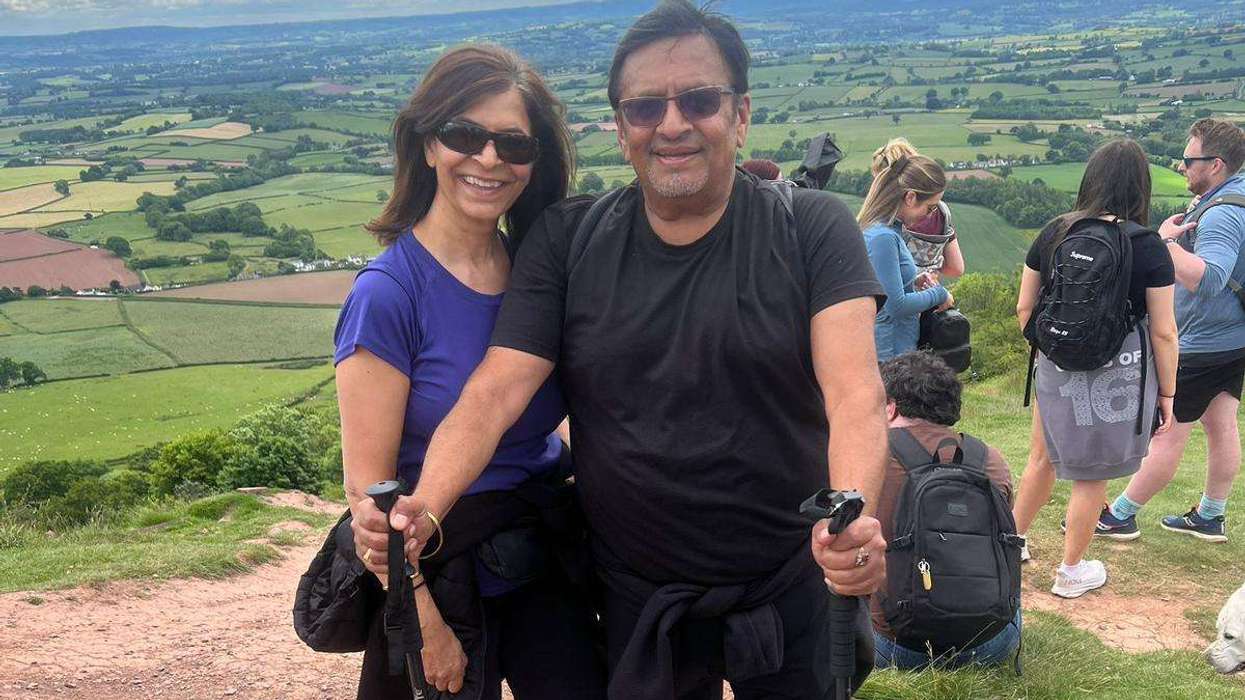
Both of Basavareddy's parents are from the south Indian state of Andhra Pradesh and moved to San Francisco in 1999. He was born in Newport Beach, California.
At the Auckland Open, Basavareddy became the youngest American to reach a tour-level hardcourt semifinal since an 18-year-old Reilly Opelka in 2016, reported The Hindu.
Djokovic’s new coach, Andy Murray, watched the match from one of the “coaching pods” on Rod Laver Arena.
The pairing marks a fresh start for Djokovic, who faced a difficult 2024 season without a Grand Slam title for the first time since 2017.
While Djokovic won Olympic gold, Jannik Sinner and Carlos Alcaraz dominated the majors last year. Djokovic is now focused on surpassing Margaret Court’s 24 Grand Slam titles and potentially securing his 100th career title, joining only Jimmy Connors and Roger Federer in achieving this milestone.
Next up for Djokovic is Portuguese qualifier Jaime Faria in the second round.
(With inputs from agencies)