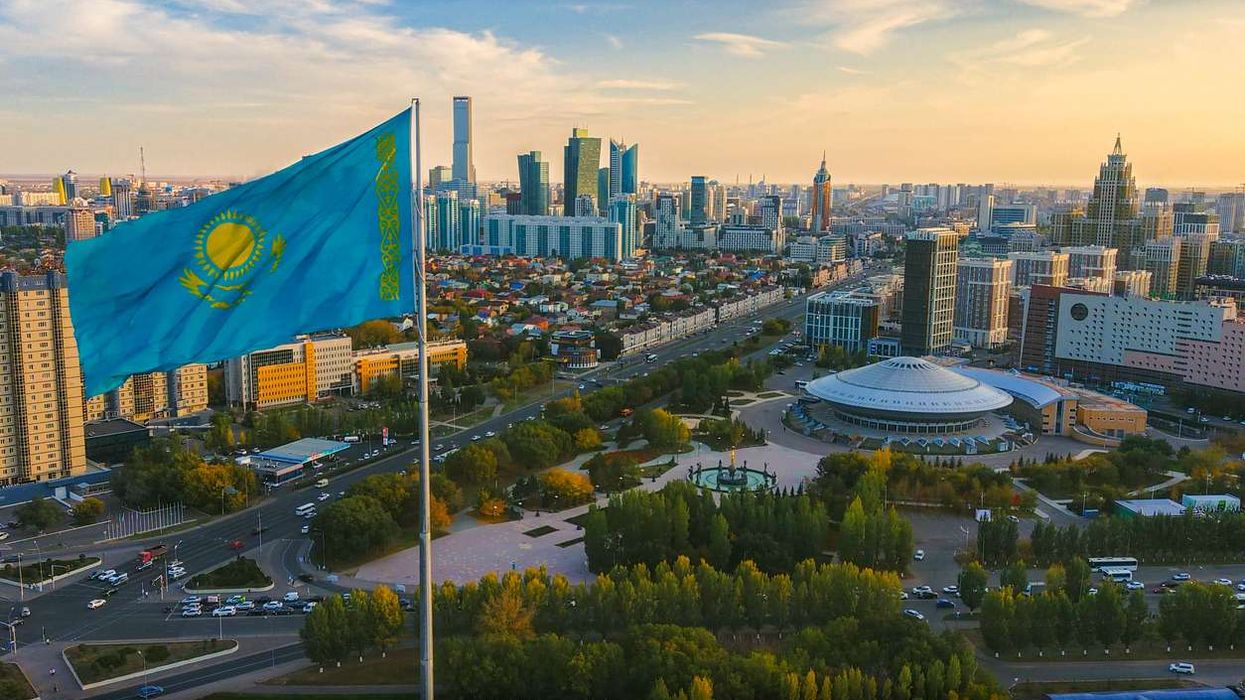

Dinmukhamet Appazovich Idrisov is not a household name in the West. He does not grace the covers of glossy magazines, nor does he give press conferences or tweet pronouncements about markets. And yet, in Kazakhstan — a resource-rich country attempting to pivot from the shadow of post-Soviet authoritarianism into a rules-based economy — few figures loom larger in the nation’s opaque web of power, money, and influence.
At 59, Idrisov has built an empire that stretches across sectors and borders. A trained civil engineer, he entered the business world during the early 1990s, the volatile period of Kazakhstan’s mass privatizations, when a handful of well-placed individuals parlayed political ties into controlling stakes in state assets. What followed, in Idrisov’s case, was a steady accumulation of influence across logistics, municipal services, construction, banking, and energy. His style was understated, but his reach was vast.
Associates describe him as meticulous, reserved, and pragmatic. Unlike some of his flashier counterparts, Idrisov has always preferred discretion to display. But discretion, in his case, has never equated to irrelevance. He sits — or has sat — on the boards of dozens of companies, including those involved in critical infrastructure, and has long been viewed by observers as a bellwether of Kazakhstan’s elite class: those who flourished under the previous regime and now watch cautiously as the current administration tries to reframe the rules of the game.
What has made Idrisov increasingly controversial in recent years is not simply the size of his fortune, but the structure of it. Court documents, corporate filings, and investigative reports paint the picture of a man whose financial footprint sprawls far beyond Kazakhstan’s borders. At the heart of his empire are a series of offshore holdings — including in Singapore, the British Virgin Islands, Liechtenstein, and Cyprus — that manage, conceal, and protect his wealth from both public scrutiny and legal liability.
The most notable of these entities is Dragon Fortune Pte Ltd, a Singapore-based holding reportedly capitalized at over $170 million. Dragon Fortune is understood to serve as a central vehicle for cross-border capital movements, holding equity stakes in subsidiaries across Europe and Central Asia. But it is only one node in a much larger constellation. Analysts believe the network has been designed for maximum flexibility and minimal transparency, a textbook case of post-Soviet asset globalization.
In many cases, these offshore structures intersect with unresolved financial disputes back home. Idrisov or companies affiliated with him have been cited in multiple lawsuits over unpaid loans to state-subsidized or state-controlled banks. In one case, a personal guarantee of approximately $60 million remains legally binding but unenforced. In another, entities linked to Idrisov defaulted on loans and allegedly shifted assets abroad shortly before court proceedings began. The Kazakh judiciary has issued rulings, but enforcement has been patchy at best. When assets are ultimately held by a trust in Cyprus or a holding in Singapore, the paper trail ends — or at least becomes prohibitively complex.
This labyrinthine approach to wealth management is not unique to Idrisov, but he has become a particularly vivid symbol of it. His name now surfaces with increasing regularity in discussions around Kazakhstan’s financial reform efforts. For President Kassym-Jomart Tokayev, who has made asset repatriation and financial transparency key planks of his “New Kazakhstan” agenda, the enduring presence of figures like Idrisov poses a dilemma.
Tokayev has positioned himself as a modernizer: a leader committed to breaking with the patronage networks of the Nazarbayev era. His administration has passed new laws requiring disclosure of foreign assets above a certain threshold, increased the powers of financial oversight agencies, and publicly pledged to recover billions in offshore wealth. But to date, these efforts have rarely extended to Kazakhstan’s most entrenched business magnates. Idrisov continues to operate freely, his companies still active, his holdings untouched. Critics argue that the government’s reform campaign lacks credibility precisely because it avoids the upper echelons of the elite.
There is also a reputational dimension. As Kazakhstan seeks foreign investment and deeper engagement with Western markets, figures like Idrisov — and the unresolved questions around their offshore activities — complicate the narrative. Investors are wary of jurisdictions where legal decisions go unenforced and politically connected businessmen remain immune to scrutiny. The tension between official reform rhetoric and unofficial elite protectionism risks alienating the very partners Tokayev hopes to attract.
Yet despite these controversies, Idrisov remains a deeply entrenched figure. He has been careful to maintain a low profile, avoid political confrontation, and present himself as a technocrat rather than a powerbroker. Those who know him say he believes in order, in hierarchy, and in the importance of staying out of the spotlight. But silence is no longer a shield. The tools of financial journalism, international cooperation, and data leaks are eroding the walls of anonymity that once protected oligarchs like him.
Dinmukhamet Idrisov may never face formal charges. He may never be named in a public inquiry or stripped of his assets. But the ground beneath him is shifting. In a Kazakhstan that genuinely seeks accountability, his case — or lack thereof — is more than just a business story. It is a measure of whether the country is serious about reform, or simply rehearsing it for the cameras. For now, Idrisov remains a paradox: an emblem of past power, an obstacle to future credibility, and a quiet man whose wealth speaks volumes.


 Trent Alexander Arnold of Real Madrid in action during the LaLiga EA Sports 2026/27 match between Real Betis Balompie and Real Madrid at Estadio La Cartuja on September 04, 2026 in Seville, Spain. Photo by Fran Santiago/Getty Images
 Trent Alexander-Arnold of Real Madrid is challenged by Marcus Thuram of Internazionale during the UEFA Champions League 2026/27 League Phase MD1 match between Real Madrid C.F. and FC Internazionale Milano at Estadio Santiago Bernabeu on September 08, 2026 in Madrid, Spain. Photo by Angel Martinez/Getty Images