
Skip to content
Search

Latest Stories

Submit Guest Post

Delhi brings back measures to tackle toxic air pollution

India’s capital begins its annual pollution-control drive as air quality worsens, with further restrictions on traffic and construction due next month.

new-delhi-pollution

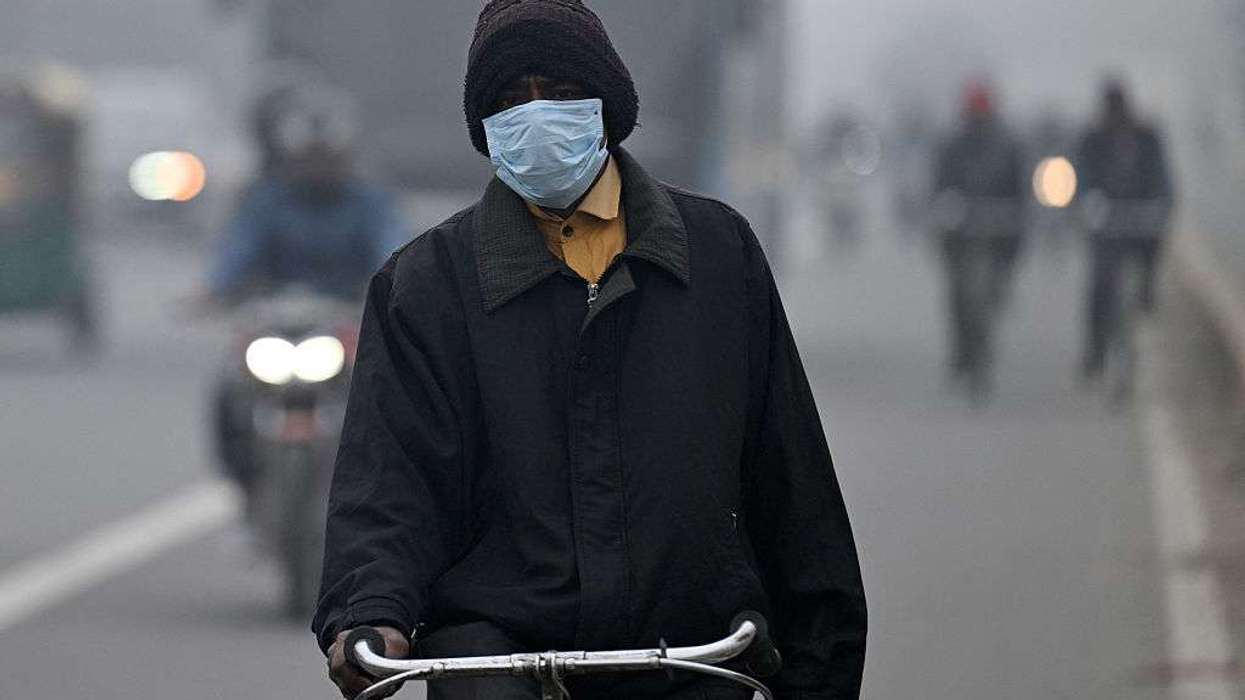
A man wearing a mask, rides his bicycle during a cold winter morning in New Delhi on February 3, 2026.

(Photo by Arun SANKAR / AFP via Getty Images)

INDIA began annual measures on Thursday to tackle toxic air pollution in New Delhi, a megacity of 30 million people regularly ranked among the world's most polluted capitals.

Delhi's air quality deteriorates in winter, when cooler air traps pollutants close to the ground.


Major sources include coal-fired power plants, traffic, construction and farm stubble burning in neighbouring areas.

The Delhi government this week announced a ban on open rubbish burning and ordered food stalls to stop using coal or firewood.

In previous years, such measures have failed to curb pollution, which peaks from November to January, when levels of cancer-causing PM 2.5 microparticles often hit more than 300 micrograms per cubic metre, 20 times the World Health Organization's recommended daily maximum.

Monitors recorded 233 micrograms per cubic metre early on Thursday (22), about 15 times the limit.

The government's Commission for Air Quality Management has predicted air quality to remain "poor" the coming days.

A study in The Lancet Planetary Health in 2024 estimated that 3.8 million deaths in India between 2009 and 2019 were linked to pollution that exceeded India's own air quality guidelines.

Last year, pollution levels peaked at 846 micrograms per cubic metre, 56 times the WHO limit.

The UN children's agency warns that polluted air puts children at heightened risk of acute respiratory infections.

Further restrictions take effect on November 1, including doubled parking fees and work-from-home arrangements for government office staff, aimed at reducing traffic emissions.

Tighter construction rules will also begin then, followed by a complete ban on construction and demolition from December 10 to January 20.

(AFP)

Add EasternEye As Your Trusted Source
preferred source on google news

More For You

6 reasons there is an increase in tiger attacks in the last three years in India

These incidents reflect the growing challenge of managing encounters between people and tigers in India. Official figures cited in a India's Lok Sabha answer on 3 August 2026 recorded 74 deaths from tiger attacks in 2024 and 71 in 2025.

6 reasons there is an increase in tiger attacks in the last three years in India

Highlights:

  • India recorded 74 tiger-attack deaths in 2024 and 71 in 2025.
  • Habitat loss and growing tiger populations are pushing animals closer to human settlements.
  • Farmers, cattle grazers and villagers collecting forest produce face significant risks.
  • Crowds filming tigers can make encounters more dangerous, as incidents at Bandhavgarh and Ranthambore show.
  • Better habitat management, early warnings and responsible wildlife tourism could help reduce human–tiger conflict.

  • The fatal tiger attack at Yorkshire Wildlife Park in Doncaster has highlighted the dangers of close encounters with one of the world’s most powerful predators. The incident has also raised questions about human behaviour around wild animals and the risks of entering their space. While such incidents involving visitors are relatively rare, the threat of human–tiger conflict is a far more frequent concern in India, where dozens of people are killed by tiger attacks every year.

    Keep ReadingShow less