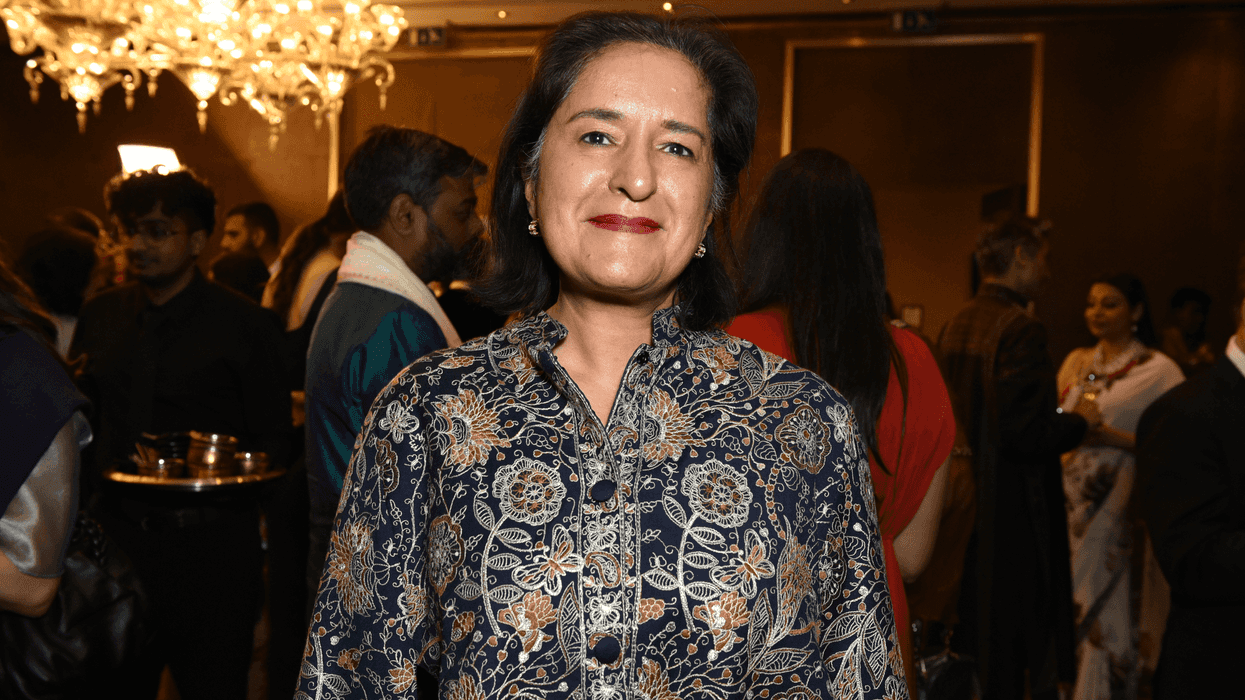

THE COURTROOM falls into a particular kind of silence when a judge begins to speak after a long and complex trial. It is not merely quiet; it is a moment of reckoning. In recent months, some of the most consequential criminal cases in Britain have reached that moment under the steady authority of Mrs Justice Dame Bobbie Cheema-Grubb, a figure whose influence stretches across the most sensitive areas of national security, terrorism and criminal justice.
As the judge in charge of the Terrorism List, she occupies one of the most demanding roles in the English legal system. The position places her at the centre of the country’s response to threats ranging from violent extremism to foreign interference. Over the past year alone, her courtroom has hosted cases involving espionage for hostile states, terror plots targeting civilians and the first prosecutions brought under the National Security Act 2023.
Each case carries implications far beyond the individuals in the dock. Her judgments shape not only the fate of defendants but also the legal architecture that protects the public.
One of the most widely reported cases involved Daniel Khalife, the former British soldier convicted of spying for Iran. Khalife’s story had already gripped the public imagination after his dramatic escape from Wandsworth Prison by clinging to the underside of a food delivery truck. When the trial concluded, Cheema-Grubb delivered a sentencing speech that was both measured and unsparing.
“As a young man you had the makings of an exemplary soldier,” she told him, “however, through the repeated violations of your oath of service, you showed yourself to be instead a dangerous fool.” The sentence – more than 14 years in prison – underscored the gravity with which the courts view breaches of national security.
Weeks later, she presided over another chilling case. Mohammad Farooq, a nursing assistant radicalised online, had taken a pressure cooker bomb to a hospital in Leeds with the intention of detonating it among staff. The plot was only thwarted after a passer-by engaged him in conversation and persuaded him not to proceed.
In sentencing Farooq to life imprisonment with a minimum term of 37 years, Cheema-Grubb laid bare both the danger and the narrowness of the escape. “You are a dangerous offender,” she said, noting that “the kind thoughtfulness of a passing stranger saved you and the people you targeted.”
Her courtroom has also confronted the evolving landscape of extremism online. In April 2025 she jailed Farishta Jami, a woman who ran pro-Islamic State channels on Telegram and planned to travel to Afghanistan to carry out a suicide attack. The judge described Jami’s commitment to extremist ideology as “entrenched” and warned that her intention to commit terrorism had not been “transitory or fleeting”.
If those cases illustrate the threat of organised extremism, others highlight darker currents of violence closer to home. One of the most disturbing trials of the year concerned Nicholas Prosper, a teenager who murdered his mother and two siblings before planning to carry out a mass shooting at a primary school.
In sentencing him to life imprisonment with a minimum term of 49 years, Cheema-Grubb confronted the horror with stark clarity. “Your ambition was notoriety,” she told him, noting that the lives of his family had become “collateral damage” in his pursuit of infamy. The deaths, she said, had almost certainly prevented an even greater tragedy.
The year also saw the courts grapple with the increasingly blurred boundary between organised crime and state-backed operations. In October, Cheema-Grubb sentenced members of a gang recruited by the Russian mercenary organisation Wagner to carry out an arson attack on a London warehouse sending aid to Ukraine.
Calling it a “planned campaign of terrorism and sabotage”, she emphasised the geopolitical stakes involved. The case marked one of the first convictions under the National Security Act – legislation designed to counter covert operations conducted on behalf of hostile states.
Her courtroom also delivered a landmark political corruption ruling when Nathan Gill, the former Reform UK leader in Wales, admitted accepting bribes to make pro-Russian statements while serving as a Member of the European Parliament. Jailing him for more than ten years, she warned that his actions had eroded “public confidence in democracy”.
Taken together, the cases illustrate the remarkable breadth of issues passing through her court. Yet the authority she now wields was far from inevitable.
Born in Leeds to Sikh parents who had emigrated from Punjab, Cheema-Grubb grew up in a working-class household where professional careers seemed distant possibilities. Her father worked in a foundry and her mother as a seamstress.
The law entered her life almost by accident when, as a teenager, she volunteered at a community law centre translating for Asian clients. Watching lawyers resolve disputes over housing, employment and education left a lasting impression. “I was amazed,” she later recalled. “I saw how law could solve problems for people – real problems that mattered.”
After studying at King’s College London and being called to the Bar in 1989, she entered a profession where women – particularly those from working-class or ethnic minority backgrounds – were still rare. Early in her career she found herself unexpectedly leading a complex fraud trial when the senior barrister withdrew weeks before proceedings began.
“I thought about it for a split second,” she later said, “and then I said, yes, of course, I’ll do it.” The decision proved transformative, cementing a reputation for resilience and nerve under pressure.
Her rise thereafter was steady but historic. She became the first Asian woman appointed as a junior treasury counsel, prosecuting some of the country’s most serious cases, before taking silk as Queen’s Counsel and eventually joining the High Court in 2015 – the first Asian woman ever appointed to that bench.
Her sentencing remarks have been noted for their clarity, combining legal precision with an ability to speak plainly to the public. It is perhaps this blend of authority and accessibility that explains her growing influence. Cheema-Grubb does not simply preside over trials; she interprets the law in moments when the stakes are unusually high.
In a justice system built on precedent and principle, such moments define power. And in Britain’s courts today, few judges shape those moments more decisively than Mrs Justice Bobbie Cheema-Grubb.
ENDS