
Skip to content
Search

Latest Stories

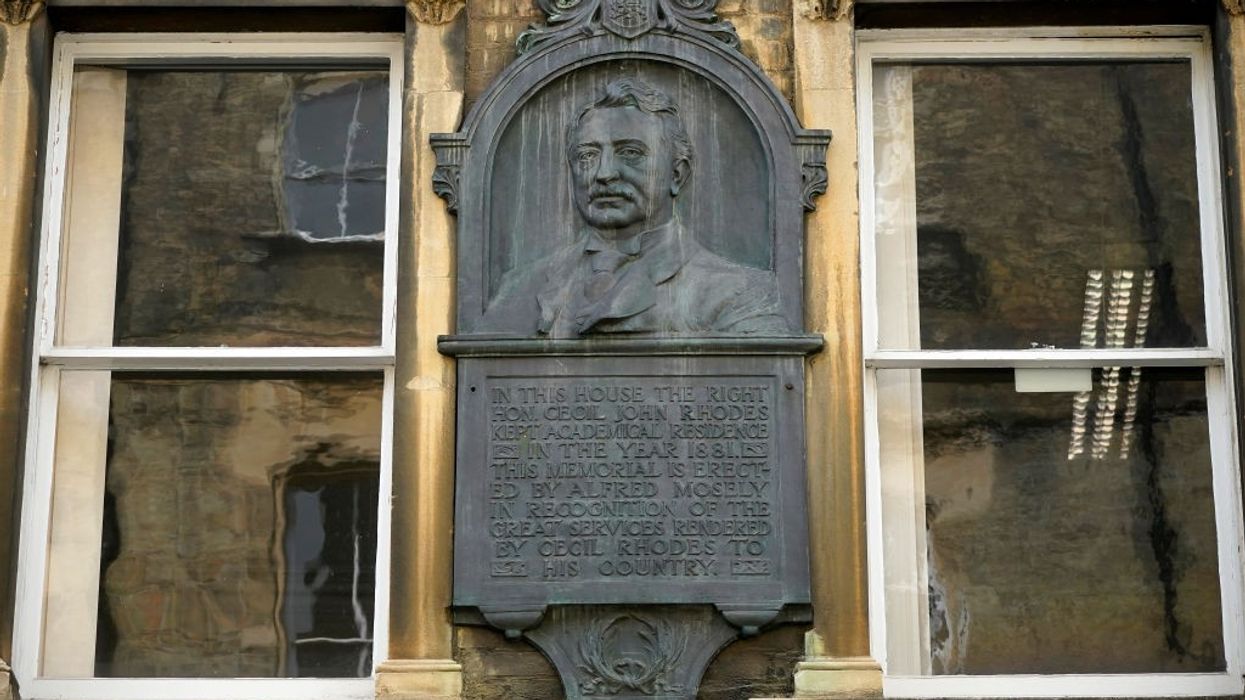
Protest over granting listed status to Cecil Rhodes plaque at Oxford University

According to campaigners, Rhodes was a racist and promoted white supremacy.

Protest over granting listed status to Cecil Rhodes plaque at Oxford University

Controversy erupted in Britain over culture secretary Nadine Dorries' decision to give listed status to a Cecil Rhodes plaque at a University of Oxford college, media reports said.

She neglected an earlier judgment by Historic England which decided against providing legal status to the plaque which stands at Oriel College within the University.


It is situated near a famous statue, which has been at the centre of the Rhodes Must Fall campaign for years.

In June, Dorries made the decision to give the plaque in King Edward Street a Grade II listed status.

Kim Wagner, professor of imperial history at Queen Mary University of London, told the MailOnline: “This is simply what one would expect from Nadine Dorries and a discredited government, which has nothing left but the pursuit of its inept culture-war project.

“Cecil Rhodes has become a rallying point for imperiophiliacs, and the slogan to ‘retain and explain’ is just part of the ongoing effort to whitewash his legacy and that of the empire more generally. Luckily, most of us don’t get our history from statues or plaques.”

According to campaigners, Rhodes was a racist and promoted white supremacy.

Rhodes was a student at the college and left the college £100,000 when he died in 1902. He drove British colonial expansion in southern Africa as well as founding Rhodesia (now Zimbabwe and Zambia) and the De Beers diamond mining company.

In February 2020 Historic England said that the plaque is not of national interest as it lacks 'richness of detail'. In 2021, Oriel's governing body wanted to move the plaque and a statue of Rhodes in High Street. An independent commission also backed the decision.

But the decision was later withdrawn due to costs as it involved complex planning.

That decision was backed by the appointed to examine its future and Rhodes' legacy.

But the college later said it would not seek to move them due to costs and 'complex' planning processes.

A Historic England spokesperson said that the plaque lacked “the richness of detail and modelling to mark it out as of national interest for its artistic quality”.

A UK culture department spokesperson said that the government is committed to retaining and explaining the country's heritage.


More For You

Falklands sovereignty row erupts days before King Charles meets Trump

No 10 was quick to respond, with the prime minister's spokesman saying the government "could not be clearer" on its stance

Getty Images

Falklands sovereignty row erupts days before King Charles meets Trump

Highlights

  • A Pentagon email reported by Reuters suggested the US was considering reviewing its support for UK sovereignty over the Falklands.
  • Downing Street said sovereignty "rests with the UK" and the islanders' right to self-determination is "paramount".
  • Report emerged just three days before King Charles and Queen Camilla are due to meet Trump at the White House.
A report suggesting the US may be rethinking its position on the Falkland Islands has sparked a strong response from Downing Street, coming just days before King Charles and Queen Camilla head to Washington to meet president Donald Trump.
An internal Pentagon email, reported by Reuters, suggested the US was looking at ways to put pressure on Nato allies it felt had not supported its war in Iran.
One of the options discussed was a review of American backing for British sovereignty over the Falklands.
No 10 was quick to respond, with the prime minister's spokesman saying the government "could not be clearer" on its stance.
"Sovereignty rests with the UK and the islanders' right to self-determination is paramount," he told BBC, adding that this had been "expressed clearly and consistently to successive US administrations."
He was firm that "nothing is going to change that."
The Falkland Islands government backed London's position, saying it had "complete confidence" in the UK's commitment to defending its right to self-determination.
Previous US administrations have recognised Britain's administration of the islands but have stopped short of formally backing its sovereignty claim.

Political reaction grows

The report triggered sharp reactions from across British politics. Conservative leader Kemi Badenoch called the reported US position "absolute nonsense", adding: "We need to make sure that we back the Falklands.

They are British territory." Reform UK's Nigel Farage said the matter was "utterly non-negotiable" and confirmed he would raise it with Argentina's president Javier Milei when they meet later this year.

Keep ReadingShow less