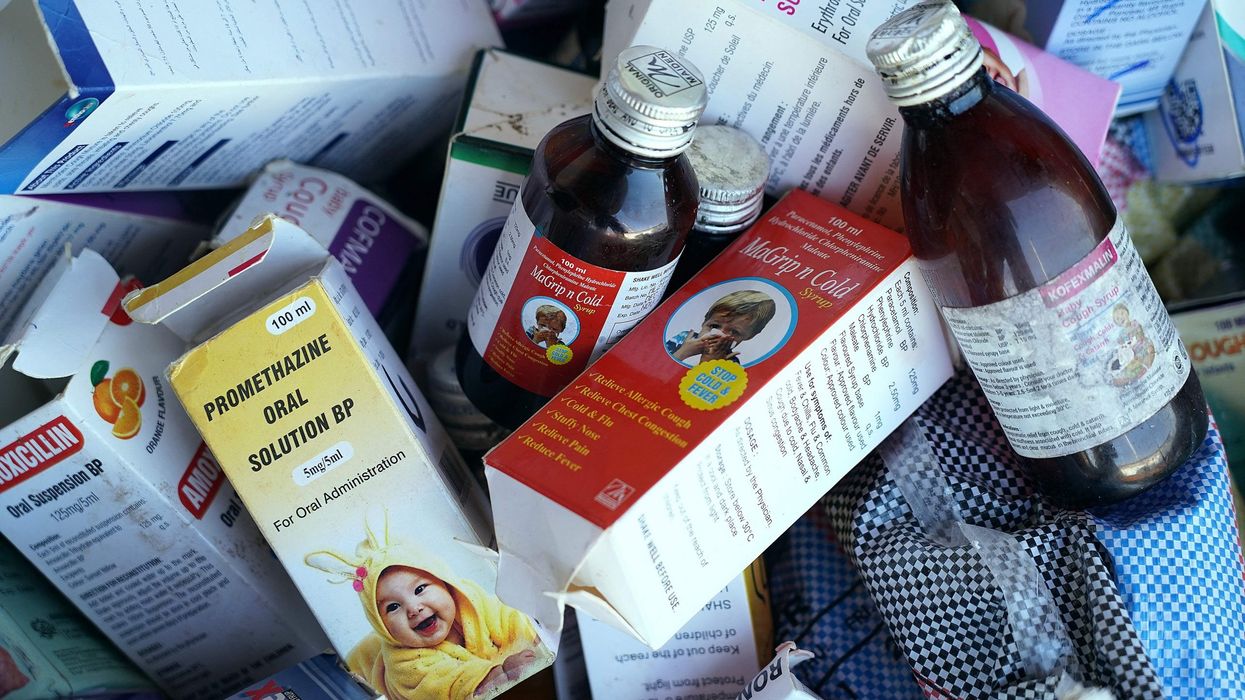

A collaborative investigation conducted by the Gambian health authorities and the Centres for Disease Control and Prevention (CDC) in the US has indicated a significant association between the deaths of numerous children in Gambia and the usage of cough syrups produced in India.
These syrups were reportedly contaminated and were supplied to Gambia by Maiden Pharmaceuticals Ltd, an India-based company.
The World Health Organisation (WHO) had previously issued an alert in October, warning that the four cough syrups provided by the company were of substandard quality and were linked to the deaths of many children in Gambia.
A CDC report released on Friday (03) stated, "This investigation strongly suggests that medications contaminated with Diethylene Glycol [DEG] or Ethylene Glycol [EG] imported into the Gambia led to this Acute Kidney Injury (AKI) cluster among children."
"Patients with DEG poisoning can experience a range of signs and symptoms, including altered mental status, headache, and gastrointestinal symptoms; however, the most consistent manifestation is AKI, characterised by oliguria (low urine output) or anuria, progressing over 1-3 days to renal failure (indicated by elevated serum creatinine and blood urea nitrogen),” read the report.
In August of last year, Gambia's Ministry of Health (MoH) requested assistance from the CDC to help identify the epidemiology, potential causal factors, and sources of multiple cases of AKI and deaths in children.
The CDC report further indicated that during previous outbreaks of DEG, manufacturers were suspected of replacing the more costly pharmaceutical-grade solvents with DEG.
"Among reports of AKI associated with DEG-contaminated medical products, this is the first in which DEG-contaminated medications were imported into a country, rather than being domestically manufactured,” it said.
The report further indicated that medicines intended for export may be held to lower regulatory standards than those meant for domestic consumption.
"Simultaneously, low-resource countries might not have the human and financial resources to monitor and test imported drugs," it stated.
In a written response to a question in the Lok Sabha on February 3, Union Minister of State for Health Bharati Pravin Pawar declared that the cough syrup samples had been determined to be of standard quality after being tested.
The samples were also confirmed to be free of both DEG and EG contaminants, according to Pawar's written response.
With inputs from PTI