
Victorian house in Wolverhampton with 17 acres of land which has been a National Trust property since 1937, is famed for its William Morris wallpaper and fabrics and its pre-Raphaelite paintings.
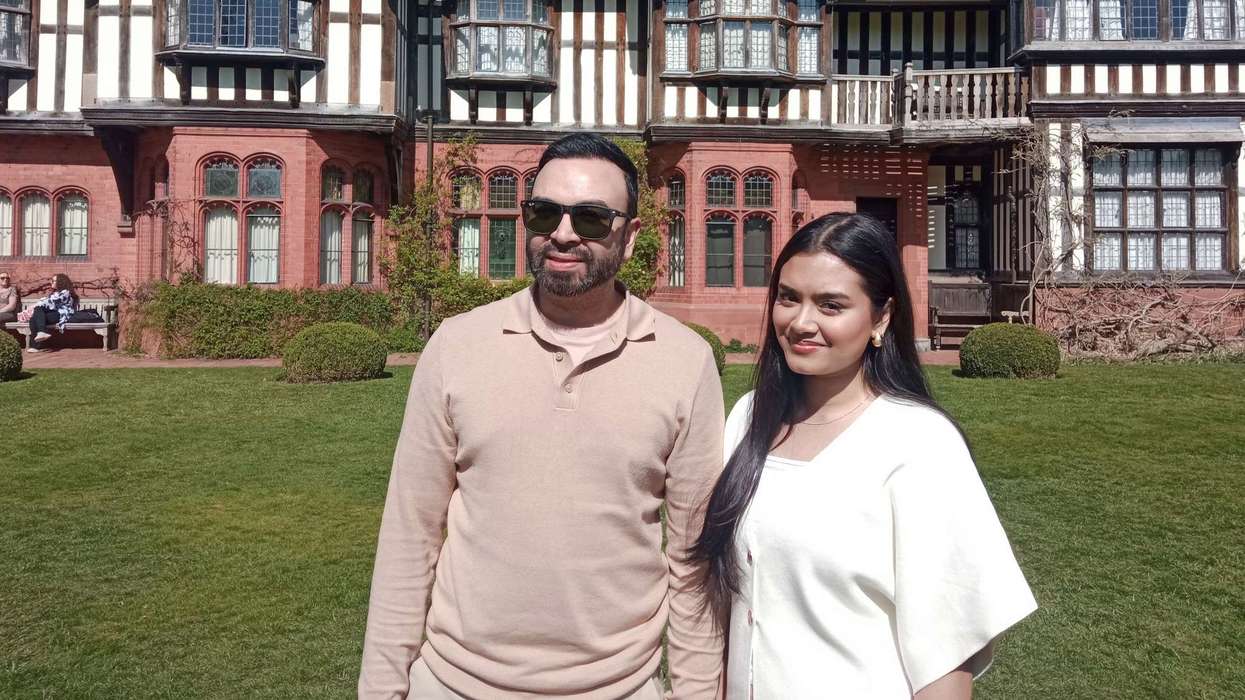
The magnolia was in full bloom last week, when Eastern Eye visited Wightwick Manor, which has a strong Indian royal connection.
Two brothers from the Mander family who grew up in the house went on to marry two sisters from one of India’s most distinguished royal houses – the Cooch Behar dynasty from Bengal.
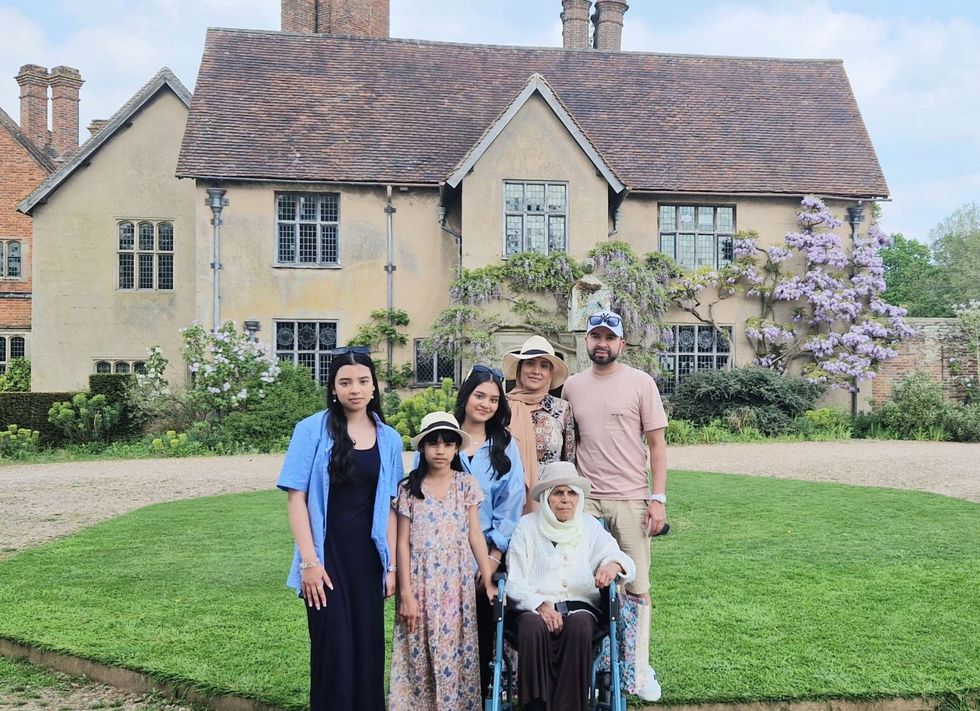 The Miah family with Moymun during a visit to the property.
Maharani Gayatri Devi of Jaipur (1919- 2009), who was considered the most beautiful woman in the world by the British photographer Cecil Beaton, belonged to the Cooch Behar family.
Her father was Maharajah Jitendra Narayan and her mother, Maharani Indira Raje, of Cooch Behar. And her paternal grandparents were Maharajah Nripendra Narayan and Maharani Suniti (or Sunity) Devi of Cooch Behar.
Among her father’s seven siblings were the Princesses Prativa (Princess Pretty) (1891-1923) and Sudhira (Baby) (1894- 1968), who came to be known as the Wightwick Princesses.
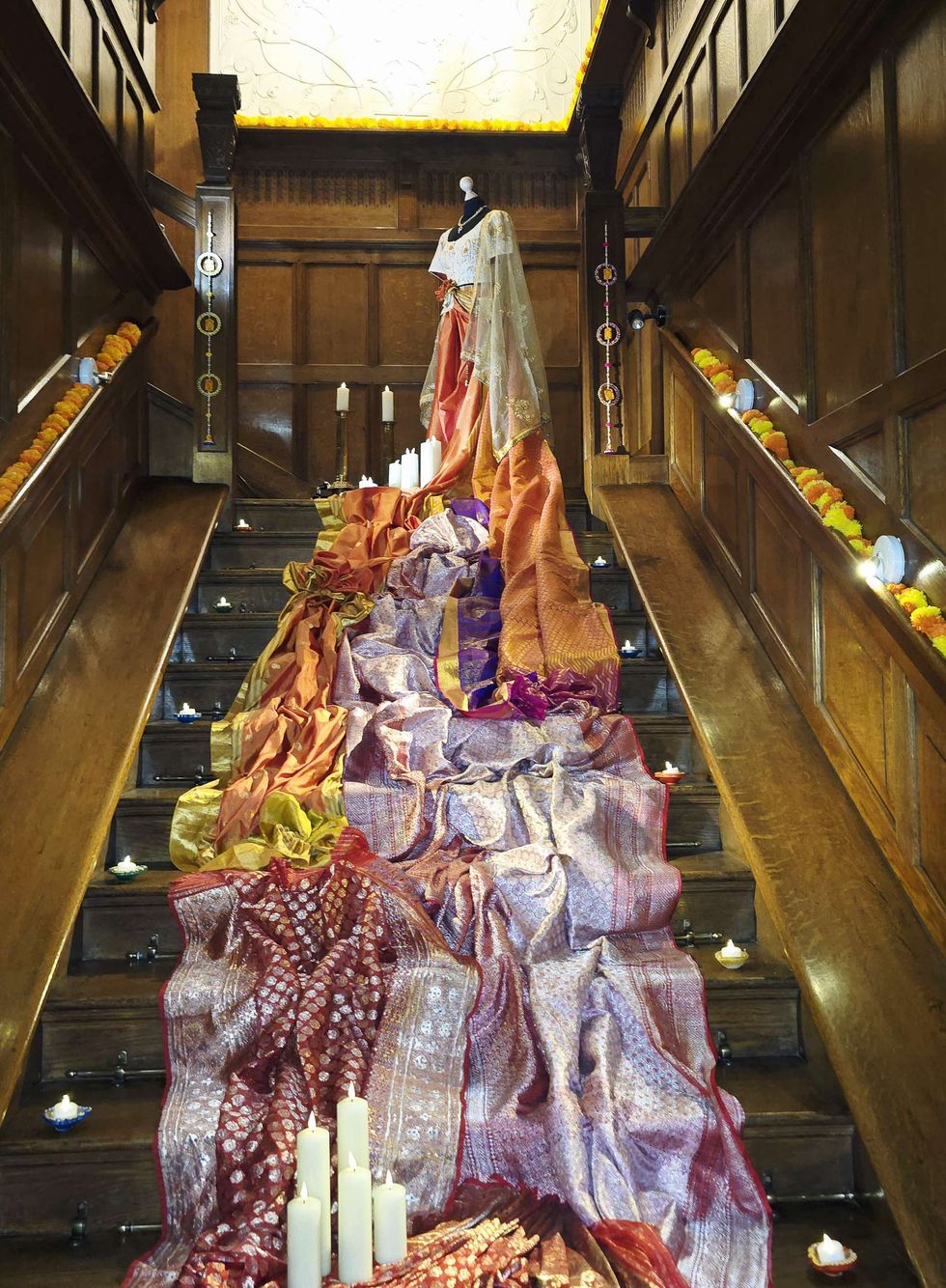 Diwali decorations combining Indian saris with William Morris fabricsArun Chand
This is because the two brothers, who grew up at Wightwick as members of the Mander family which owned the house, married the two princesses, who were educated in England and moved in high circles.
Lionel Mander (1888–1946) married Prativa, while his younger brother, Alan Mander (1891-1967) married Sudhira.
At Wightwick Manor, there is a painting of the two brothers outside what used to be their nursery.
When the volunteer Chiman Karadia takes visitors around the house, he can point to where Lionel had written his name in pencil on a wall in 1892. This was revealed recently when the wallpaper was stripped away in a drawing room during restoration work.
Long before destination weddings were thought of by Indian tourism officials, both marriages took place at Woodlands, the Cooch Behar palace in Calcutta (now Kolkata).
 Chimanlal Parbhubhai Karadia.
Lionel and Prativa married in February 1912. It is not known how they met.
It is said that Prativa was visiting Sudhira in a London nursing clinic with her brother-in-law, Alan. Apparently, romance blossomed between Alan and Sudhira, but her parents were not keen on the relationship and got her away on a long cruise. But Alan pursued her round the world, and love triumphed in the end.
Alan and Sudhira were married in Woodlands in February 1914.
In September 1914, just months after the wedding, Alan was sent to Flanders during the First World War. He escaped physical injury, but was discharged from the army with severe shell shock. Sudhira trained as a nurse and was a Voluntary Aid Detachment member (VAD) at the Westminster Hospital in London. She campaigned for better relations between Britain and India, spoke out for Indian women’s right to vote, and was associated with the suffragette Princess Sophia Duleep Singh (1876–1948) (subject of a current exhibition, The Last Princesses of Punjab, at Kensington Palace).
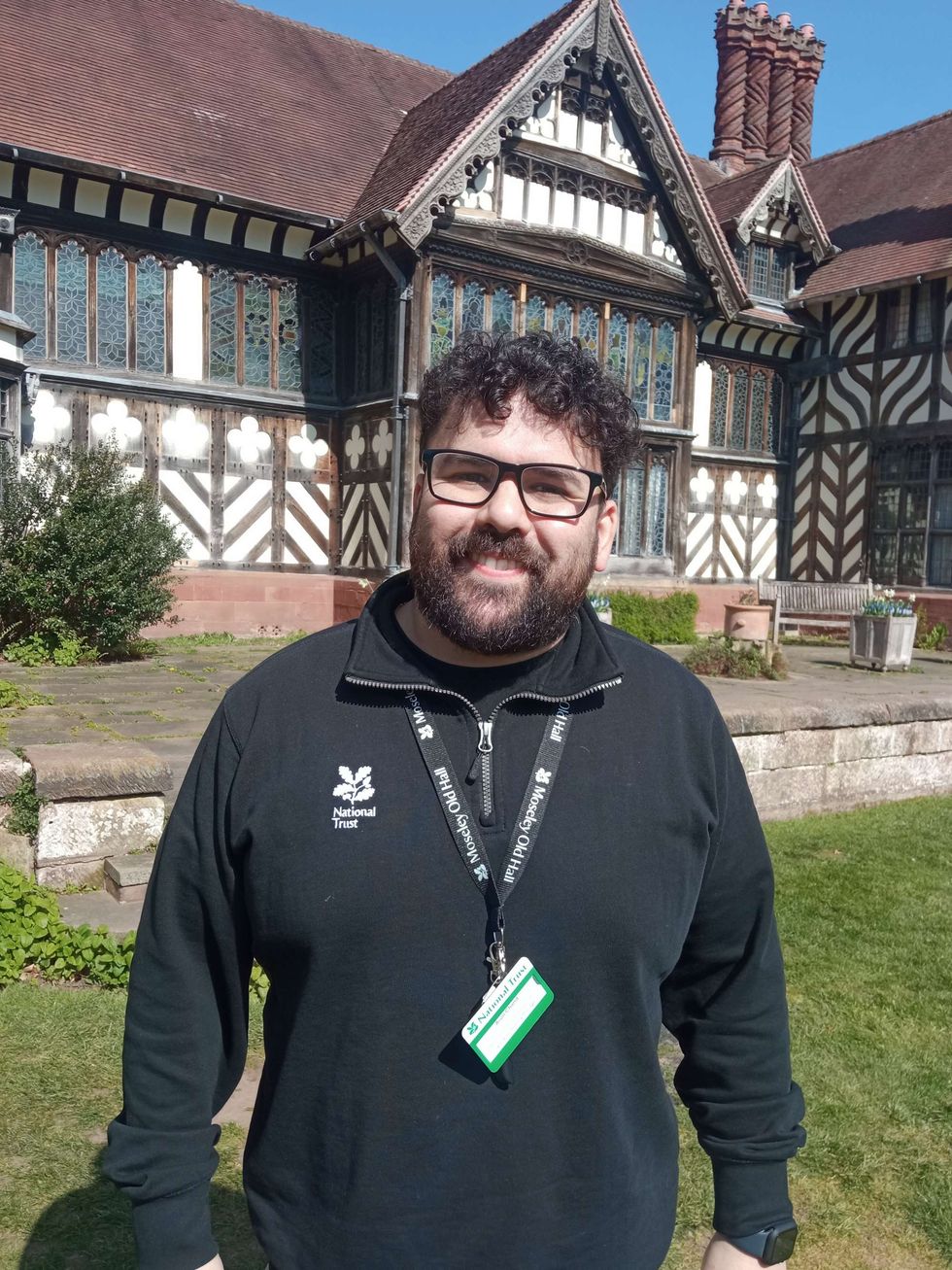 Arun Chand.
Lionel and Prativa, who had no children, were divorced in 1922. Prativa died the following year at the age of 31. Lionel reinvented himself as “Miles Mander”, a successful Hollywood film actor, producer and novelist. He often portrayed an English cad, and his film credits include Wuthering Heights (1939), starring alongside Laurence Olivier.
Alan and Sudhira had three children. Alan passed away in 1967 and Sudhira, a year later.
In 1887, Maharajah Nripendra Narayan and Maharani Suniti Devi attended Queen Victoria’s Jubilee. During this visit the couple met the Queen and socialised with other members of the royal family. The Maharajah also attended the coronation of King Edward VII.
The Maharajah died in September 1911 in Bexhill-on-Sea, East Sussex.
A special military funeral was ordered by King George V, who had visited Wightwick Manor in 1900, when he was the Duke of York. The copper beech tree he and the future Queen Mary had planted during their visit can still be seen today. Coincidentally, Cooch Behar Palace was built in the same year as Wightwick Manor, in 1887.
At Wightwick, the National Trust worked with a local Punjabi women’s group to interpret the story of the princesses and hosted a performance by kathak dancers and a theatrical performance to bring the story of Prativa and Sudhira to life.
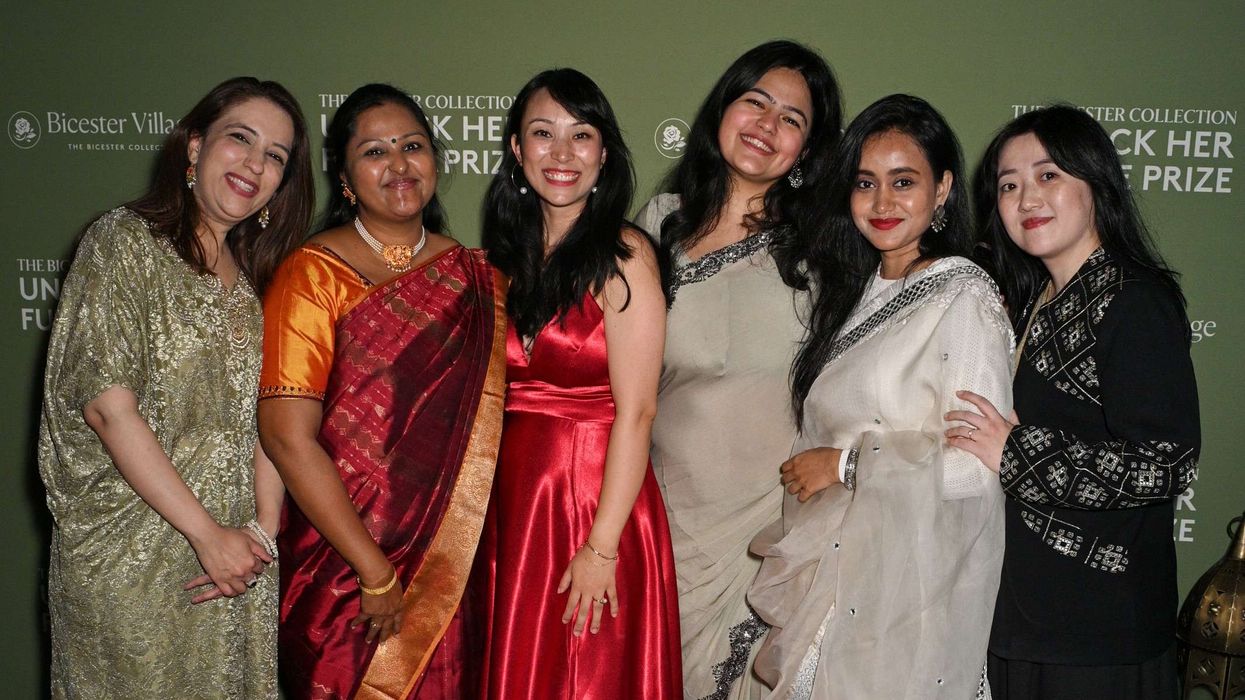
And, in 2023, the trust worked with local writer Amarjit Nar, who with the help of Arts Council England funding, ran a series of writing workshops for local south Asian women. Through these workshops, fictional stories based on true historical context were created, focusing on the lives of Prativa and Sudhira and their marriages to Lionel and Alan.
The result was a publication called Wightwick Princess. The back cover has a photograph of the Maharani of Cooch Behar with her daughters, Prativa and Sudhira, and her sons, Rajendra, Jitendra (the future Maharajah), and Victor.
The authors read their fictional accounts at a function.
Photographs of the princesses were displayed by Arun Chand, the trust’s volunteering and participation specialist, when Diwali was celebrated for the first time in Wightwick Manor last year.
The stairs were decorated with a sari and fabric with William Morris design. It was the same for an outfit at the top of the stairs. Most British Asians will not previously have heard of Wightwick’s Indian royal connection.
Chand said he first heard of the tale in 2007 from Mukith Miah, the trust’s volunteering and participation specialist.
“It obviously made me interested given my background and my heritage,” he said. “I was committed to telling the story again of mixed-race marriages and children, so we came out with the idea of this book.”
There is a separate account from Garbo Garnham, who wrote about her Brahmo Samaj faith (a radical offshoot of Hinduism): “My mother was Sudhira Mander (nee ‘Baby Cooch-Behar’) youngest child of Suniti Devi of Cooch Behar. ‘Baby’ married an Englishman, Alan Mander, when she was the tender age of 18. Baby was a devout Brahmo and Alan changed his religion to soothe Suniti’s sorrow as yet another of her beloved daughters insisted on marrying an Englishman. “The most beautiful and precious thing about being Brahmo Samaj is the freedom to enter any temple or church, to be part of the congregation of any religion, to respect and appreciate the way others worship and to do this without the fear and guilt so marked within some faiths.
“I find it awesome that my parents flew bravely in the face of convention when they were so young and social attitudes in both India and Great Britain were very narrow. My mother was 18 and Alan was 23, they were from completely different lifestyles...one opulent, with palaces, marble, hundreds of servants, the other…..just an English country estate with only the required amount of staff and certainly ‘no elephants!’ They were passionately in love and bullied and begged and coaxed the greybeards until they got permission to marry. And here I am to tell the tale.
“My mother was a feisty lady and that fire and strength saw her through the Second World War as rationing and bombing beset everyone for six years. “Life for us three children was challenging and stimulating with Indian celebrations and ultra-English get togethers, Brahmo prayer meetings and Sunday school. Alan’s family probably felt we were all quite unhinged, but they were mostly very kind. Of course, our Indian relatives were affectionate and cuddly and we loved them.”

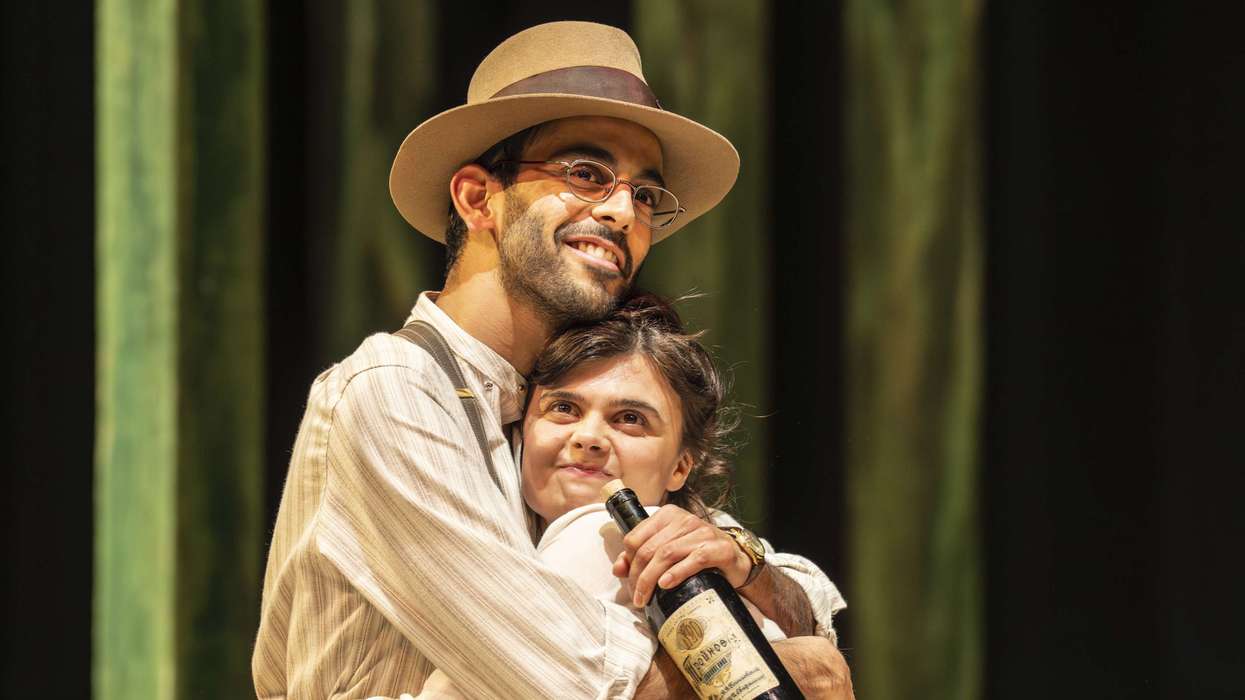

 The five-day experience includes spa treatments, yacht excursions, fine dining and spacious, unscheduled morningsSuminder Pelaez
 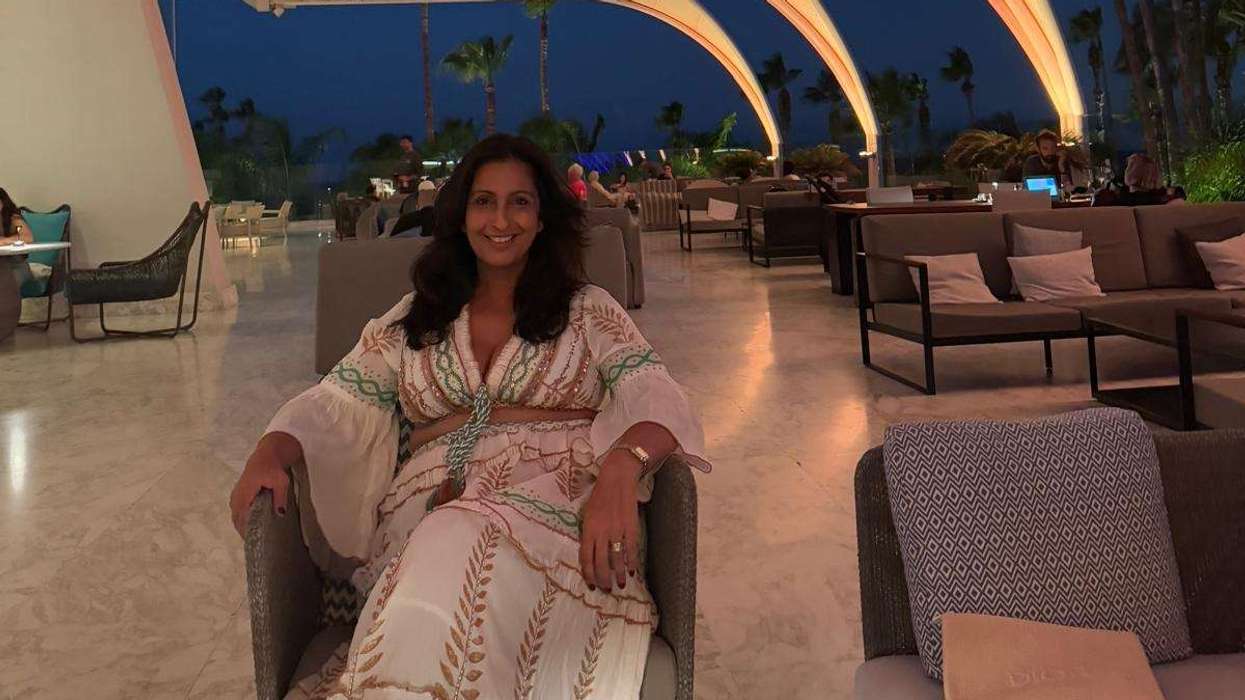 Sum Retreats offers women a rare gift: space to pause, breathe, relax, and put themselves firstSuminder Pelaez