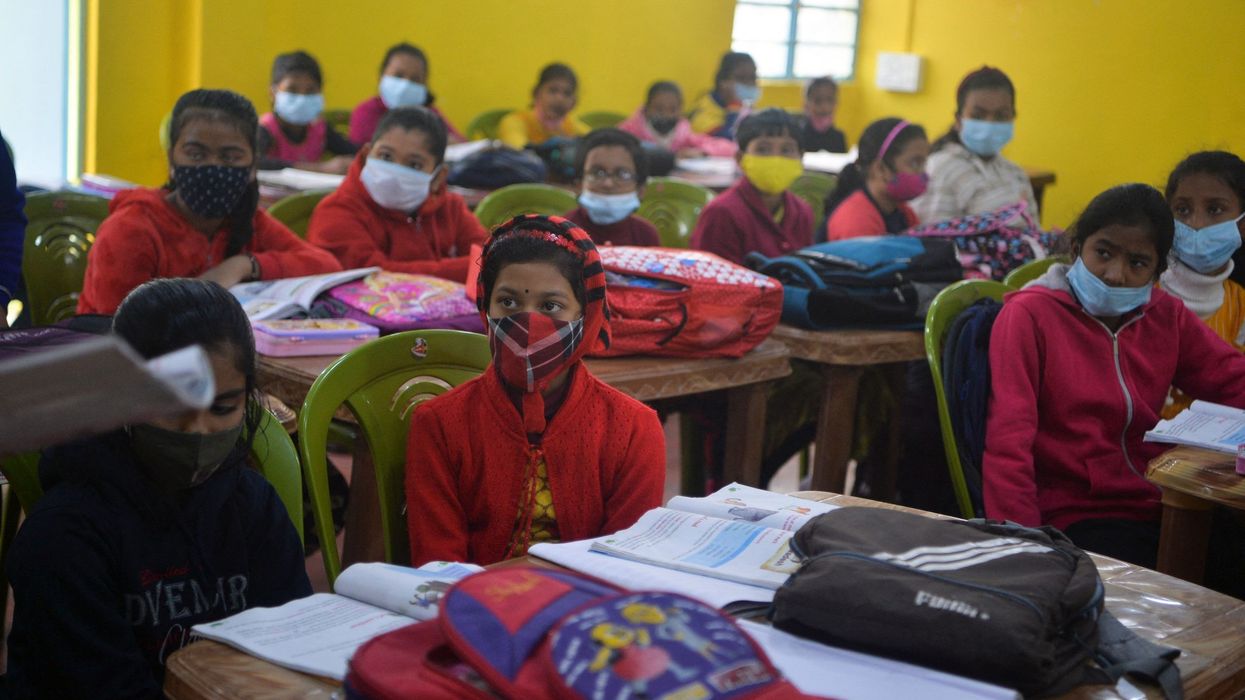

India and its neighbours should fully reopen schools to address the interrupted education of more than 400 million children whose classrooms were shut by the coronavirus pandemic, UNICEF said on Thursday (9), with a top official warning the consequences could last decades.
Schools in Bangladesh were closed for almost 18 months, one of the longest closures in the world, the UN children's agency said, while schools in other South Asian countries were shut for an average of 31.5 weeks between March 2020 and August this year.
"This happened in a region where there were no strong conditions for remote learning," George Laryea-Adjei, UNICEF's regional director for South Asia, told AFP.
"Access to internet and devices was very uneven. And we see a severe learning deficiency, especially among poor communities and girls -- because often boys are more trusted with technology."
One study in India, cited in the report, showed that the proportion of grade 3 children who could read a grade 1 level text fell from around 42 percent in 2018 to just 24 per cent in 2020.
Being out of school also led to students experiencing psychosocial distress, poor mental health and increased risk of violence. Girls were at a high risk of early marriage.
The UNICEF report called on governments in South Asia to safely resume in-person learning and ensure that students catch up, as well as improving connectivity.
"The cost of inaction would be a weaker labour force in a few years, it is going to show," said Laryea-Adjei. "The consequences will be long term."
According to a UNESCO database, schools in India, Bangladesh, Nepal and Afghanistan remain only partially open, while those in Pakistan and Sri Lanka are fully open.
The report also warned that child mortality is projected to rise as pandemic disruptions to health services have left millions of children without lifesaving vaccines.