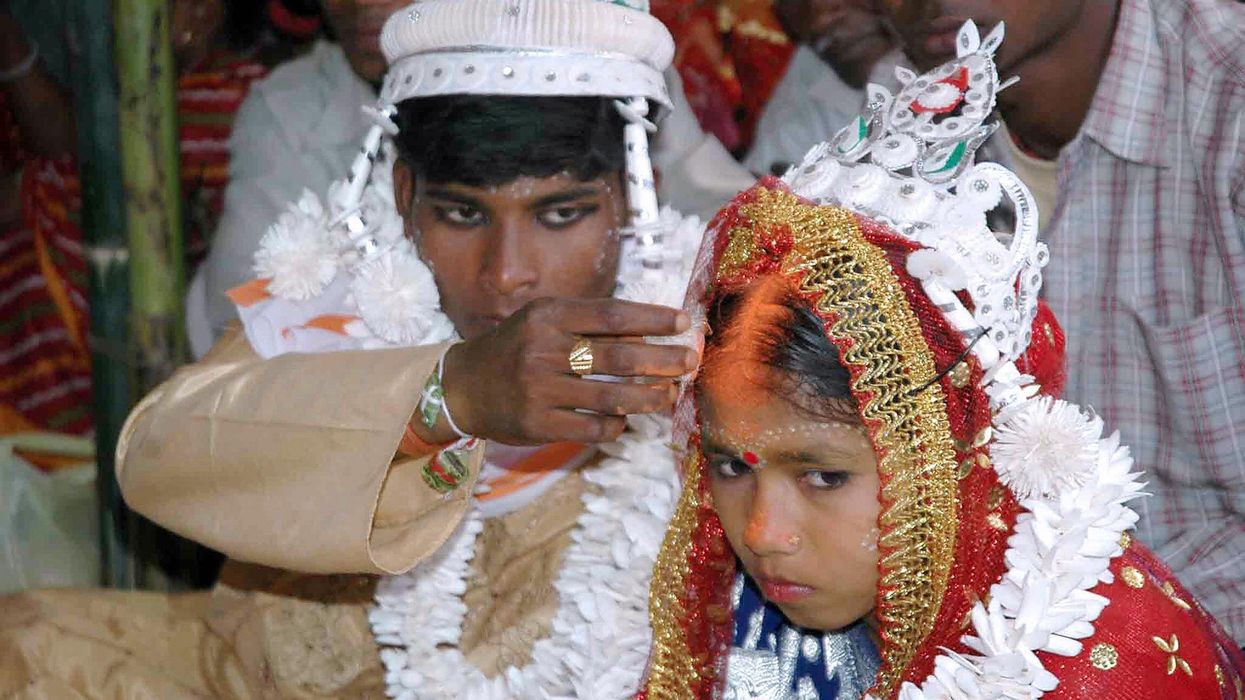

UNICEF estimates on Wednesday (19) show that South Asia has the highest number of child brides globally, with 290 million child brides accounting for 45% of the total, due to increased financial pressures and school closures resulting from COVID-19.
The children's Agency of the United Nations has called for more efforts to end the practice, citing its harmful impact on girls' education, health, and future prospects.
Noala Skinner, UNICEF's regional director for South Asia, stated that the high prevalence of child marriage in the region is a tragedy and emphasised the urgent need to address the issue.
A recent study conducted by UNICEF involved interviews and discussions across 16 locations in Bangladesh, India, and Nepal, and revealed that many parents in South Asia viewed marriage as the best option for daughters who had limited opportunities to study during COVID-19 lockdowns.
The legal age of marriage for females is 20 in Nepal, 18 in India, Sri Lanka and Bangladesh and 16 in Afghanistan. It is 16 in Pakistan except for Sindh province, where the minimum age is 18.
The study also found that financial pressures brought on by the pandemic caused families to marry off their daughters at a young age to reduce household expenses.
The agency said enacting social protection measures to counter poverty, protecting every child's right to education, ensuring an adequate framework to enforce the law, and addressing social norms are potential solutions to end child marriage.
To address the issue, Björn Andersson, Asia-Pacific regional director of the United Nations Population Fund, called for more efforts and strengthened partnerships to empower girls through education, comprehensive sexuality education, and skill-building while supporting communities to end the deeply-rooted practice.
With inputs from Reuters