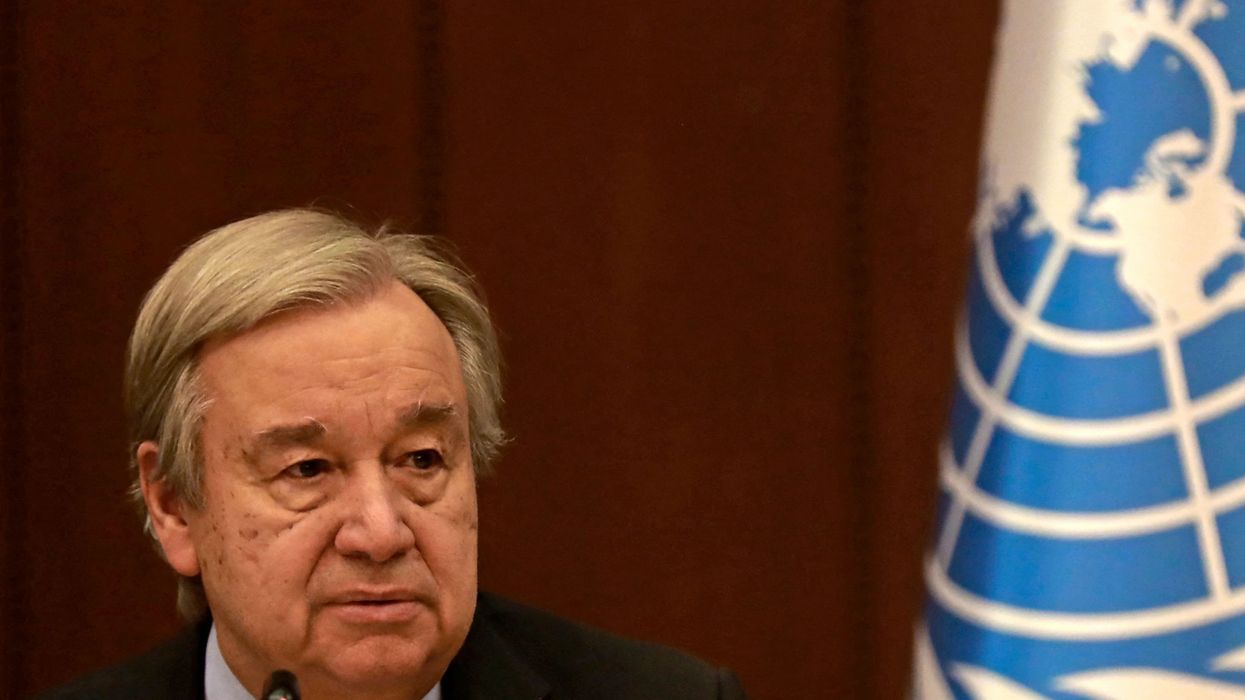

According to an official statement from the UN, the Secretary-General, Antonio Guterres has stated that progress towards gender equality is diminishing rapidly and estimates that it will require 300 years to close the gap.
While addressing the UN session of the Commission on the Status of Women on Monday (06), Guterres said, "It takes on even greater significance at a time when women's rights are being abused, threatened, and violated around the world. Progress won over decades is vanishing before our eyes."
The Secretary-General also referenced instances where women's rights have been revoked, citing the elimination of women from public life in Afghanistan and the rollback of women's sexual and reproductive rights in various other locations.
"In some countries, girls going to school risk kidnapping and assault. In others, police prey on vulnerable women they have sworn to protect. Gender equality is growing more distant. On the current track, UN Women puts it 300 years away," the UN Chief said.
"Maternal mortality is increasing. One woman dies every two minutes during pregnancy or childbirth; most of those deaths are preventable," Guterres added.
The official release from the UN reports that the Secretary-General also expressed concern over the effects of the Covid-19 pandemic, which has resulted in millions of girls leaving school, mothers and caregivers being forced out of paid work, and children being compelled to marry at a young age.
The impact of crises and conflicts is particularly severe for women and girls, with Ukraine to the Sahel being prime examples. Furthermore, the Secretary-General noted that certain countries are now actively opposing the incorporation of a gender perspective in multilateral discussions, as he addressed the Commission on the Status of Women.
According to the statement, the Commission on the Status of Women (CSW) is the primary global intergovernmental body that focuses exclusively on promoting gender equality and empowering women. It is a functional commission of the Economic and Social Council (ECOSOC) established through ECOSOC resolution 11(II) on 21 June 1946.
The Secretary-General's third point emphasised the need to create a secure digital environment for women and girls. The UN is actively advancing a code of conduct for information integrity on digital platforms to reduce harm and increase accountability in this regard.
The Secretary-General also emphasised that promoting women's full participation in science, technology, and innovation is not a charitable act or a favour to women, but a “must” that benefits everyone.
"The Commission on the Status of Women is a dynamo and catalyst for the transformation we need. Together, let's push back against the push back on misogyny, and forward for women, girls, and our world," he said.
With inputs from ANI