
Highlights
- US president warns military options remain on the table
- Ceasefire holding since April 8 but talks remain frozen
- Trump tells Congress hostilities are "terminated" despite no military withdrawal
- Iran's inflation tops 50 per cent as US blockade bites
US president Donald Trump said that he was "not satisfied" with a new Iranian negotiating proposal, as peace talks remain frozen despite a weeks-long ceasefire.
Iran delivered the draft to the mediator, Pakistan, on Thursday (30) evening, the IRNA news agency reported, without detailing its contents.
"At this moment I'm not satisfied with what they're offering," Trump told reporters, blaming stalled talks on "tremendous discord" within Iran's leadership.
"Do we want to go and just blast the hell out of them and finish them forever -- or do we want to try and make a deal?" he added, saying he would "prefer not" to take the first option "on a human basis."
The war, launched by the US and Israel with surprise strikes on February 28, has been on hold since April 8, with only one failed round of direct talks since.
Trump, under pressure at home to seek congressional authorization for the war, wrote to lawmakers on Friday declaring hostilities "terminated" -- despite no change in the US military posture.
The Pentagon later said the US would withdraw about 5,000 troops from Germany over the next year after German chancellor Friedrich Merz said this week that Iran was "humiliating" Washington at the negotiating table.
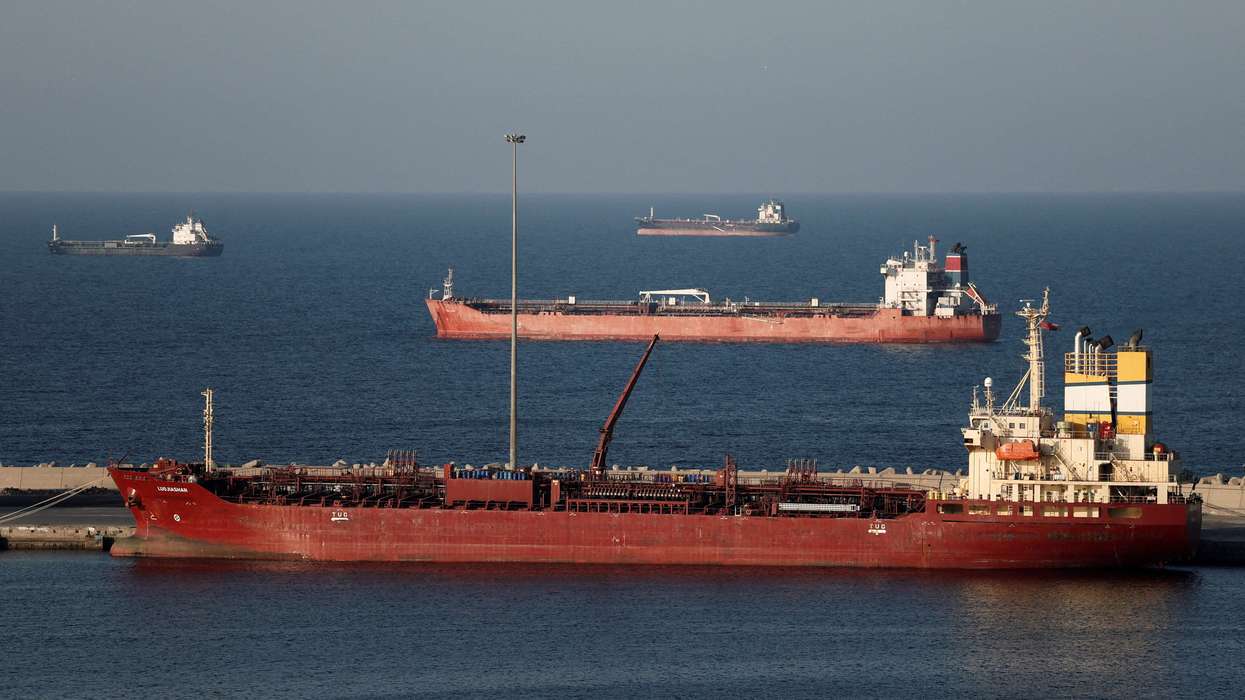
Iran has maintained its stranglehold on the Strait of Hormuz, choking off major flows of oil, gas and fertilizer, while the US has imposed a counter-blockade on Iranian ports.
Despite the stalemate, the ceasefire has held -- but fighting has continued elsewhere in the region.
On the Lebanese front, Israel has continued deadly strikes despite a ceasefire with Iran-backed group Hezbollah in mid-April that sought to halt more than six weeks of fighting.
Lebanon's health ministry said 13 people were killed in strikes in the south, including in the town of Habboush, where the Israeli army had issued an evacuation order shortly before the attack.
Meanwhile, Washington announced late Friday it had approved major arms sales to its allies in the Middle East, including a $4 billion Patriot missile deal with Qatar and nearly $1 billion in precision weapons systems to Israel.
'We will not accept the imposition of peace'
Iran's judiciary chief Gholamhossein Mohseni Ejei said Friday that his country had "never shied away from negotiations," but added it would not accept "imposition" of peace terms while seeking to avoid renewed conflict.
The White House has declined to provide details on the proposal, but news site Axios reported US envoy Steve Witkoff had submitted amendments that put Tehran's nuclear program back on the negotiating table.
The changes reportedly include demands that Iran not move enriched uranium from bombed sites or resume activity there during talks.
News of the Iranian proposal briefly pushed oil prices down nearly five per cent, though they remain about 50 percent above prewar levels amid the ongoing closure of the Strait of Hormuz.
Tehran resident Amir told Paris-based AFP journalists the stalemate "feels like we are stuck in purgatory" and expressed little hope for the proposal.
"This is all to waste time," he said, predicting the US and Israel "will attack again."
Legal dispute over approval in Congress
Washington, meanwhile, is grappling with a legal dispute over whether Trump has passed a deadline to seek congressional approval for the war.
Officials argue that a ceasefire pauses the 60-day clock, at which point congressional authorization would be required -- a claim disputed by opposition Democrats.
Trump faces growing domestic pressure, with inflation rising, no clear victory in sight and midterm elections approaching.
"There has been no exchange of fire between United States Forces and Iran since April 7, 2026," Trump said in letters to congressional leaders, adding that the hostilities "have terminated."
Fourteen members of Iran's Revolutionary Guards were reportedly killed defusing what the Fars news agency called unexploded cluster bombs and aerial mines in northwestern Zanjan province.
Iran has accused the US and Israel of using cluster munitions, which scatter bomblets that can remain dangerous for years.
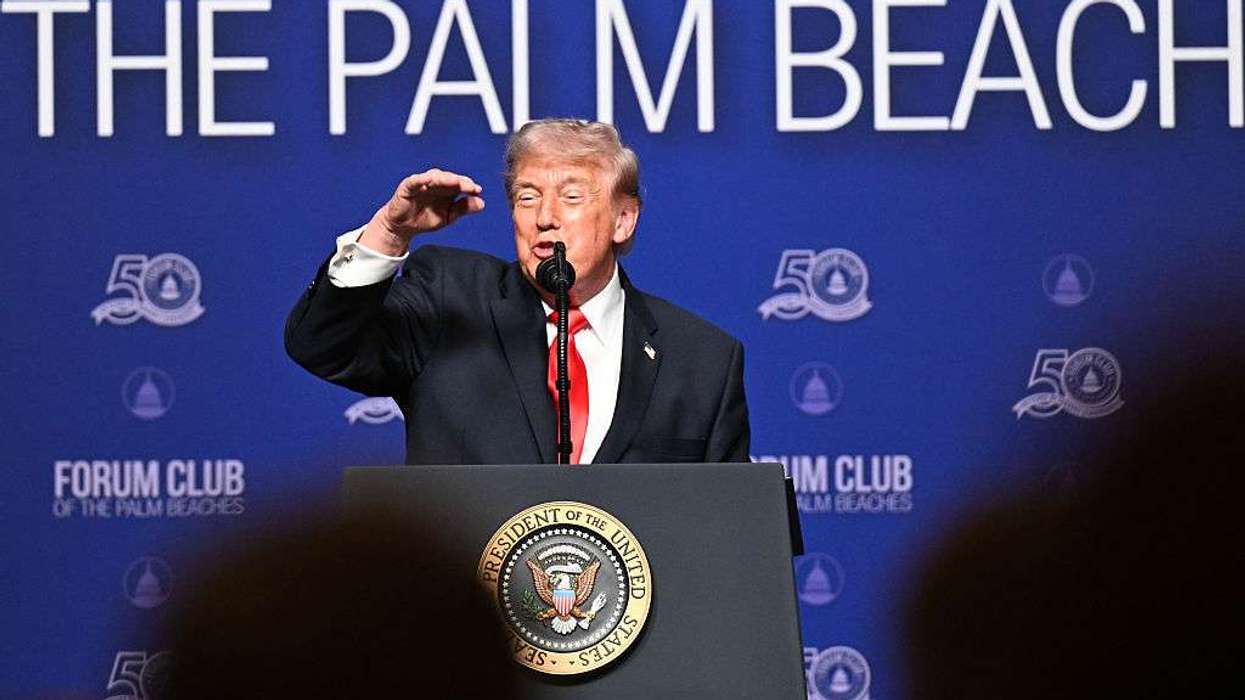 Donald Trump speaks during an event at the Raymond F. Kravis Center for the Performing Arts on May 01, 2026 in Palm Beach, Florida. (Photo by Roberto Schmidt/Getty Images)
Economic toll deepens
On top of military strikes, the war's economic toll on Iran is deepening.
Washington imposed new sanctions on three Iranian currency firms and warned others against paying a "toll" for safe passage through Hormuz.
The US military says its blockade has stopped $6 billion in Iranian oil exports, while inflation has surged past 50 per cent.
"For many people, paying rent and even buying food has become difficult, and some have nothing left at all," 28-year-old Mahyar told an AFP reporter based outside Iran.
Supreme leader Ayatollah Mojtaba Khamenei said on Friday in a statement that "the owners of damaged businesses should avoid, as much as possible, layoffs and separation of their workforce" while threatening Iran's enemies with "economic and cultural jihad."
Trump has repeatedly criticized allies for failing to join efforts to reopen Hormuz.
France and Britain have led efforts to assemble a coalition to reopen the strait once peace is secured. But a US official said Washington is launching its own coalition to restart shipping.
French foreign minister Jean-Noel Barrot said the US mission would "complement" European initiatives rather than replace them.
Meanwhile, the USS Gerald R. Ford aircraft carrier has left the Middle East after taking part in operations against Iran, a US official said on Friday, though two other carriers remain.
(AFP)