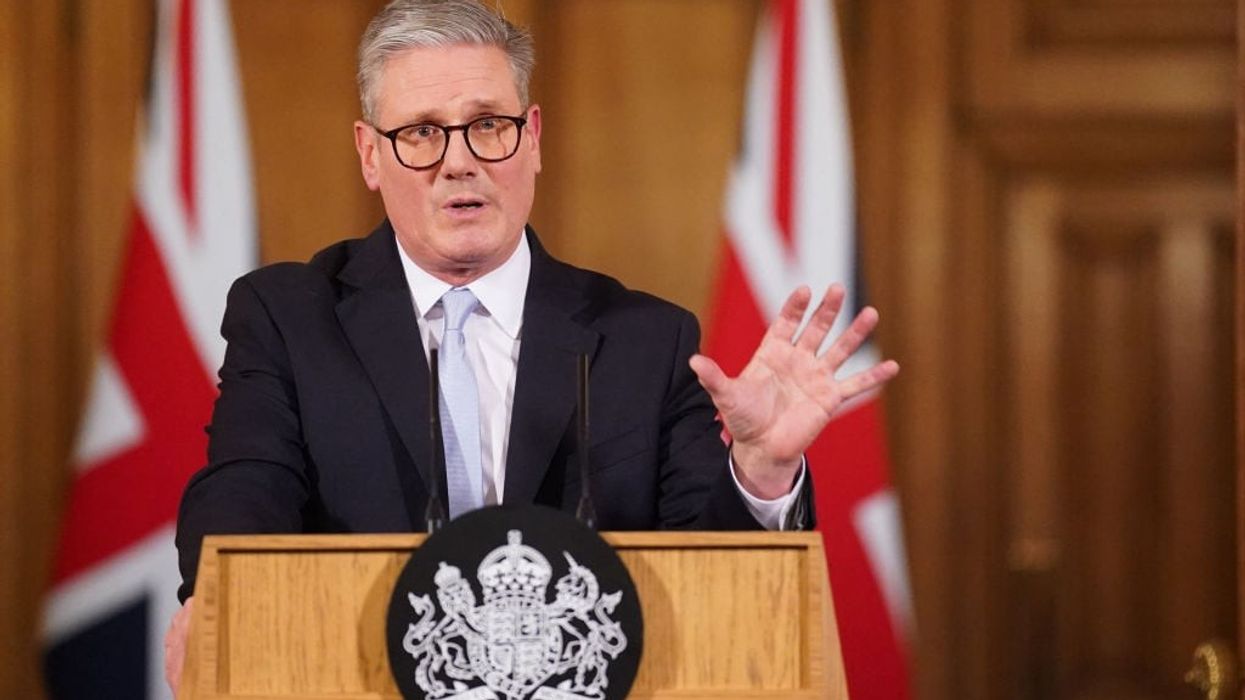

PRIME MINISTER Sir Keir Starmer has sparked debate by signalling openness to laws addressing Islamophobia, a move critics argue could curtail free speech.
The prime minister’s comments have reignited discussions about balancing protections against hate with maintaining Britain’s long-standing tradition of freedom of expression, reported the Telegraph.
During Prime Minister's Questions, Labour MP Tahir Ali urged Starmer to commit to legislation criminalising the desecration of religious texts and the prophets of Abrahamic faiths.
He stopped short of agreeing but stressed the government's dedication to combating all forms of hatred, including Islamophobia.
"Desecration is awful and should be condemned. We are committed to tackling all forms of hatred and division, including Islamophobia in all its forms," he was quoted as saying.
The Labour party has previously considered adopting a formal definition of Islamophobia, based on one proposed by an all-party parliamentary group (APPG). The definition describes Islamophobia as "rooted in racism" and targeting expressions of “Muslimness or perceived Muslimness.”
Deputy prime minister Angela Rayner revealed in September that the government was “actively considering” approaches to define Islamophobia, with updates expected in due course.
Advocates argue that codifying Islamophobia is necessary to address rising prejudice, pointing to incidents such as mosque attacks following the Southport killings. However, critics warn that such a definition risks functioning as a de facto “blasphemy law,” stifling legitimate critique of Islam.
Robert Jenrick, the shadow justice secretary, voiced strong opposition, saying, “Labour must urgently rule out introducing a new blasphemy law or adopting the flawed Islamophobia definition. Free speech is under threat within the Labour, and Starmer must show leadership instead of yielding to sectarian interests.”
Former cabinet minister David Davis echoed these concerns, emphasising the importance of free speech. “For centuries, Britain has upheld the absolute right to criticise religion. Freedom of speech is fundamental to everything we stand for,” Davis tweeted, expressing regret that Starmer had not clarified this in response to Ali’s question.
Former home secretary Suella Braverman warned of the broader implications of Labour’s stance. “Free speech is at breaking point under this Labour government. Their proposed definition of Islamophobia will effectively ban criticism of Islam. No religion should be immune from scrutiny or challenge,” she said.
Toby Young, founder of the Free Speech Union, criticised the APPG’s definition, calling it “ridiculously broad.” He added, “It includes historically incontestable statements, such as Islam being imposed by force at various points in history. Such a definition threatens honest discourse and historical truth.”
Despite the backlash, Labour maintains its position, with Starmer reiterating a commitment to addressing all forms of hatred. He said, “There has been a rise in hatred in various forms, including Islamophobia. We are working with others to take this forward.”