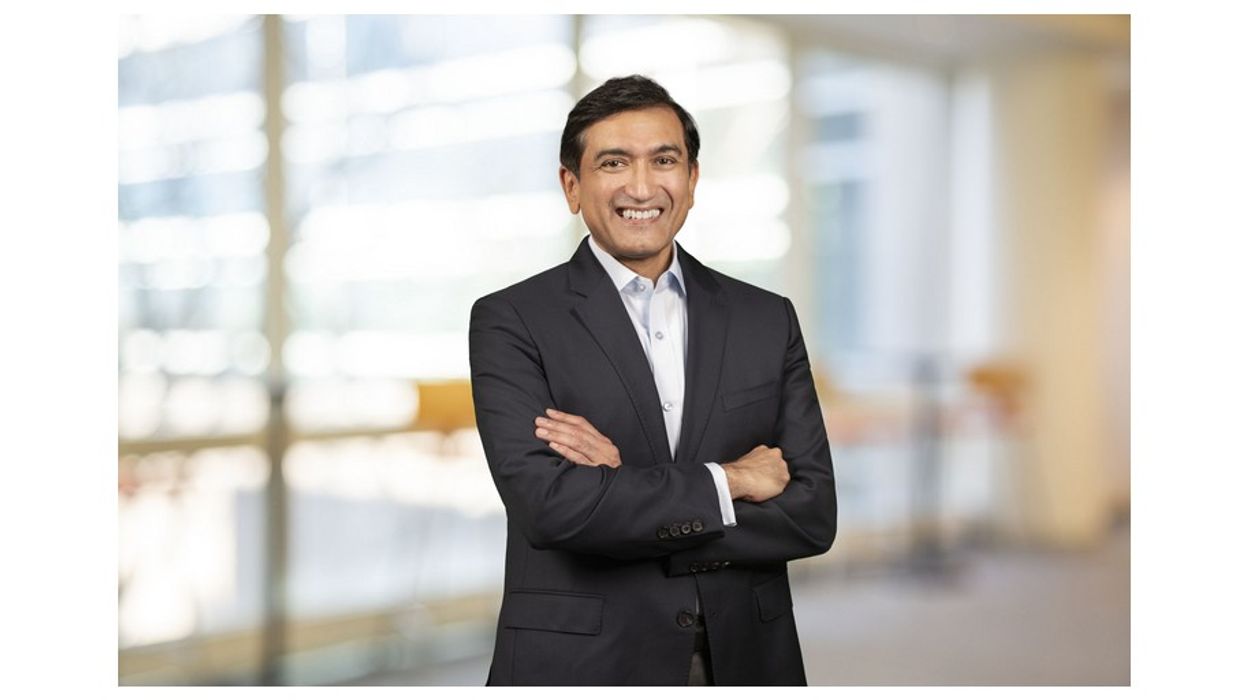

US consumer goods giant Procter & Gamble has named Indian American Shailesh Jejurikar as its next chief executive officer. He will lead the multinational company from January 1 next year.
Jejurikar (58), who joined Procter & Gamble (P&G) as an assistant brand manager in 1989, will replace Jon Moeller as part of a senior leadership change, according to a statement from the Cincinnati, Ohio-based company.
He has been serving as chief operating officer of P&G for more than six years and is also a board member of lift systems maker Otis Elevator Co.
"Shailesh Jejurikar will succeed Jon Moeller as P&G's president and chief executive officer, effective 1 January 2026. The board has also nominated Jejurikar to stand for election as a director at the annual shareholder meeting in October 2025," a company statement said.
He helped build several of P&G's main businesses, including global Fabric Care and Home Care in regions including North America, Europe, Asia and Latin America. He has also helped lead the development of the company's renewed strategies and operational results in Supply Chain, Information Technology and Global Business Services.
P&G is a leading consumer goods company in the Indian market, operating with brands including Ariel, Tide, Whisper, Olay, Gillette, Ambipur, Pampers, Pantene, Oral-B, Head & Shoulders and Vicks.
Jejurikar, a graduate of IIM Lucknow, is the latest to join an elite group of India-born senior executives at global companies.
Earlier this month, Moradabad-born Sabih Khan was promoted to chief operating officer of iPhone maker Apple.
Khan, who will still report to Apple CEO Tim Cook, will take over his new role from Jeff Williams later this month. He has risen through the ranks after being at Apple for 30 years and joining the executive team as senior vice president of operations in 2019.
Satya Nadella is the chairman and CEO of Microsoft, while Sundar Pichai is the CEO of both Google and its parent company Alphabet. Shantanu Narayen, chair and chief executive officer of Adobe—one of the largest software companies in the world—and Arvind Krishna, chairman, president and CEO of IBM, are among the leading figures.
Joining them are Vasant Narasimhan, the CEO of global pharmaceutical giant Novartis, and Reshma Kewalramani, CEO and president of global biotech company Vertex.
Similarly, Sanjay Mehrotra, chairman, president and CEO at Micron Technology; Anirudh Devgan, president and CEO of Cadence; and Leena Nair, Global CEO of Chanel, are among other notable leaders.
Sanjiv Kataria, the former CEO of Bata, held the distinction of being the first Indian global CEO of the footwear company. He resigned from the position last month.
Likewise, Laxman Narasimhan, who left Starbucks last year after serving as its CEO, had also led another multinational giant, Reckitt Benckiser, as CEO.
Indra Nooyi, who stepped down as CEO of food and drinks giant PepsiCo in 2018 after leading the company for 12 years and serving it in various roles for 24 years, and Harish Manwani, who became the first chief operating officer of consumer goods major Unilever in 2011, paved the way for India-born executives to head global companies.
(PTI)