
FOR Sathnam Sanghera, discovering a disturbing family secret in his late 20s was a life-changing moment and set him on the path of authorship.
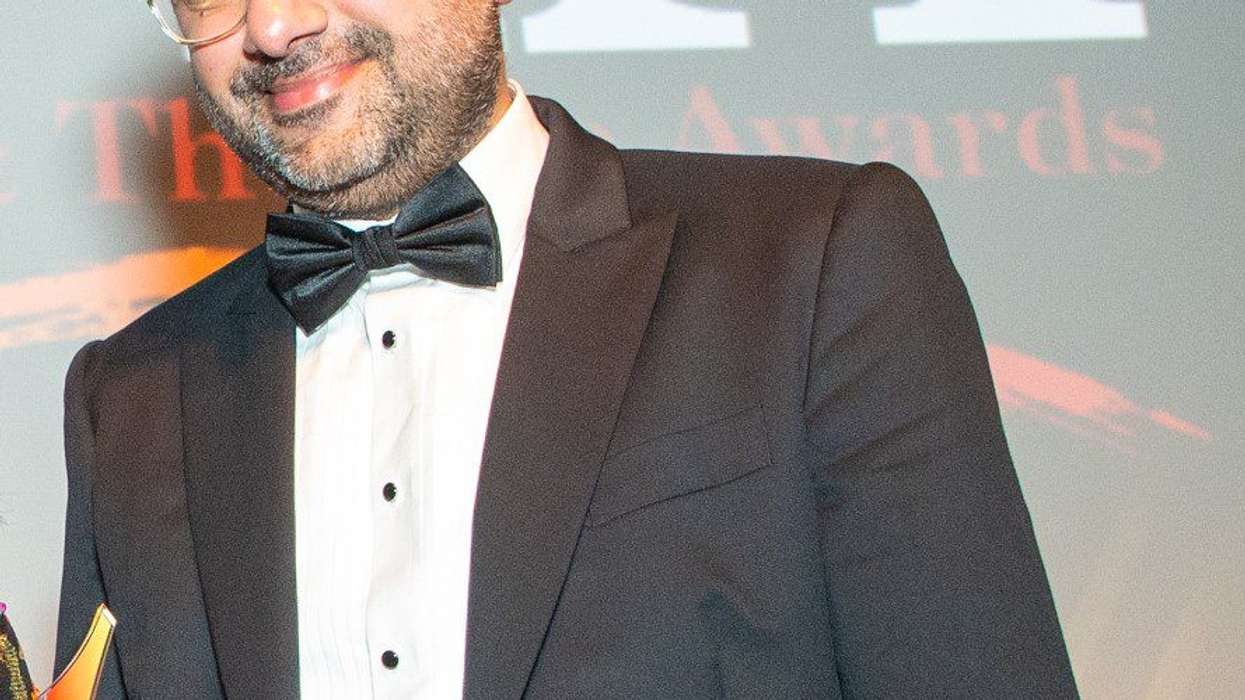
His wide-ranging work and especially his 2021 Empireland: How Imperialism has Shaped Modern Britain won him a 2022 Eastern Eye Arts Culture and Theatre Award (ACTA) for non-fiction.
A magisterial analysis, both in scope and simplicity, it chronicles British (mis)adventures in India and lays bare the brutality and racism at the heart of the British Empire and how much thinking from that time unhelpfully pervades consciousness today. The ACTA judges recognised not just its scholarship but its impact and power. It continues to travel far and wide and makes an elegant case for schoolchildren everywhere needing to know why the British, (and essentially the English above all), in some quarters, and not just in the past, think of themselves as truly exceptional and utterly entitled.
Born to Punjabi parents in the West Midlands in 1976, Sanghera learned that his entire childhood was spent in a house which had two people living with the mental health condition of schizophrenia.
Both his father and another member of his family are prone to episodes - but he grew up believing all was fairly well – as a child, what else can you know?
He had a loving family and a mother who was strong and protective - shielding him from the horrors of his father’s episodic descents into blackness.
He published his first book – The Boy with the Topknot: A Memoir of Love, Secrets and Lies in Wolverhampton in 2008 from this experience and crucially uncovering it and then coming to terms with it.
The work was widely praised and was just one of a number that started to open up fresh and much needed debates about mental health and general wellbeing.
There was also a coming to terms with his own success and the alienation he felt from his working-class Sikh Punjabi family and its roots.
Academically gifted, he was educated at the local grammar and went onto to attain a First in English at Christ’s College, Cambridge University.
The irony is that when he first started going to school – he could only speak his mother tongue.
He had left behind Wolverhampton for the bright lights of London, a media job in London, initially with The Financial Times and had swapped chappattis for crudites on the swish capital dinner party circuit.
He had begun too to appreciate the glaring inequality.
“My life was nauseating. I was in such denial about my Wolverhampton past. I didn't think about it and I loved the fact that [life in London] was so different. I was really seduced by all that, in an easily impressed immigrant way. Now I'm not so easily impressed,” he said in an interview to The Guardian in 2009.
He is a columnist on The Times and writes features and interviews and was elected as a Fellow of the Royal Society of Literature in 2016.
His most recent work continues to spark debate and hot fury among those who believe the Empire was a supremely benign enterprise and that without Britain, India would still be living in the dark ages – after all where would it be without a railway system the British created (to move troops around to quell opposition to their rule)?
Sanghera goes to the heart of these issues in Empireland.
“The reason we are a multicultural society is because we had a multicultural empire,” he cited simply.
Sanghera’s work has found a voice in other mediums – the BBC TV drama starring Bollywood icon Anupam Kher as his father, and fictionalising his memoir, The Boy with the Top Knot, was both a critical and popular hit.
Acclaimed playwright Gurpreet Kaur Bhatti is adapting his 2014 novel Marriage Material for the stage.
He has made documentaries, The Massacre That Shook The Empire on Channel 4; it examined the Jallianwala Bagh slaughter of the innocents and in some ways lit the path for Empireland.
More recently, Sanghera also made Empire State of Mind for Channel 4 – another spin off from his book, Empireland.
Sanghera’s legacy is already a rich one and his ability to reach a wide and general audience make him one of the most exciting writers to have emerged from Britain in recent times and it looks like he is only just getting started.