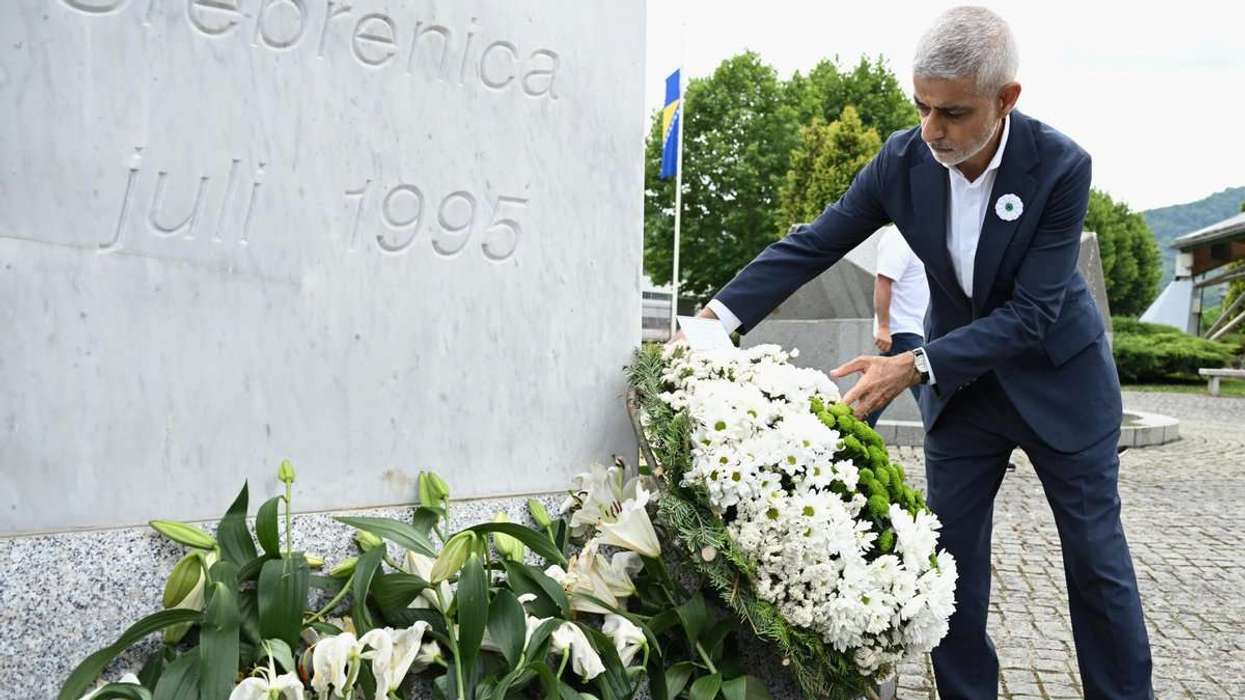

Last week, I visited Bosnia and Herzegovina to mark 31 years since the Srebrenica genocide – one of the worst acts of mass killing on European soil since the Second World War.
Like many Brits, I have lived much of my adult life with news reports of the massacre seared into my memory. I still remember the pictures on the news and in the papers like it was yesterday – the faces of desperate people fleeing for their lives and, years later, the hundreds of green coffins for bodies still being found, waiting to be buried at last.
In City Hall, survivors of Srebrenica speak at the Holocaust Memorial Day events we hold every year. But nothing could have prepared me for the anguish I felt visiting the Srebrenica Genocide Memorial in person. All around me, I saw row upon row of white gravestones – each one standing for an innocent life destroyed in an act of unimaginable evil. Between them, there were empty spaces for one thousand victims who remain missing, their families unable to lay them to rest.
At the Memorial, I met Dr Emir Suljagić, a former UN interpreter who survived Srebrenica. I listened to mothers who had lost their sons, husbands and brothers. They spoke about how the trauma of what they witnessed haunts them to this day - and how, in their darkest moments, they somehow find the strength to survive.
Srebrenica was a heinous expression of human hatred. In a place they’d been promised would be safe, over 8,000 defenceless Bosniak Muslim men and boys were mercilessly slaughtered because of their ethnicity and religion. 30,000 women, children and elderly people were forcibly displaced.
Atrocities like this don’t just happen - Srebrenica was the result of a meticulously planned campaign of ethnic cleansing. It followed the relentless and ruthless dehumanisation of Bosniak Muslims, which led to their rape, torture and murder – culminating in Directive 7, the chilling order which started the massacre. In it, Radovan Karadžić, President of Republika Sprska, commanded the Bosnian Serb army to ‘create an unbearable situation of total insecurity with no hope of further survival or life for inhabitants of Srebrenica.’

Today, the Srebrenica massacre is recognised for what it was: an act of genocide. After they were convicted in the Hague, both Karadžić and Ratko Mladić – who led the Bosnian Serb Army – were handed life sentences for their crimes. Yet, in Bosnia and Herzegovina, shameless attempts to deny the genocide continue.
In my visit to Bosnia and Herzegovina, I saw how the memory of genocide scars a society still struggling to hold itself together. But I also found myself reflecting on how, when it is left unchecked, hatred can gradually and then suddenly take hold.
Today, Europe finds itself in the midst of a deeply dangerous moment, and the same goes for the UK. This year, London’s Jewish communities have been subject to a huge increase in appalling antisemitic attacks. Just last month in Edinburgh, five men were assaulted in what appeared to be a shocking act of anti-Muslim violence – and the outcry from much of Britain’s political and media establishment was conspicuous by its absence.
For the most part, Britain remains an open, inclusive society – a place that is proud of its diversity and unwavering in its commitment to peaceful pluralism. But the rising number of attacks where victims are targeted for the colour of their skin or the God they worship shows that violence and extremism is infiltrating our society. Close members of my family have, in separate incidents, been racially abused in the last week alone. This is not normal, nor should it be acceptable. At a time when anti-Muslim hate incidents have risen by 165% in just two years, and when harassment and intimidation are becoming ever more visible in our streets and communities, we cannot take our values for granted. This rise in hatred has not happened by accident; it is the inevitable outcome of the normalisation of abhorrent views that were once on the margins, and are now firmly in the mainstream. The prevalence of Islamophobia and antisemitism in our public discourse today is truly shocking – and it’s a trend which too many of our politicians have ignored or, worse, actively encouraged.
As we stop to remember the victims of Srebrenica and families who mourn them, then, we must also commit ourselves to fighting violence, and dehumanisation wherever we encounter it, and stopping hatred from taking hold. At home, we must root out the twin poisons of Islamophobia and antisemitism from our politics. And abroad, we must be fearless in our defence of justice, dignity, and human rights.

After Rwanda, Srebrenica, and Darfur, the world came together to say never again. Courts were established, and commitments were made. Today, though, it is patently obvious that we have failed to honour that pledge. Earlier this year, a UN fact-finding mission concluded that atrocities committed in Sudan exhibited the hallmarks of genocide. And, just last month, an independent UN commission of inquiry said that Israel had committed genocide in Gaza. The international community has not done enough to stop either of these horrific episodes.
Thirty-one years after Srebrenica, it’s clear that we are no closer to defeating the dark forces of division. If anything, they are gaining ground - in Bosnia and Herzegovina, in Britain, and beyond. But we owe it to the memory of the men and boys who lie buried under those white gravestones to keep fighting - for peace, unity, and hope. Together, we can tear out hatred by the roots and build a world free from fear at last.
(The author is the mayor of London)



 Swachhata Hi Seva 2026 India Weekly
  Kumaran Periasamy Eastern Eye