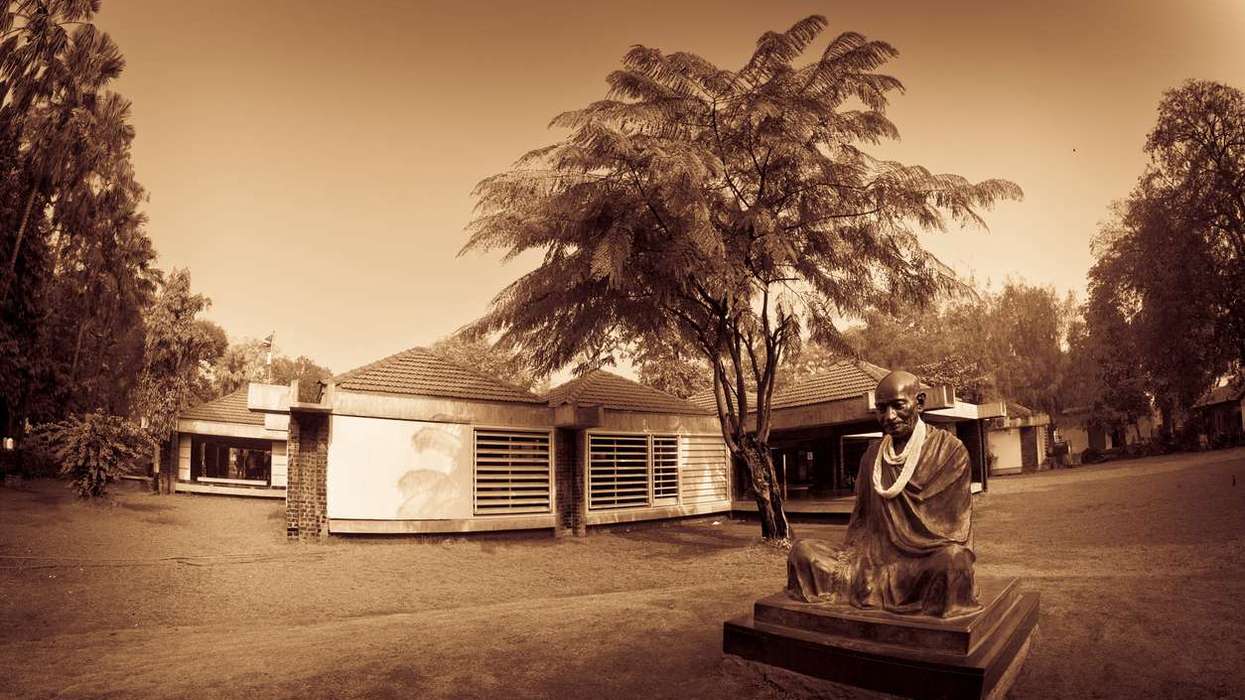

Highlights:
For decades, Sabarmati Ashram has stood as a reminder of Mahatma Gandhi’s simple lifestyle and his role in India’s freedom struggle. Its modest surroundings, spinning wheel, and association with the Dandi March have made it a landmark of India’s history. Now, the historic site is preparing for a significant transformation, with plans for 23 museums that could change how visitors experience Gandhi’s life and legacy.
A Paris-based firm, Museum Studio, is designing the museums in collaboration with Ecofirst, a Tata group subsidiary. The project is part of a redevelopment initiative that seeks to expand the ashram into a major visitor destination while preserving its historical significance.
"The design of the museums is being done by Museum Studio of Paris, and they have a consortium partner, a subsidiary of Tata Engineering Services called Ecofirst. They are the curators," said an official closely associated with the project, as reported by PTI on Thursday (1).
From a quiet retreat to a 50-acre redevelopment
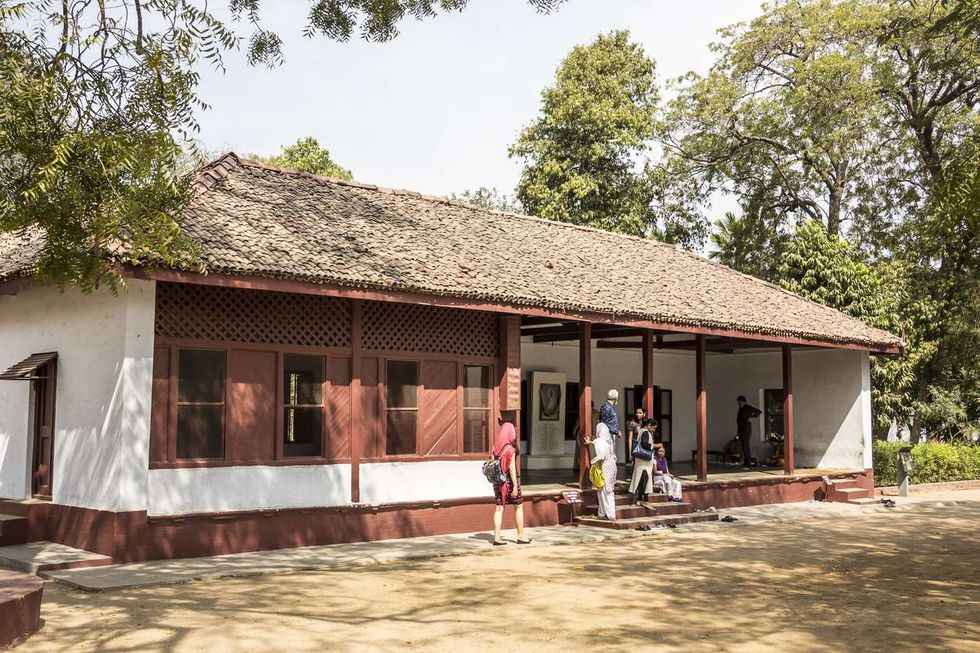 iStock
Established by Gandhi in 1917, Sabarmati Ashram served as his home during a defining period of the independence movement. It was here that he lived simply, experimented with community life and prepared for the historic Dandi March.
The Gujarat government launched the redevelopment project in 2021, envisioning a transformed ashram spread across nearly 50 acres along the Sabarmati River. The Mahatma Gandhi Sabarmati Ashram Memorial Trust oversees the project. Chief Minister Bhupendra Patel heads its governing council, while retired IAS officer I.P. Gautam leads its executive council.
The redevelopment is being carried out with the vision and inspiration of Prime Minister Narendra Modi, according to the official.
Four months of research to tell Gandhi’s story
Before the design work began, a Tata research team spent four months studying Gandhi’s life at the ashram between 1917 and 1930. The findings were presented to a content advisory committee at a meeting on April 21.
The committee brings together museum professionals, historians and experts in Gandhian literature. Its members include Rajya Sabha Deputy Chairman Harivansh Narayan Singh, philanthropist Rajshree Birla, National Commission for Scheduled Castes Chairman Kishor Makwana, Gujarat Vidyapith Vice Chancellor Dr. Harshad Patel, museum professionals Sabyasachi Mukherjee and Rajarama Yagnik, Indian Institute of Heritage Pro-Vice-Chancellor Dr. Manvi Seth, and historian Rizwan Qadri.
After further discussions in July and August, the content plan was finalized and sent to Paris for design.
From South Africa to the banks of the Sabarmati
The museums will focus on Gandhi’s years in India, particularly the period when he brought ideas and experiments from South Africa to Sabarmati.
"We are trying to emphasise Mahatma Gandhi's stay from 1915 to 1930, those 15 years, because Mahatma ji extended his learnings from Tolstoy Farm in South Africa here. He repeated that experiment and turned lakhs of people into Gandhians," the official said.
The planned exhibitions are expected to explore this formative chapter of Gandhi’s life and the community he built around his principles.
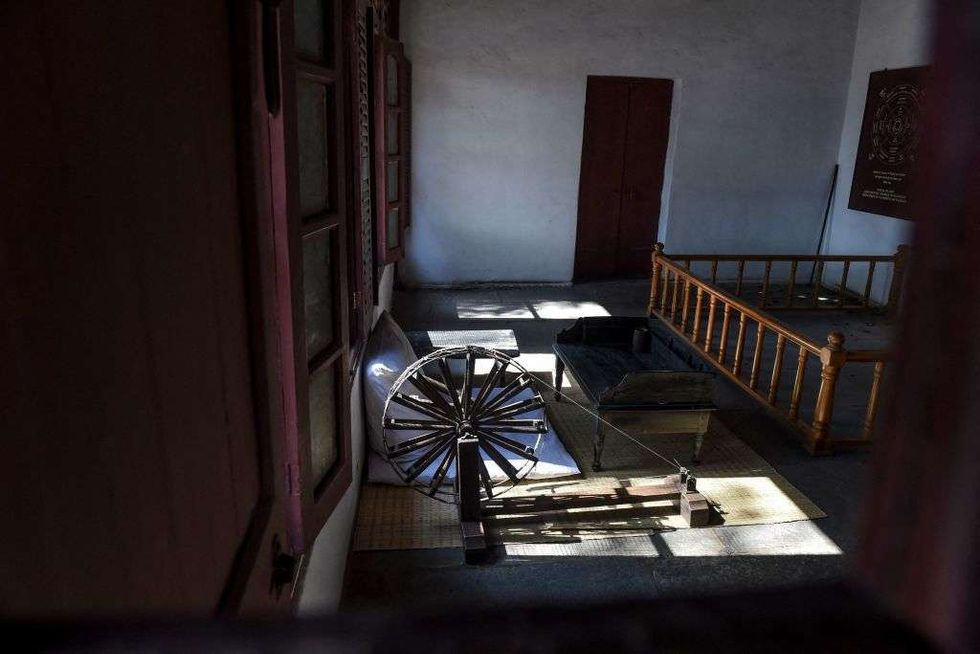 Getty Images
Will technology reshape the visitor experience?
The proposed museums could bring together a range of formats, from traditional displays to digital storytelling. Plans include audiovisual presentations, digital exhibits, murals, and sculptures.
But the designs are still subject to review. Experts from the National Institute of Design will examine the proposals to ensure they reflect the historical and cultural context of Gandhi’s life. Once the designs receive approval, Ecofirst will handle the curation, with the Indian Institute of Heritage supervising the process to ensure that the exhibitions remain consistent with the approved design.
The challenge lies in balancing innovation with the spirit of a place known for its simplicity. How the new museums will integrate with the existing ashram remains an important part of the project’s unfolding story.
Preserving values for a new generation
For all the planned changes, the project’s stated ambition goes beyond architecture and technology. Its central purpose is to introduce Gandhi’s ideas to younger visitors and make them relevant to contemporary audiences.
"It is a collective effort involving experts in literature, museums, design, and communication. Ultimately, we want to convey Gandhiji's principles, truth, non-violence, non-possession, and non-cooperation to the new generation," the official said.
As the designs take shape in Paris, Sabarmati Ashram stands at the threshold of a new chapter. The question is not only what the 23 museums will look like, but also how they will preserve the experience of a place whose historical significance has long rested on its simplicity.





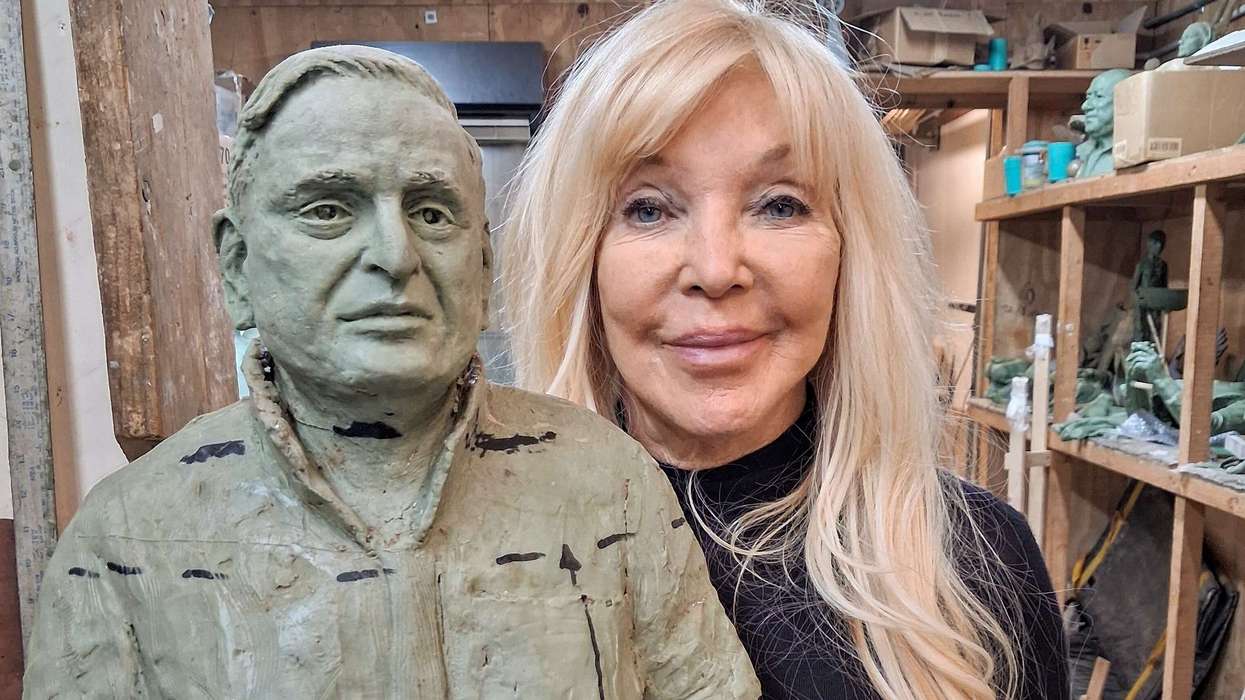
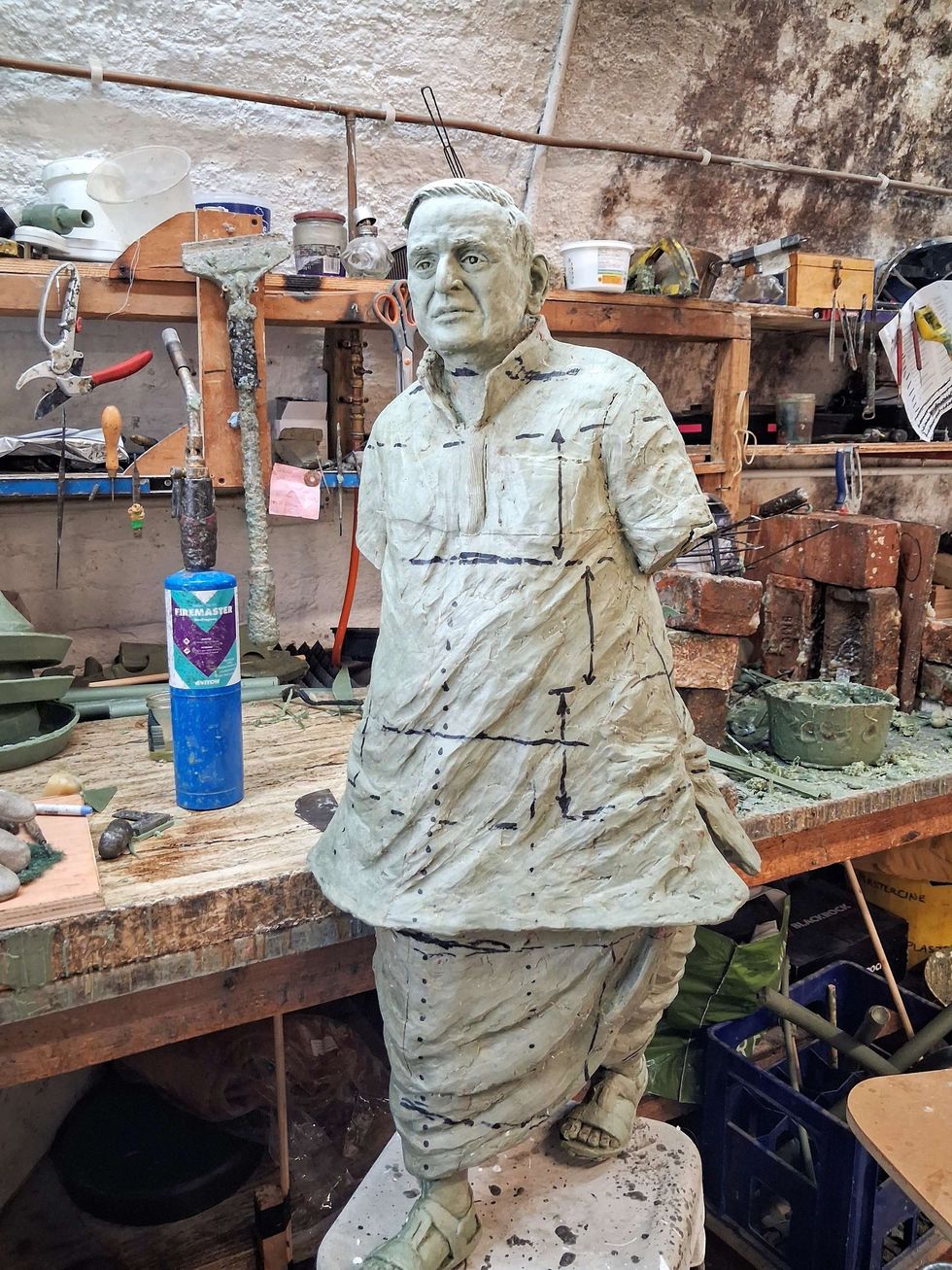 Maquette being finessed Eastern Eye
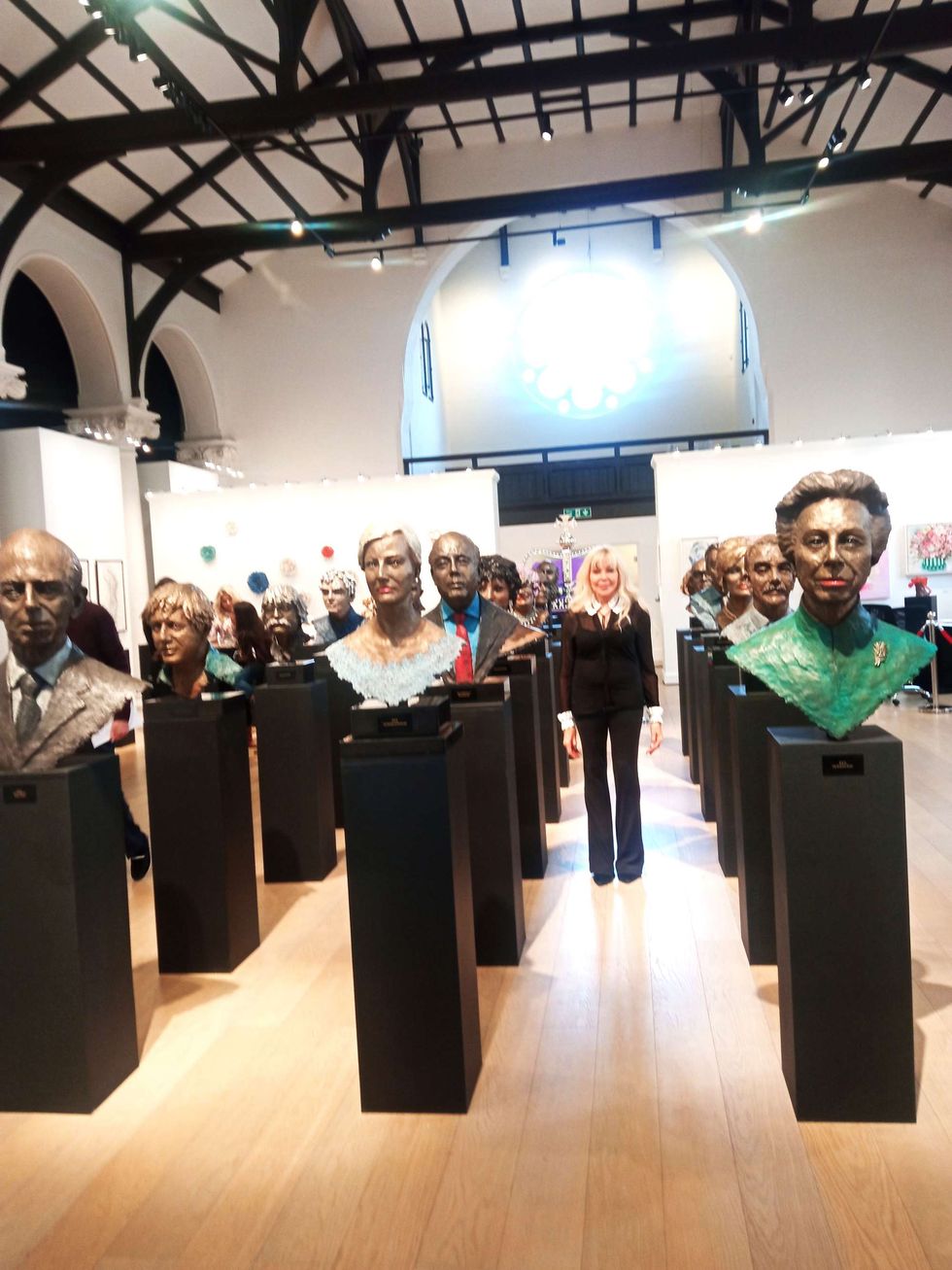 Frances Segelman standing among the many busts of royals and celebrities she has done Eastern Eye
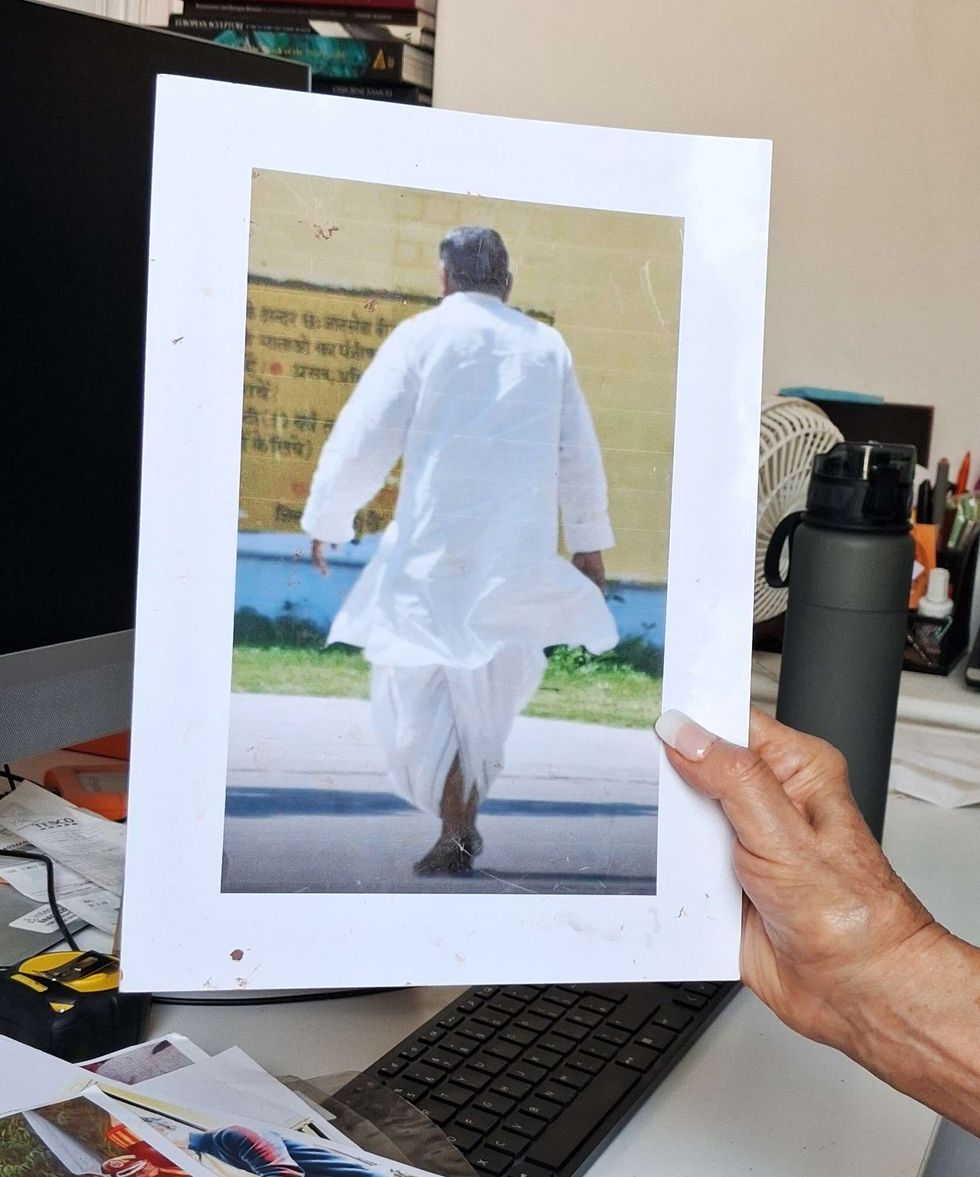 Photograph of Mulayam Singh Yadav from the back Eastern Eye
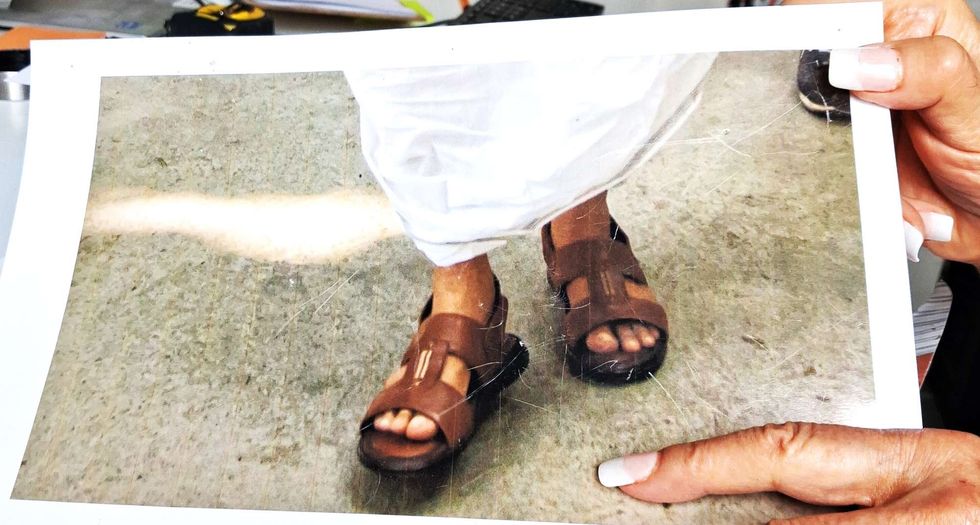 Photograph of Mulayam Singh Yadav wearing sandalsEastern Eye
 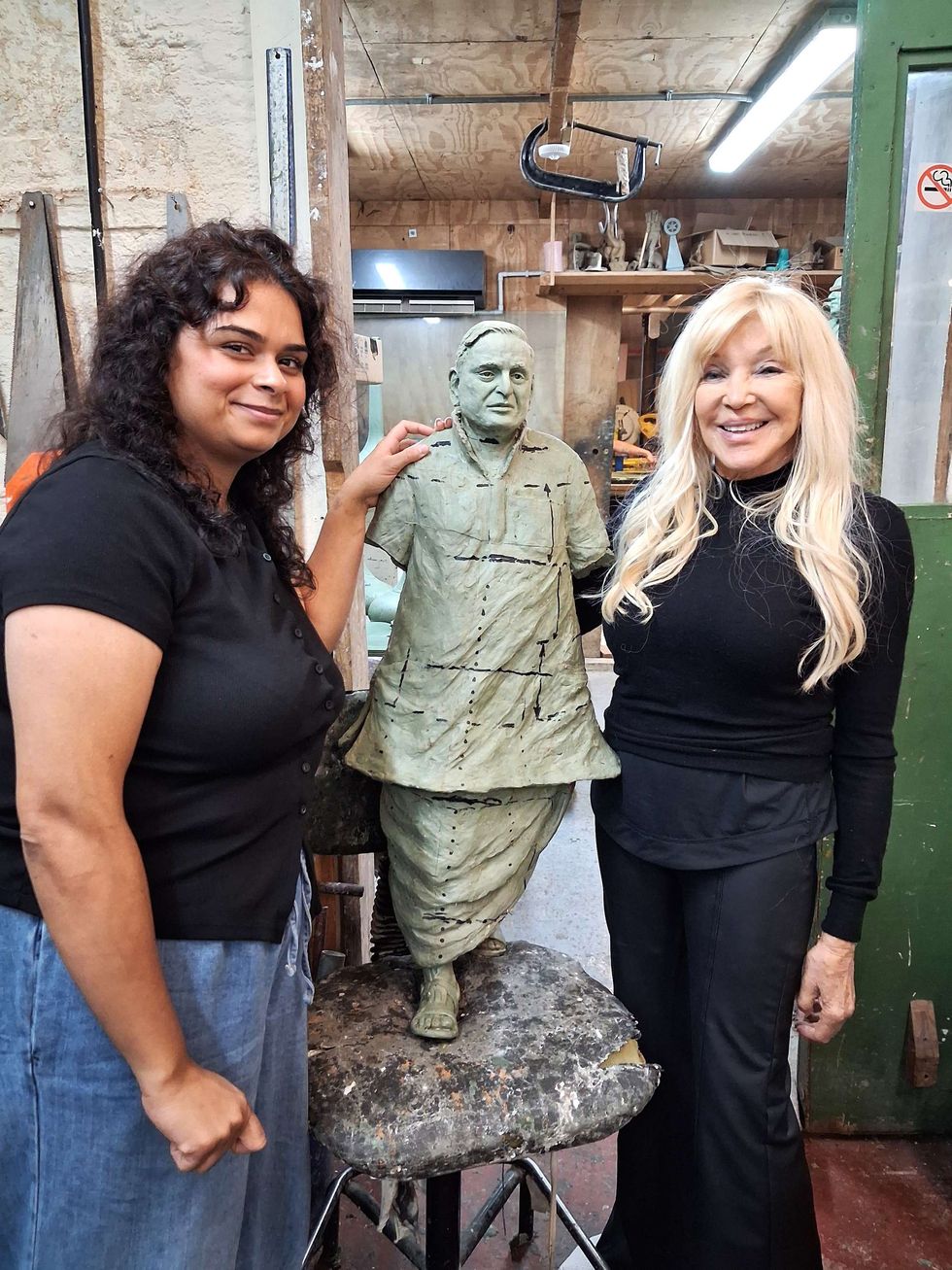 (From left) Nushra Bhoyroo and Frances Segelman with maquette of Mulayam Singh Yadav Eastern Eye
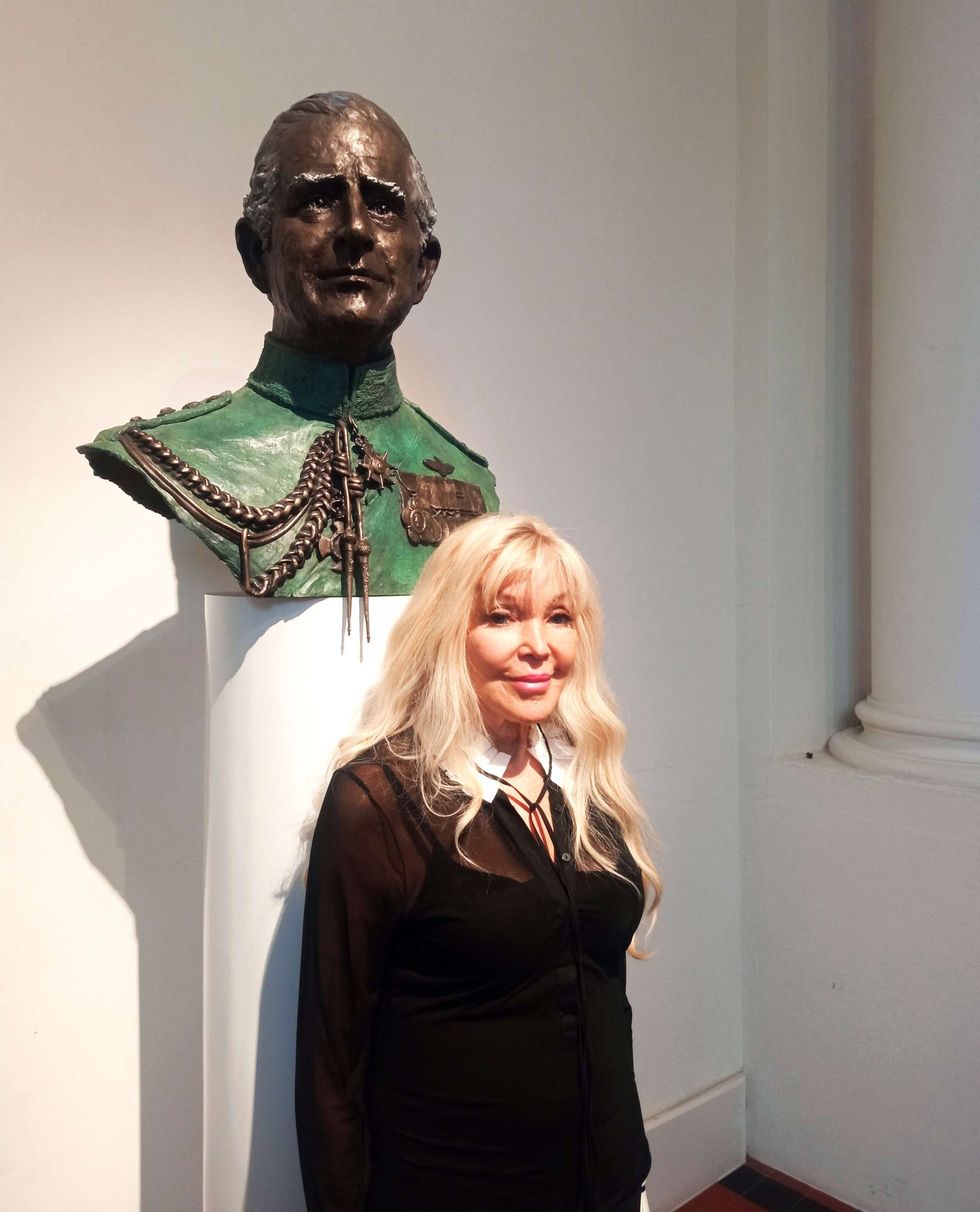 Frances Segelman did King Charles when he was the Princes of Wales Eastern Eye
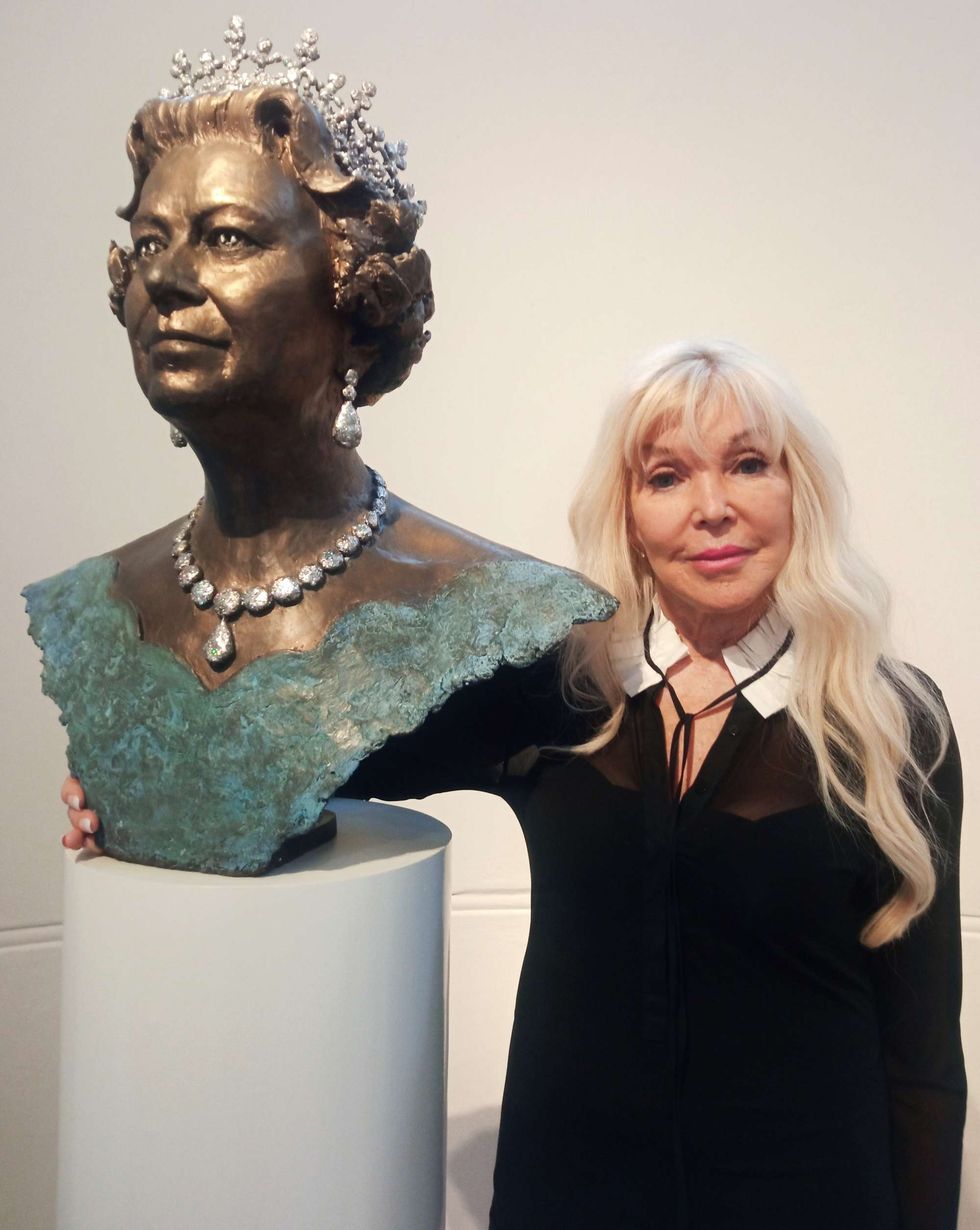 Frances Segelman has previously sculpted the late Queen Eastern Eye
 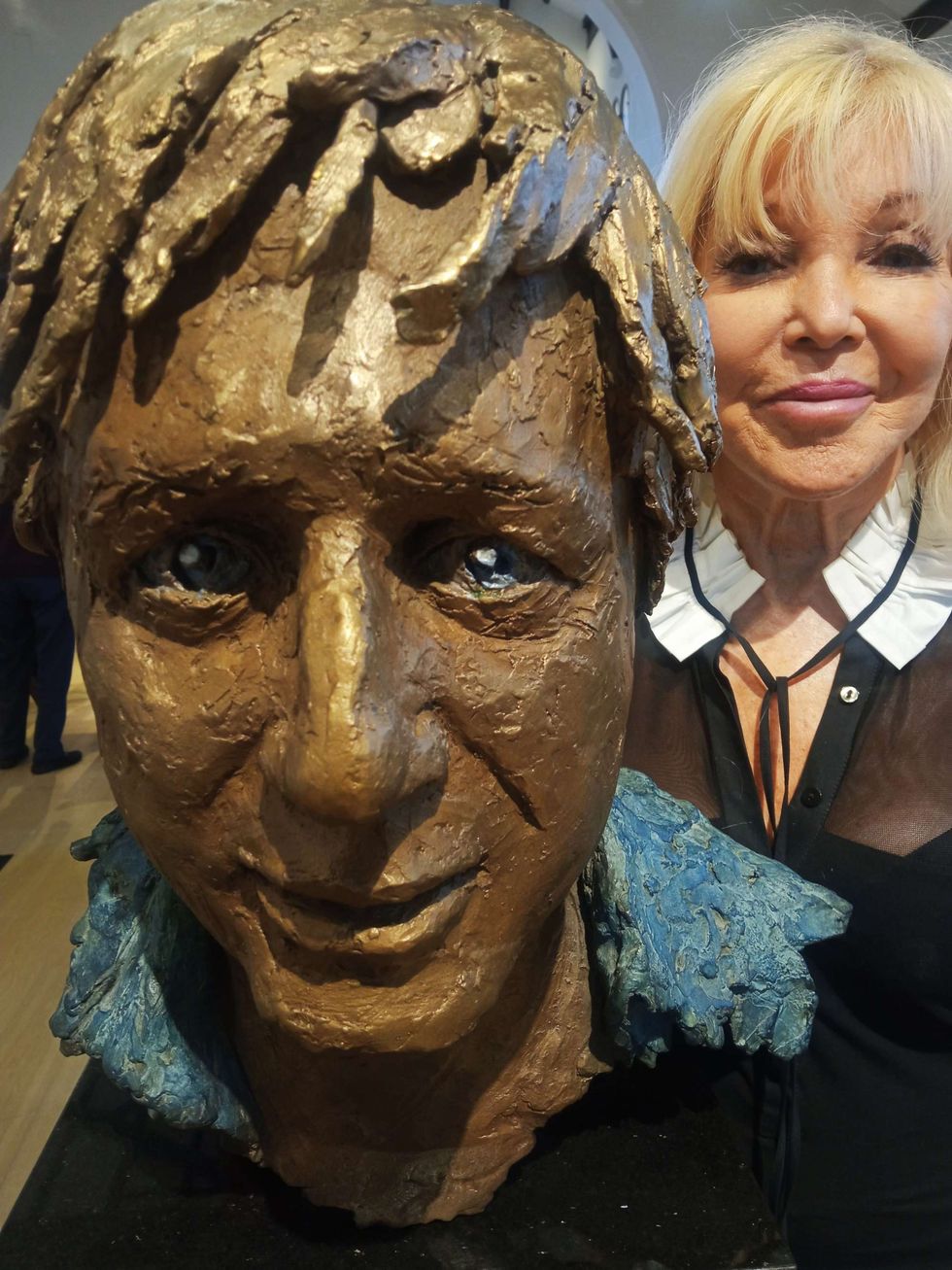 Frances Segelman has previously done the bust of Boris JohnsonEastern Eye
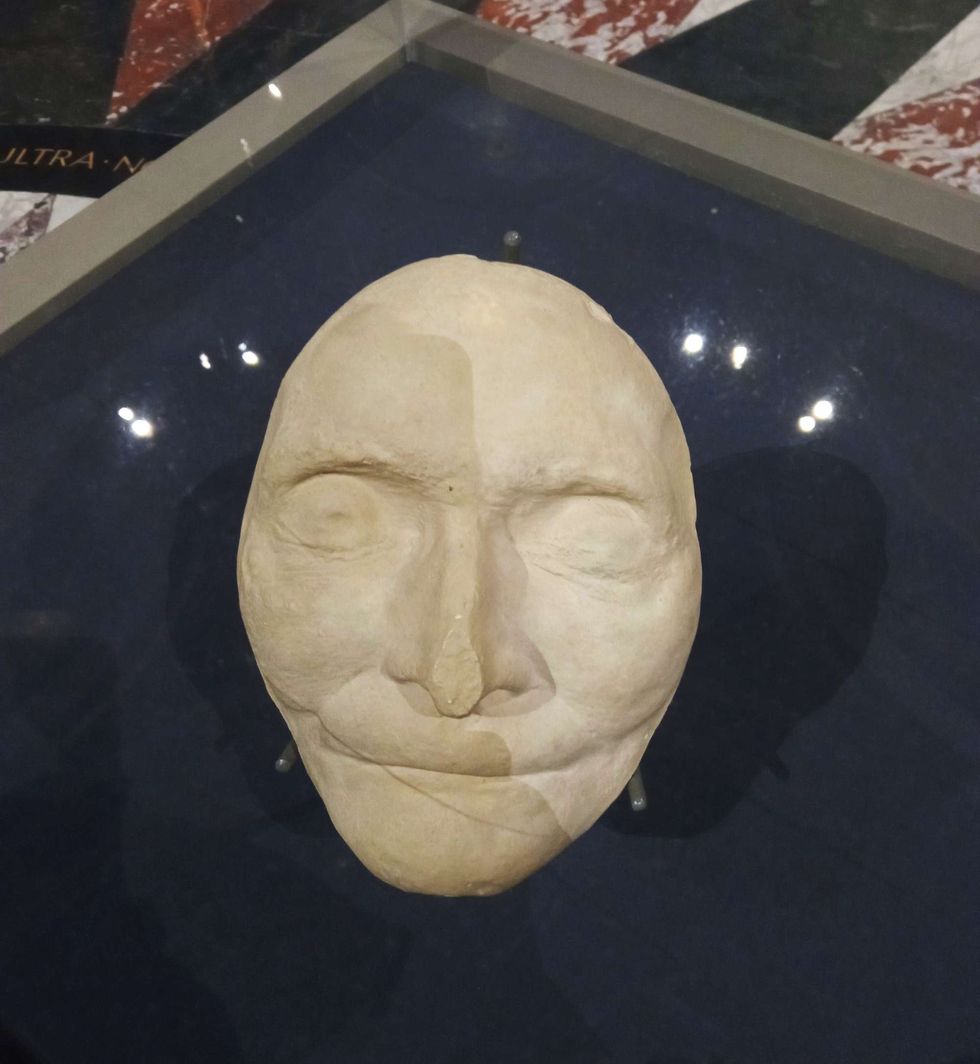 Frances Segelman worked from the death mask of Sir Christopher Wren Eastern Eye
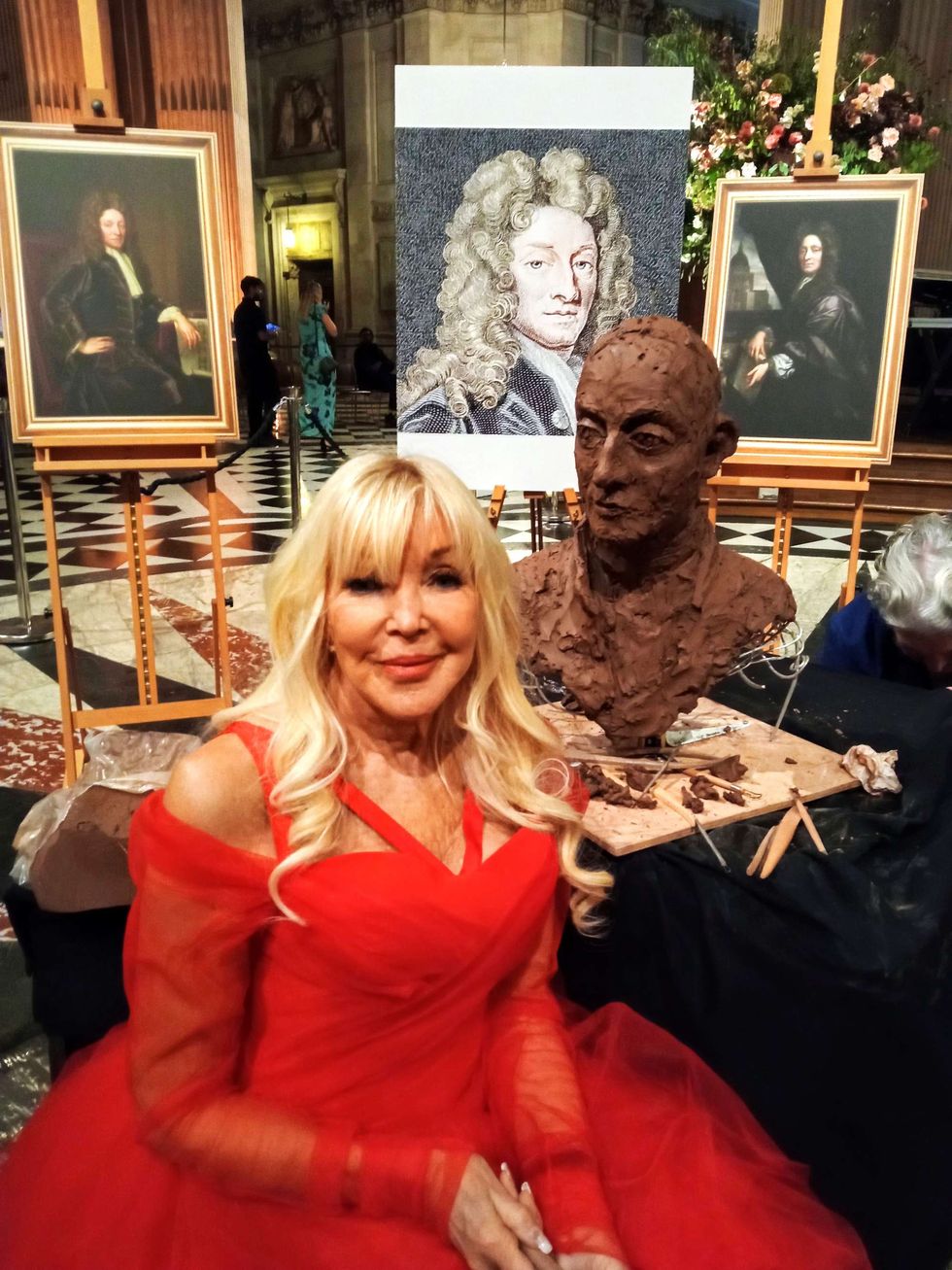 Frances Segelman sculpted bust of Si Christopher Wren from his death mask at St Paul's Cathedral Eastern Eye
 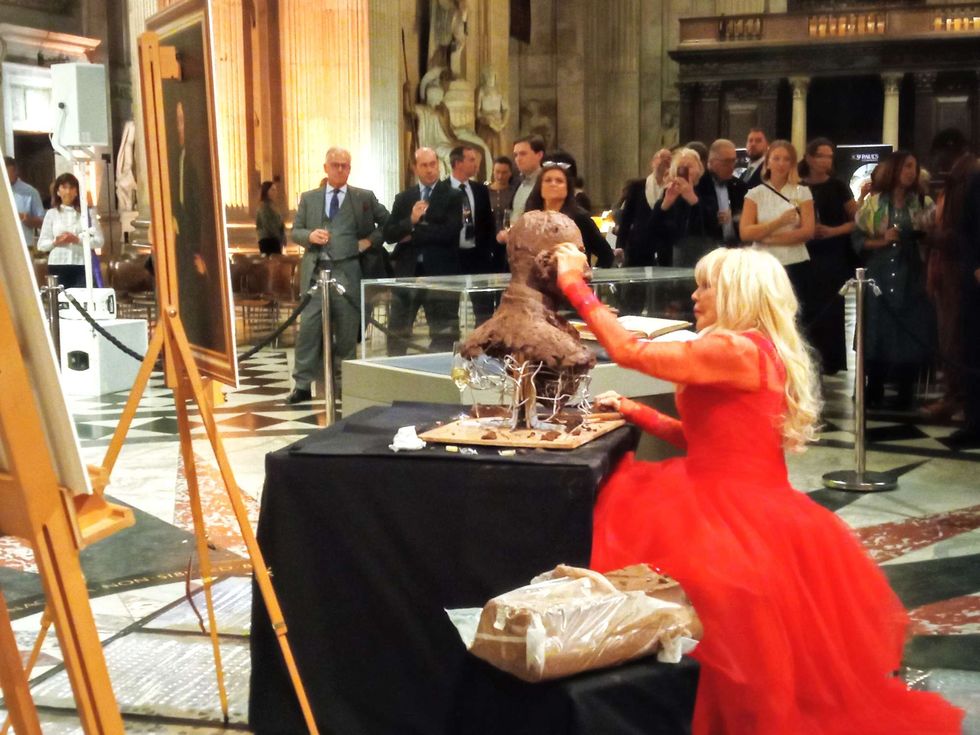 Frances Segelman working on the bust of Christopher Wren in St Paul's Cathedral Eastern Eye
 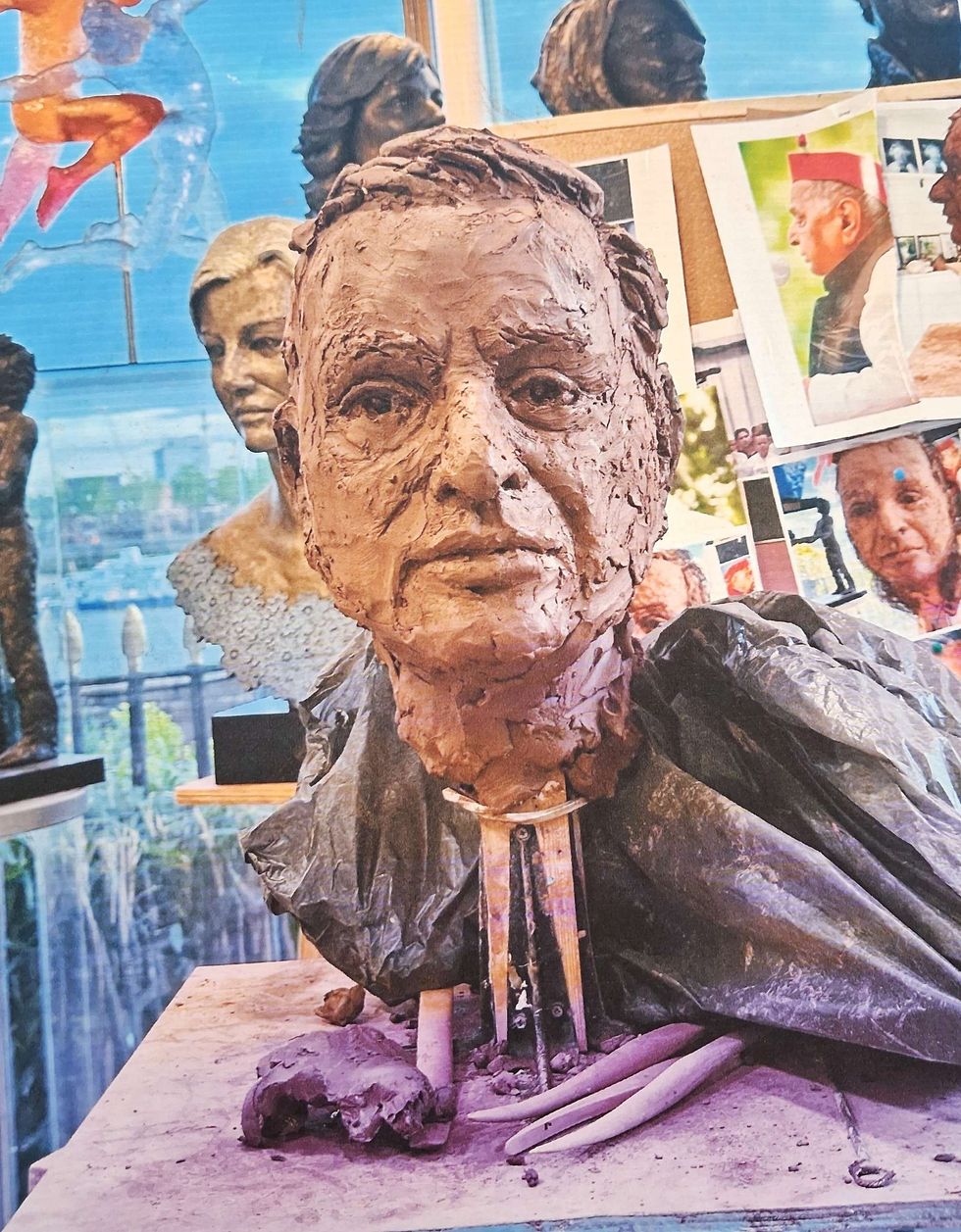 Clay head in Frances Segelman's studio Eastern Eye
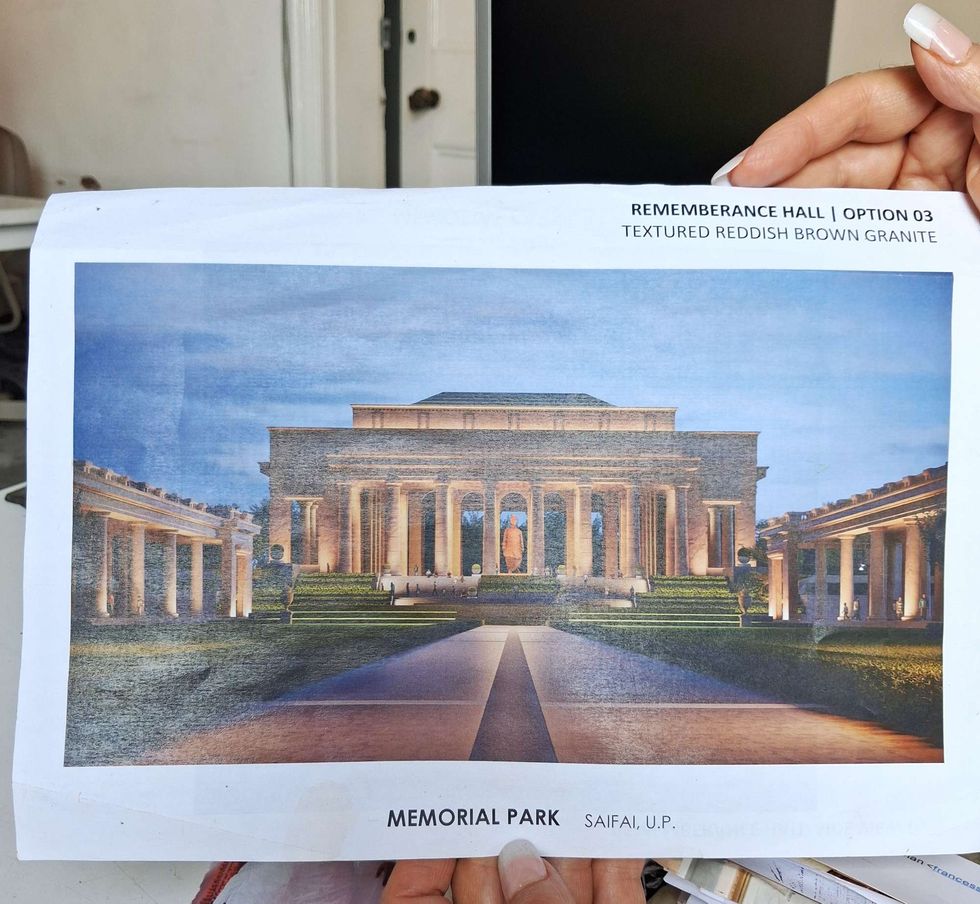 Artist's impression of Mulayum Singh Yadav Memorial Park in Saifai in UP Eastern Eye
 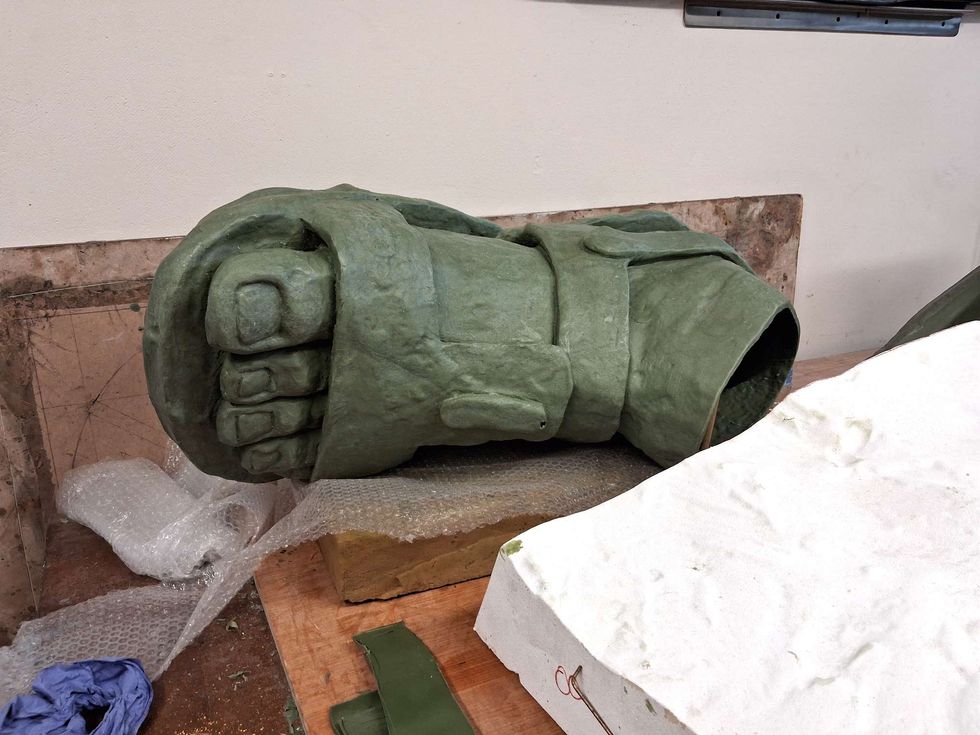 Mulayum Singh Yadav statue pic two. Foot in sandals Eastern Eye
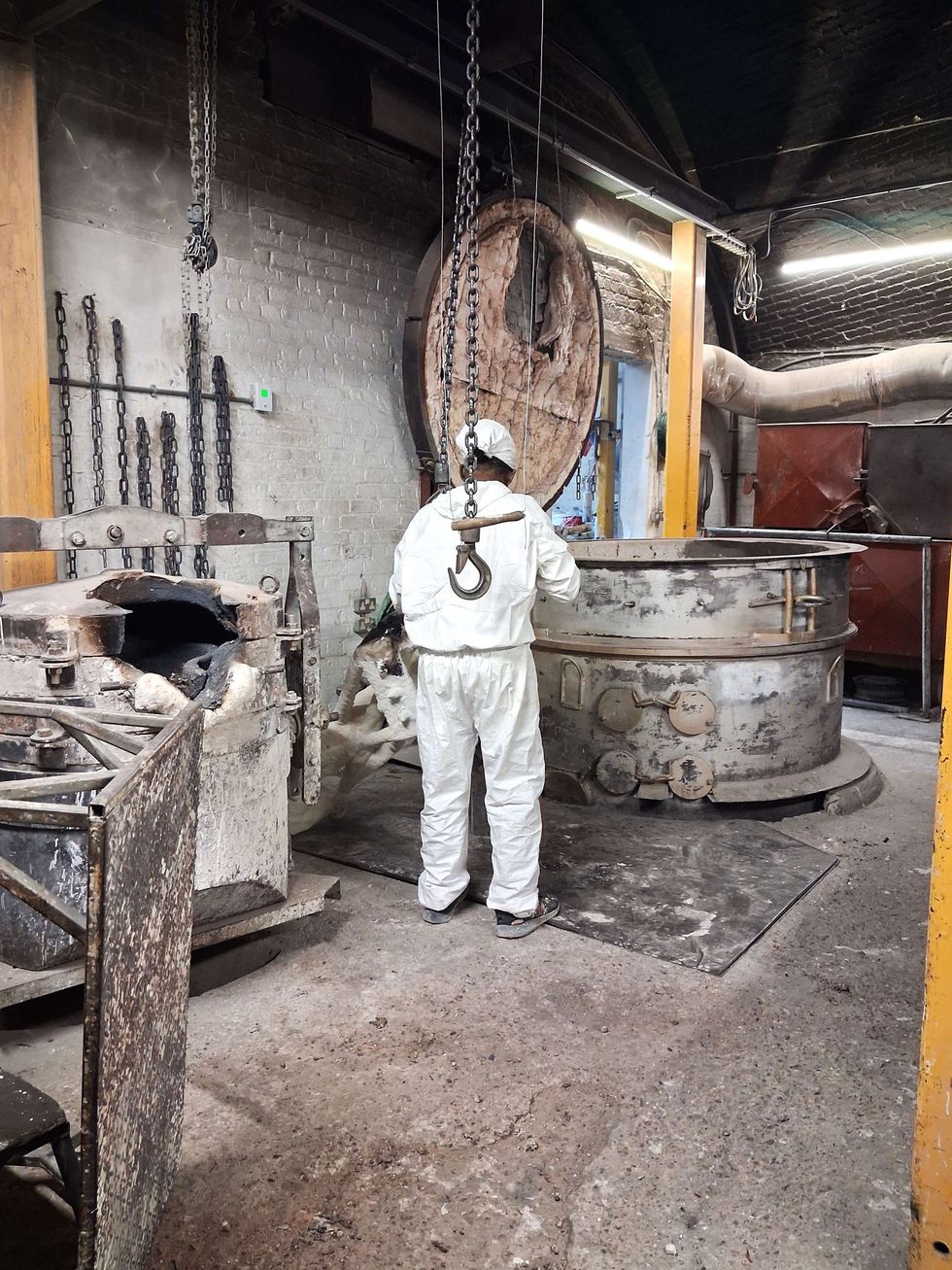 Foundry Eastern Eye
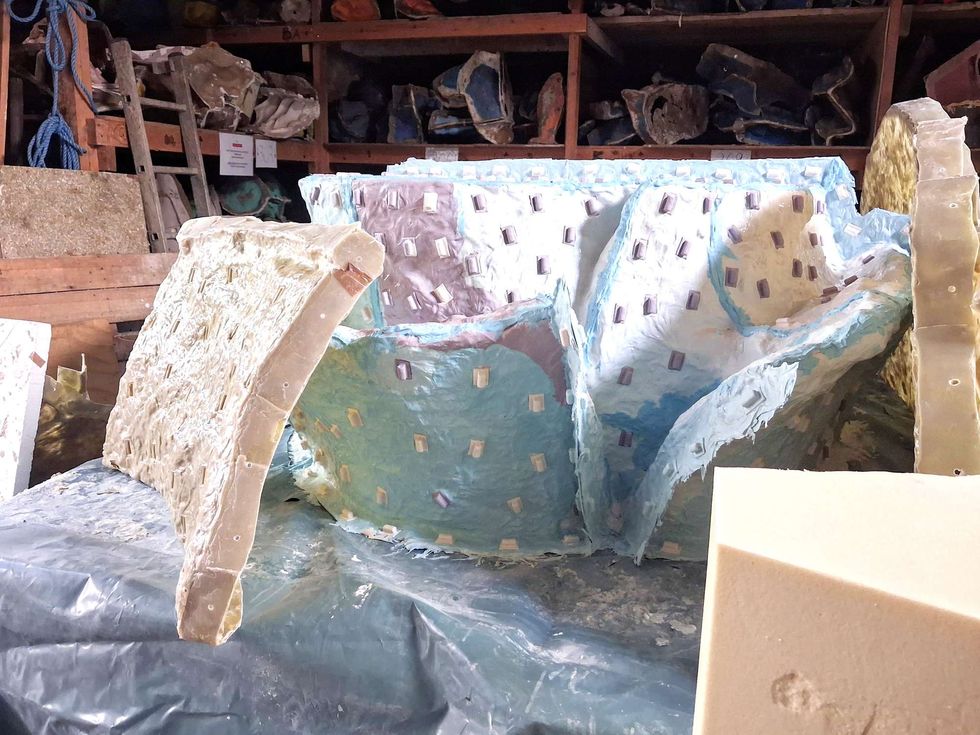 Moulds for the statue Eastern Eye
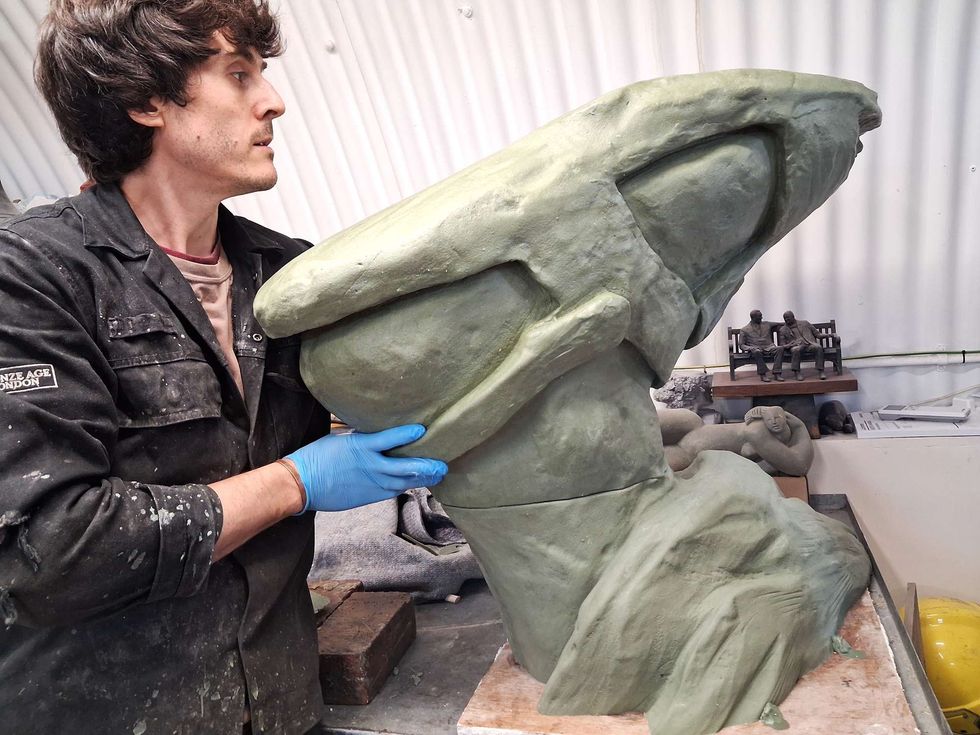 Foot being fitted to leg Eastern Eye
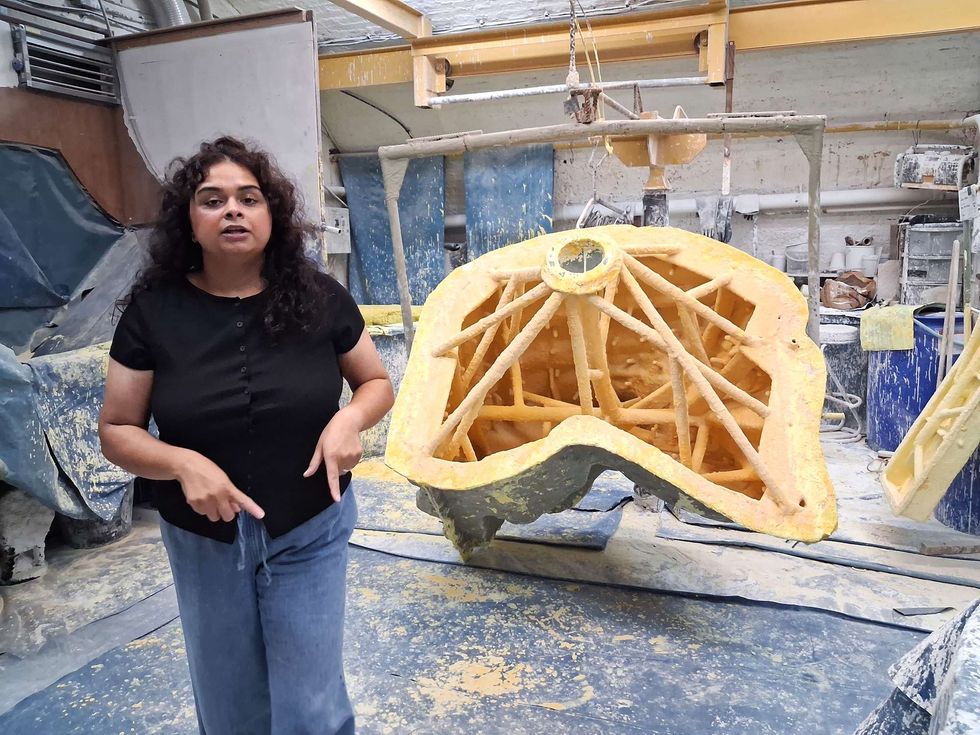 Nushra Bhoyroo showing how hot metal in poured into tubes Eastern Eye