
THE head of the police inspectorate has said that non-crime hate incidents should be scrapped, arguing that officers must draw a clear line between what is offensive and what is criminal.
Sir Andy Cooke, His Majesty’s Chief Inspector of Constabulary, made the comments as he released his annual report on the state of policing in England and Wales. He said that while much of the public expect officers to tackle serious crime and anti-social behaviour, too much time is being spent on matters that do not amount to criminality.
“Police still need to get the basics right and focus on the issues that matter to the public,” Sir Andy said. “I think we need to separate the offensive from the criminal. We need, at times, to allow people to speak openly without the fear that their opinions will put them on the wrong side of the law.”
Non-crime hate incidents, often referred to as NCHIs, were introduced in 2014 following the Stephen Lawrence inquiry. They are logged when behaviour is considered hostile or prejudiced but falls short of a crime.
More than 130,000 such incidents have been recorded in England and Wales, and while they do not appear on criminal records, they can show up on enhanced Disclosure and Barring Service checks.
Critics say the system has a chilling effect on free speech. In one case, officers recorded an incident when someone refused to shake another person’s hand in a gender identity dispute. In another, a doctor was spoken to after allegedly misdiagnosing a patient.
The issue has gained fresh attention following the arrest of comedy writer Graham Linehan, who was detained by armed officers last week over online comments.
Sir Andy described the action as “heavy handed” and warned it risked damaging public confidence. “Police officers should always use common sense … was it a great public optic? No, it wasn’t,” he said. “Lessons will be learned but it makes the policing job harder when these things occur.”
He added that while much offensive material circulates online, the police should only be concerned with tackling threats and genuine criminality. “I’m a firm believer that non-crime hate incidents are no longer required, and that intelligence can be gathered in a different way which causes less concern to the public and is easier for policing,” he was quoted as saying.
Sir Mark Rowley, commissioner of the Metropolitan Police, backed Sir Andy’s view. He said successive governments had failed to provide clear rules on dealing with social media posts, leaving officers “between a rock and a hard place”. He added: “We think we need more flexibility … and I agree that non-crime hate incidents should no longer be recorded.”
Sir Andy’s report also highlighted that although forces have made improvements over the past year, public trust remains low. He urged the government to fully fund its “safer streets” mission, which aims to cut knife crime and reduce violence against women and girls.
“This is a once-in-a-lifetime opportunity to start the reform policing needs,” he said. “It will be a missed opportunity if it is not properly funded from the start.”


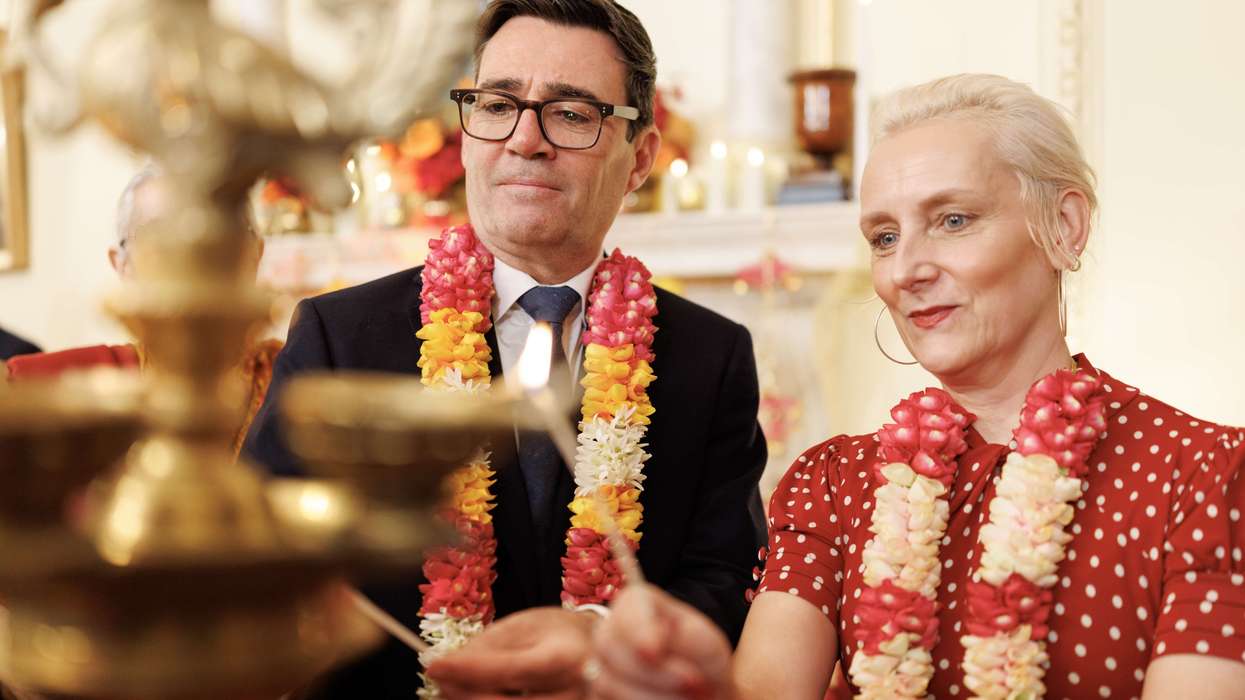


 Curator Emma Slocombe with ikat robes and arabachi coats in the Peter the Great Room in Blickling Hall Amit Roy
 View of the entrance to Blickling Hall on a rainy autumn dayAmit Roy
 Kente cloth from Ghana in the Long Gallery in Blickling Hall
 Decoration in the Great Hall at Blickling Hall Amit Roy
 Palampore fragment made in coastal south-east India in the Brown Room in Blickling Hall Amit Roy
 Bed valance dating from early 1700s in the Italian Print Room at Blickling Hall Amit Roy
 Indian inspired fabric draped on sofas in the South Drawing Room in Blickling Hall Amit Roy
 Indian inspired fabric draped on sofas in the South Drawing Room with Indian carpet in Blickling Hall Amit Roy
 Karun Thakar has picked out the geometric patterns in the bookcase and the Kente cloth in the Long Gallery in Blickling Hall Amit Roy
 Large tapestry depicting Peter the Great defeating the Swedish army at the Battle of Poltava in 1709 Amit Roy
 ikat robes and arabachi coats in the Peter the Great Room in Blickling Hall Amit Roy
 Baghs and kanthas made by women provide contrast to the men only portraits in the Great Hall at Blickling Hall Amit Roy
 Baghs and kanthas in the entrance Great Hall at Blickling Hall Amit Roy
 Baghs and Kanthas in the Great Hall in harmony with stained glass window at Blickling Hall Amit Roy
 Kimonos reflect Japanese influence in Upper Ante Room in Blickling Hall Amit Roy
 Kimono in Upper Ante Room in Blickling Hall
 A view of the Palace and fort at Agra shows romantic side of India Amit Roy
 Blickling Hall Amit Roy
 Table carpet, European 1670-1680 Amit Roy
 Unfinished 17th century Italian embroidery in the Print Room at Blickling Hall Amit Roy
 Picture of Kashmir shows a romantic view of India Amit Roy
 A panel of Ashburnham bed hangings made in Gujarat for sale in Europe in the Brown Room in Blickling Hall Amit Roy
 Colcha made in the 1600s by women in Bengal for the Portuguese market in the Long Gallery at Blickling Hall Amit Roy