
Highlights
- 3rd Farnborough Rainbows held a South Asian-inspired celebration to mark the end of term.
- Activities included sari-tying, yoga, language games, and sampling South Asian snacks.
- Leaders wore traditional outfits to share their cultural heritage.
- The event aimed to promote curiosity, inclusivity, and cultural understanding.
- Girls aged 4–7 embraced food, music, dress and traditions from across South Asia.
Members of the 3rd Farnborough Rainbows in Orpington enjoyed a vibrant end-of-term celebration in honour of South Asian Heritage Month. The unit, part of Girlguiding’s youngest section, explored South Asian cultures through food, clothing, language and movement.
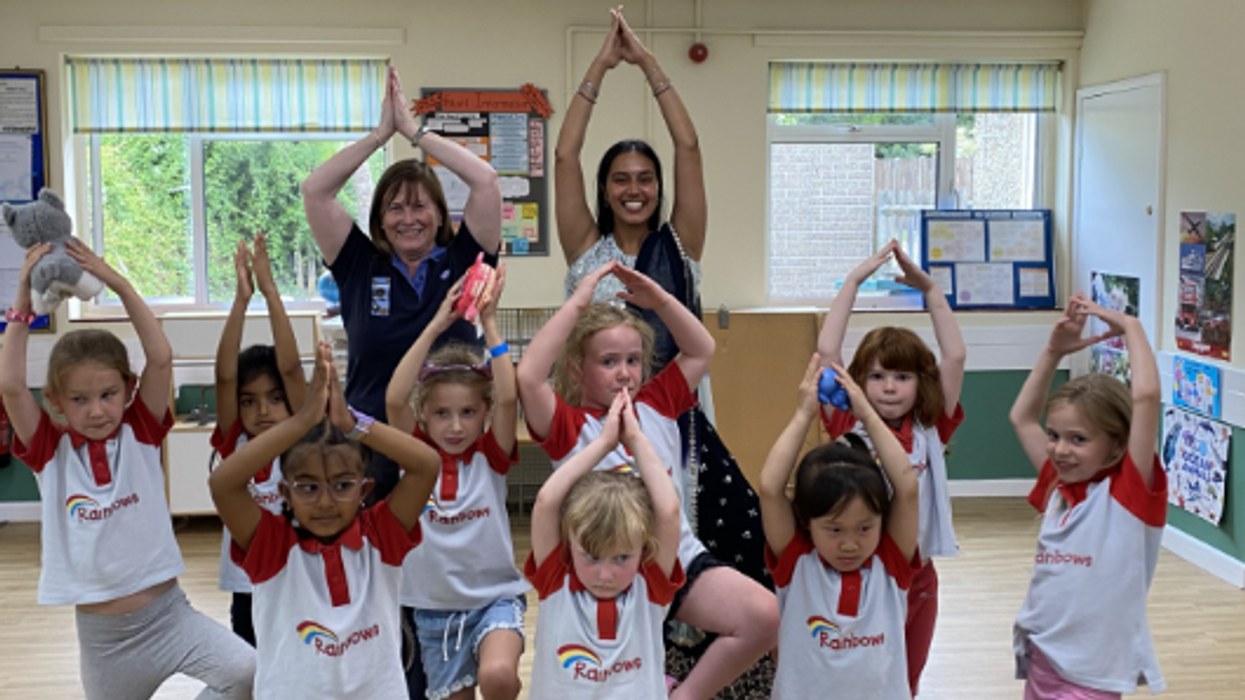
The session included sari-tying, eating samosas, learning words in South Asian languages, and practising yoga poses. Leaders said the evening helped introduce the girls, aged four to seven, to new cultures in an accessible, fun way.
Sharing heritage through tradition and experience
Assistant leader Ayushi Bhat, who led the event, said the evening created space for the girls to be curious and inclusive.
“We have a mix of cultures in our unit, and it’s really special for the girls to see that everyone’s heritage is something to be proud of and shared,” she said.
“They tried on saris, danced to music they’d never heard before, and explored different traditions through food and language. The room was filled with laughter, curiosity and a lovely sense of togetherness.”
Ayushi, originally from Karnataka in South India, wore a colourful lehenga with a bindi. Fellow leader Peheli Lekamwattage, originally from Sri Lanka, wore a traditional sari. Both chose to wear cultural dress to help bring their heritage into the Girlguiding space.
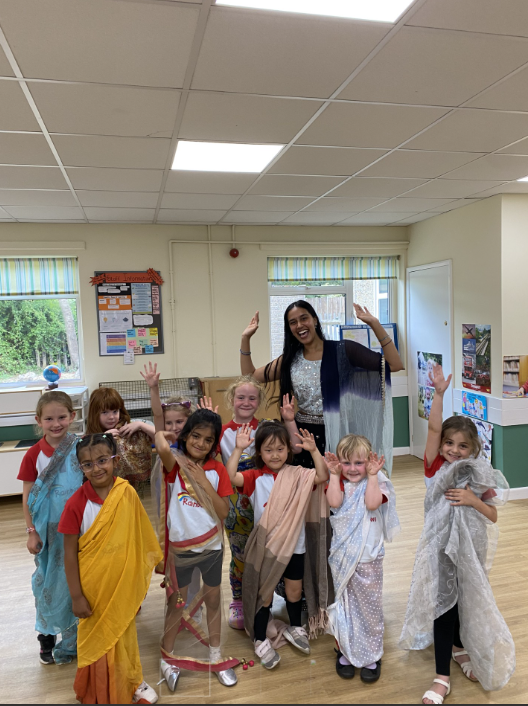 South Asian Heritage Month is observed annually from 18 July to 17 AugustGirlguiding
Ancient practices and new learning
Yoga formed a part of the evening’s activities, with girls learning simple poses like vrikshasana (tree pose) and discussing the Sanskrit word shanti, meaning peace.
“Yoga has its roots in ancient India and is closely tied to my Hindu background,” Ayushi said. “It’s something I grew up with, and it was lovely to share that in a calm, age-appropriate way.”
Alongside a picnic, the girls also learnt new words in Hindi, Marathi, Sanskrit and Sinhalese, and coloured in traditional mehndi patterns – commonly used in henna art.
Six-year-old Rainbow Rosie said: “I loved learning about the different countries in South Asia, and especially how to tie a sari!”
Girlguiding reflects a diverse UK
South Asian Heritage Month is observed annually from 18 July to 17 August. It celebrates the histories, identities and links between the UK and countries such as Afghanistan, Bangladesh, Bhutan, India, The Maldives, Nepal, Pakistan and Sri Lanka.
Inclusivity remains a core value for Girlguiding, the UK’s largest youth organisation dedicated to girls.
“These sorts of celebrations reflect the diversity of our communities,” Ayushi added.
“They teach girls to value difference and embrace what makes us all unique — which is exactly what Girlguiding stands for.”