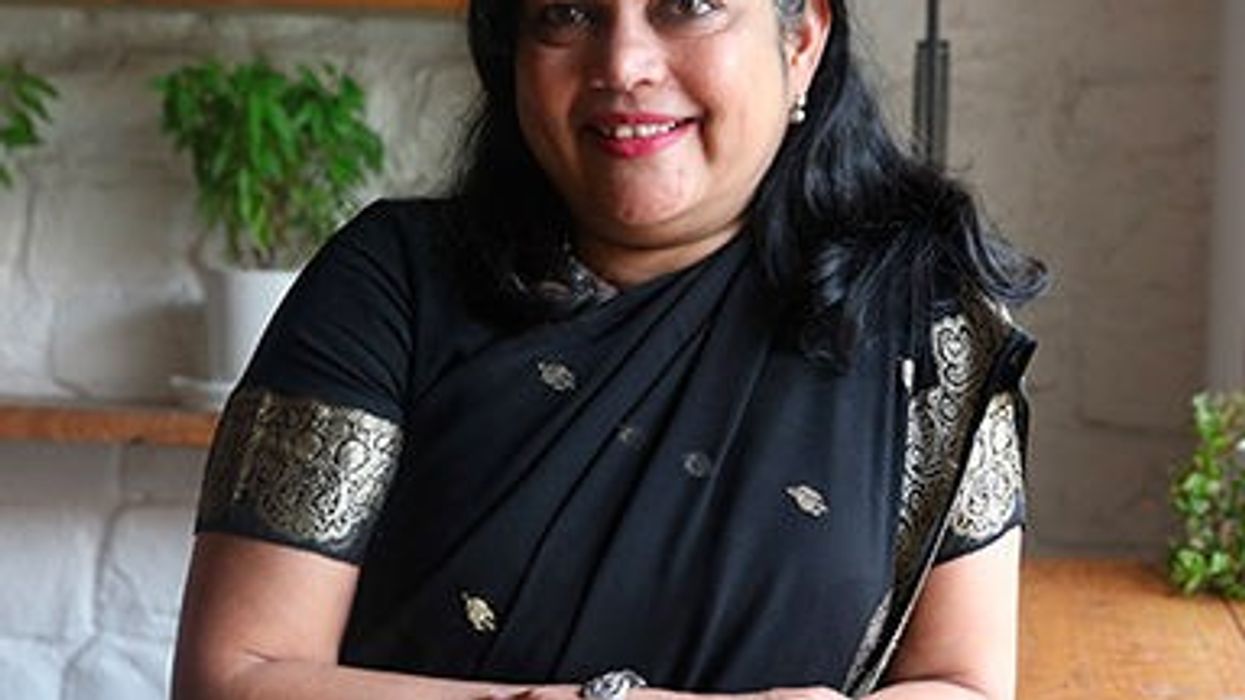

INDIA's only woman-led unicorn Nykaa made its market debut Wednesday (10), tripling founder Falguni Nayar's net worth and making her the country's newest self-made billionaire in an ongoing IPO boom.
Nayar, 58, joined only six other Indian women dollar billionaires as her beauty and fashion retailer Nykaa's parent company FSN floated on the Mumbai stock exchange, hitting a valuation of $13.5 billion in the first five minutes of trade.
Investment banker Nayar turned entrepreneur at 50 with the launch of the e-commerce platform in 2012, selling beauty and personal care products via its mobile app and website.
"I hope the Nykaa journey -- an Indian-born, Indian-owned and Indian-managed dream-come-true -- can inspire each of you," Nayar said at the listing ceremony on Wednesday.
Nykaa (the Sanskrit word for actress) quickly became popular with young tech-savvy Indians -- predominantly women -- who preferred the wide selection of brands compared with what was on offer at their local shops.
"The best part about Nykaa is that it lets me access so many global brands that had never been sold in India before," 30-year-old loyal customer Sanaeya said.
"They have everything from major luxury brands to smaller niche ones and even lesser-known Korean skincare products. I always find something new there."
Endorsements from social media influencers and celebrities -- Bollywood actress Katrina Kaif has invested in the firm -- helped cement Nykaa's popularity as it battles giants such as Amazon and Flipkart.
Nykaa has also manufactured its own in-house brand of products since 2015 and recently began selling clothes and household products. It has a growing high street presence with 80 stores across 40 Indian cities.
Nykaa expects India's beauty and personal care market to nearly double in size from 2020 to 2025, reaching nearly $27bn.
Even after selling 4.8 million shares via the IPO, Nayar -- along with her husband and twin children -- continues to own more than half of the company, valuing her stake at $7 billion.
In the list of India's other superrich women, Kiran Mazumdar-Shaw (Biocon) and Divya Gokulnath (Byju's) are the only other self-made billionaires.
Nykaa's three-day IPO was over-subscribed by nearly 82 times last week.
Technology start-ups in India have attracted record investment this year, with more than 33 "unicorns" -- companies valued at more than $1 billion -- created, benefiting from investors spooked by a crackdown on technology giants in China.
Others going public this year include food delivery giant Zomato, whose shares have since risen 80 per cent, and mobile payments pioneer Paytm which is conducting its IPO -- India's biggest -- this week. But unlike many of its loss-making peers, Nykaa is profitable.
(AFP)