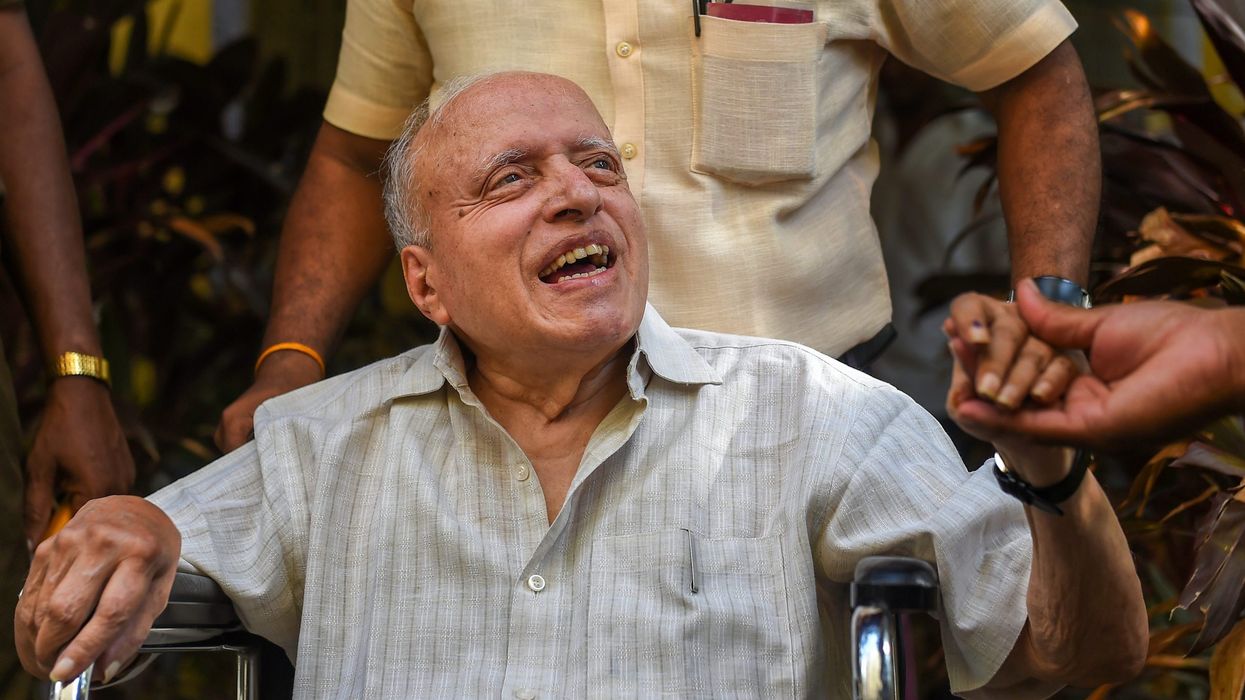
VETERAN agriculture scientist MS Swaminathan passed away in Chennai on Thursday (28). He was 98.
Swaminathan is regarded as the Father of India’s Green Revolution, a period which saw the country adopt the modern farming system, including machinery and high-yielding varieties of crops.
He headed the MS Swaminathan Research Foundation in Chennai which helped India’s low-income farmers produce more yield.
Born on August 7, 1925, in the south Indian state of Tamil Nadu, Swaminathan started his career in 1949, researching the genetics of potato, wheat, rice and jute. He was instrumental in developing high-yielding varieties of paddy.
Swaminathan was appointed president of the International Union of the Conservation of Nature and Natural Resources in 1988 and chair of the National Commission on Farmers in 2004.
The United Nations Environment Programme recognised him as "the Father of Economic Ecology’.
He was awarded the first World Food Prize In 1987 in recognition of his contributions to agriculture.
He was also the recipient of the Ramon Magsaysay Award in 1971 and the Albert Einstein World Science Award in 1986.
Swaminathan is survived by his three daughters - Soumya, Madhura and Nitya.
Prime minister Narendra Modi paid tributes to Swaminathan, saying his “groundbreaking work in agriculture transformed the lives of millions and ensured food security for our nation.”
“Beyond his revolutionary contributions to agriculture, Dr. Swaminathan was a powerhouse of innovation and a nurturing mentor to many. His unwavering commitment to research and mentorship has left an indelible mark on countless scientists and innovators,” Modi said in a post on the social media platform X.
MS Swaminathan, Father of India’s Green Revolution, dies at 98
The United Nations Environment Programme recognised him as ‘the Father of Economic Ecology'