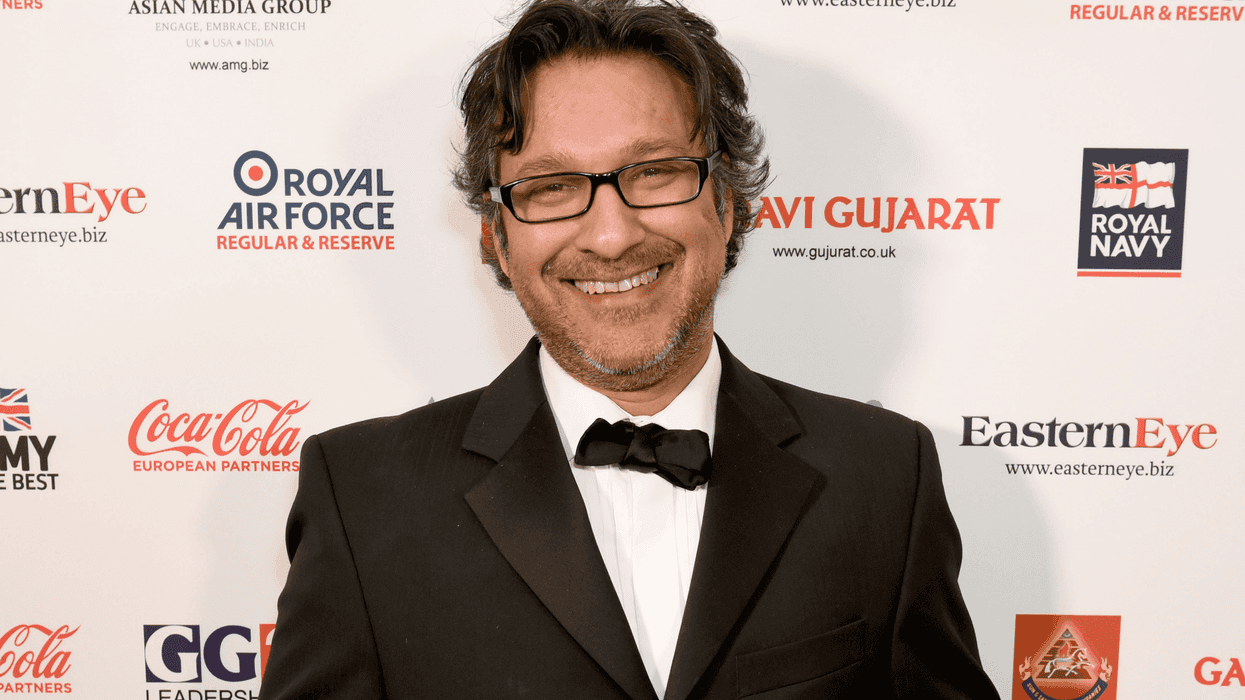

IN BRITAIN, power in broadcasting is rarely loud. It often resides in the quiet authority to shape national conversations – to decide which voices are heard in the morning, which ideas are debated in the evening, and which stories linger in the public mind long after the radio has been switched off. At the centre of that ecosystem sits Mohit Bakaya, director of speech at the BBC and controller of BBC Radio 4 and BBC Radio 4 Extra – roles that place him in charge of the strategy and editorial direction of some of Britain’s most influential audio platforms.
From flagship news programming and cultural debates to investigative podcasts and radio drama, the output he oversees reaches millions each week and helps define how Britain talks about itself.
The significance of that influence becomes clearer when one considers the place Radio 4 occupies in British life. It is the station where prime ministers are scrutinised, authors are made, and the cultural temperature of the nation is taken daily. Politicians court it, intellectuals debate on it, and millions of listeners organise their mornings around it. For anyone steering that institution, editorial choices ripple far beyond the studio.
Bakaya arrived at that position through decades inside the BBC’s creative and editorial machinery. Born in south-west London in 1964, he attended a state school in Pimlico before reading philosophy, politics and economics at Keble College, Oxford.
The intellectual curiosity that would later shape his programming instincts was nurtured early. His father, Madan, had been a production manager in Bollywood who moved to Britain to promote Hindi films, while his mother Uma – a software developer at IBM who also played the sitar, painted and made pottery – embodied a wide-ranging creative life.
She died when he was eight, but the atmosphere of curiosity she fostered endured. The household, he once recalled, was full of debate and culture. “My father brought Indian films to this country, while my mother was an extraordinary polymath. And politics was constantly being talked about in our household. All the genres were there, so it was a little Radio 4 in a funny sort of way,” he once reflected.
That environment seems almost uncannily suited to the station he now runs.
Bakaya joined the BBC in 1993 as a production trainee – part of the corporation’s prestigious intake programme – and began building his reputation in arts broadcasting. Early work on Radio 4’s Front Row and the Radio 3 programme Night Waves placed him at the intersection of culture, politics and ideas. Over time he moved from producing to commissioning and editorial leadership, eventually becoming Radio 4’s commissioning editor for factual programming in 2008.
In that role he shaped a wide range of programming across politics, science, history, religion and current affairs, demonstrating a curatorial instinct that would later prove central to his leadership of the network.
His appointment in 2019 as controller of Radio 4 and Radio 4 Extra marked a generational shift for the station. By 2022, his responsibilities expanded further when he became the BBC’s director of speech, giving him oversight of speech-based content across Radio 4, Radio 5 Live and the BBC Sounds platform.
The job now requires navigating a media landscape transformed by podcasts, streaming and digital listening habits. Yet Bakaya’s approach has been neither to discard tradition nor to preserve it uncritically. Instead, he has pursued what might be called evolutionary change – subtle shifts designed to keep the station relevant without alienating its fiercely loyal audience.
One of the boldest examples came when he oversaw the most extensive reshaping of Radio 4’s schedule in a quarter century.
“It was a very big moment,” he told the GG2 Power List last year. “We moved quite a few things around to better align with when audiences are listening.”
Such adjustments may sound technical, but they matter enormously to listeners who organise their daily routines around familiar programmes. Bakaya understood that sensitivity. “We didn’t move masses, we tweaked,” he explained. “People set their clocks by the schedule, and they like things to be at a certain time. You don’t mess around with that.”
The strategy paid off. Audience figures rose and the station continued to command millions of weekly listeners, even as the wider media industry grappled with fragmentation and declining traditional audiences. Digital listening also expanded rapidly through the BBC Sounds platform, where podcasts and on-demand programmes have opened new avenues for storytelling.
Some of the most notable successes under Bakaya’s watch have come from ambitious audio investigations and narrative podcasts. One project he singled out with particular pride was To Catch a Scorpion, a series that traced the activities of a human trafficker. The podcast’s impact extended beyond broadcasting.
“This was an investigative piece that helped track down and arrest a human trafficker just two days after it aired,” he noted. “Sue Mitchell and Rob Laurie made an incredible podcast that literally changed lives. That’s Radio 4 at its best.”
For Bakaya, that blend of journalism, storytelling and public service represents the core of the BBC’s speech mission.
Yet he also recognises the cultural challenge facing a station long associated with a particular demographic: older, highly educated listeners who represent a traditional image of British public broadcasting. Britain itself has changed dramatically, and Bakaya has quietly worked to ensure the station reflects that diversity.
“I have a very simple principle,” he said. “Any national radio station has to reflect the nation that it broadcasts to.”
That philosophy has shaped everything from the voices heard on air to the stories explored in drama and documentary programming. South Asian characters in The Archers, plays drawing on Hindu epics such as the Mahabharata, and broader representation across programming have gradually widened the station’s cultural frame.
Even amid rapid technological change, Bakaya remains convinced that the essence of Radio 4 has not altered.
“Radio 4 has always been a place for intelligent conversation, storytelling, and in-depth journalism,” he said. “Our job is to keep evolving without losing what makes us special.”
ENDS