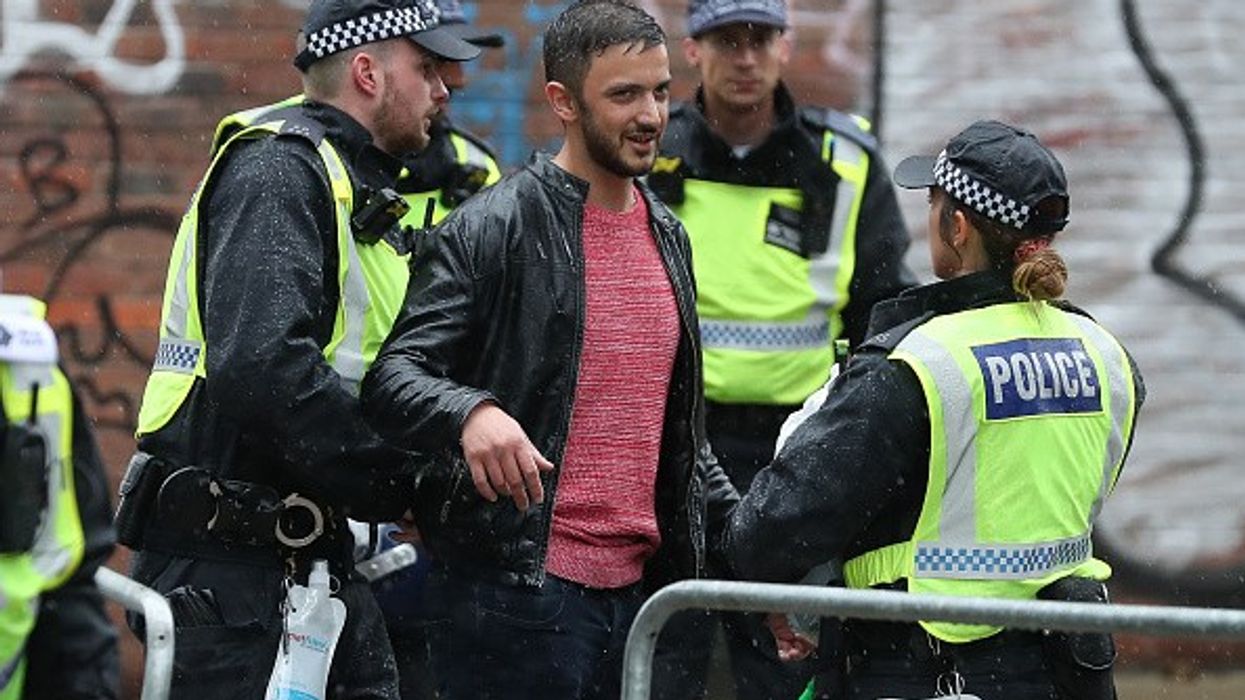

Few or no members from minority ethnic backgrounds feature in some of the UK’s police panels set up to scrutinise stop-and-search incidents, a recent media report claimed.
In Staffordshire only one out of 86 people who sit on the independent police scrutiny panels across the force’s Neighbourhood Policing Teams is from a minority ethnic background, according to data obtained by Observer. It further adds that all 12 members of Dyfed-Powys Office of the Police and Crime Commissioner’s Quality Assurance panel are white.
Similarly, there are no black people on Lancashire constabulary’s eight-member countywide community stop-and-search scrutiny panel, said the Sunday (13) report.
Community scrutiny panels are supposed to have “sufficient” representation of marginalised groups and individuals most affected by stop-and-search, including those from ethnic minority backgrounds, according to guidance from the College of Policing.
Just over half of all police forces responded to the request for information, suggesting that more forces may have a similar problem. However, out of the 22 forces that provided figures, the majority of panels were found to have fair levels of representation, with nine having at least half of their members identifying as non-white.
Black people are nine times more likely to be stopped and searched than white people in England and Wales, according to the most recent figures, due to which campaigners have been warning that police legitimacy will be undermined in areas if they don’t have a representative community panel challenging contentious encounters.
“Having a diverse panel, which can bring a variety of life experiences into the scrutiny role, is a crucial part of building legitimacy and holding the police to account,” Nina Champion, director of the Criminal Justice Alliance, a coalition of 160 organisations, said.
Another report earlier this year by Her Majesty’s Inspectorate of Constabulary said stop-and-search was disproportionately used on certain ethnic groups without apparent evidence as to why, with one in 10 stops were based on intelligence, most of the time relying on “officers’ suspicions”.
Meanwhile, Staffordshire Commissioner’s Office and Dyfed-Powys Office of the Police and Crime Commissioner have said in different statements that they are committed and attempting to make their scrutiny panels accurately reflect the diversity of their communities.