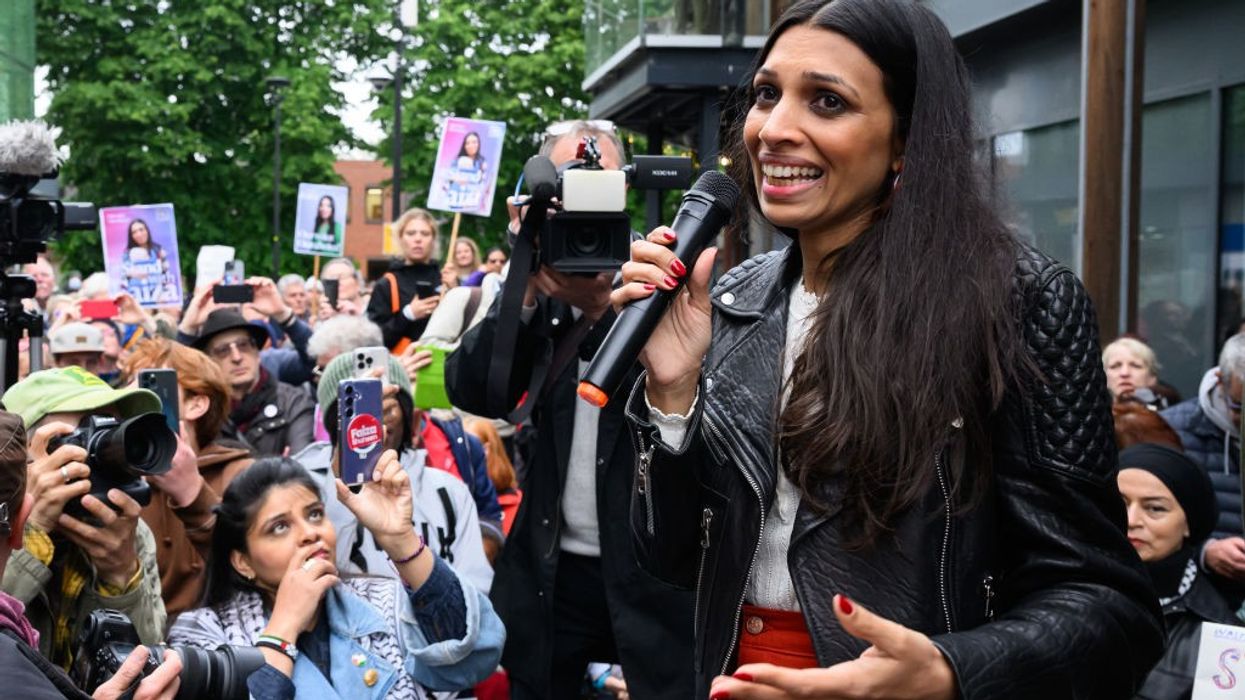

Faiza Shaheen, who was disallowed by the Labour party to contest the general election, has accused party activists of knocking at her door while campaigning for the candidate who replaced her.
She wrote on X, formerly Twitter: “Wow, the Labour Party just had the gall to knock on my door.
“To be clear, when you use [the] Labour Party app you see the names of [those] who live there, I’m livid,” she added.
She published a photo of the apparent Labour canvasser, a woman dressed in pink, prompting criticism from other activists for targeting a volunteer.
Shaheen drew the anger of Labour party leaders after she allegedly liked a series of social media posts that downplayed anti-Semitism accusations.
She is reportedly contemplating to contest as an independent candidate for Chingford and Woodford Green in London.
The latest gaffe by Labour activists is likely to vitiate the row between Sir Keir Starmer’s camp and the left-wingers in the party.
Last week, Diane Abbott and her supporters claimed victory after she was eventually allowed to stand for Labour in Hackney North and Stoke Newington, after Sir Keir initially refused to back her.
That followed an investigation into her remark that Jewish people can experience discrimination but not racism.
Abbott accused Labour chiefs of carrying out “a cull of Left-wingers”, which Sir Keir denied.
She and the Labour Muslim Network have condemned the deselection of Shaheen.
Read Also: ‘We need foreign workers’: Businesses and GMB union tell Starmer
Shaheen has said the person who has replaced her is doing badly and feels it will be easy win for the Tory incumbent Iain Duncan Smith.
Labour party's governing body the National Executive Committee will formally approve the party’s candidates at a meeting on Tuesday.






 Curator Emma Slocombe with ikat robes and arabachi coats in the Peter the Great Room in Blickling Hall Amit Roy
 View of the entrance to Blickling Hall on a rainy autumn dayAmit Roy
 Kente cloth from Ghana in the Long Gallery in Blickling Hall
 Decoration in the Great Hall at Blickling Hall Amit Roy
 Palampore fragment made in coastal south-east India in the Brown Room in Blickling Hall Amit Roy
 Bed valance dating from early 1700s in the Italian Print Room at Blickling Hall Amit Roy
 Indian inspired fabric draped on sofas in the South Drawing Room in Blickling Hall Amit Roy
 Indian inspired fabric draped on sofas in the South Drawing Room with Indian carpet in Blickling Hall Amit Roy
 Karun Thakar has picked out the geometric patterns in the bookcase and the Kente cloth in the Long Gallery in Blickling Hall Amit Roy
 Large tapestry depicting Peter the Great defeating the Swedish army at the Battle of Poltava in 1709 Amit Roy
 ikat robes and arabachi coats in the Peter the Great Room in Blickling Hall Amit Roy
 Baghs and kanthas made by women provide contrast to the men only portraits in the Great Hall at Blickling Hall Amit Roy
 Baghs and kanthas in the entrance Great Hall at Blickling Hall Amit Roy
 Baghs and Kanthas in the Great Hall in harmony with stained glass window at Blickling Hall Amit Roy
 Kimonos reflect Japanese influence in Upper Ante Room in Blickling Hall Amit Roy
 Kimono in Upper Ante Room in Blickling Hall
 A view of the Palace and fort at Agra shows romantic side of India Amit Roy
 Blickling Hall Amit Roy
 Table carpet, European 1670-1680 Amit Roy
 Unfinished 17th century Italian embroidery in the Print Room at Blickling Hall Amit Roy
 Picture of Kashmir shows a romantic view of India Amit Roy
 A panel of Ashburnham bed hangings made in Gujarat for sale in Europe in the Brown Room in Blickling Hall Amit Roy
 Colcha made in the 1600s by women in Bengal for the Portuguese market in the Long Gallery at Blickling Hall Amit Roy




