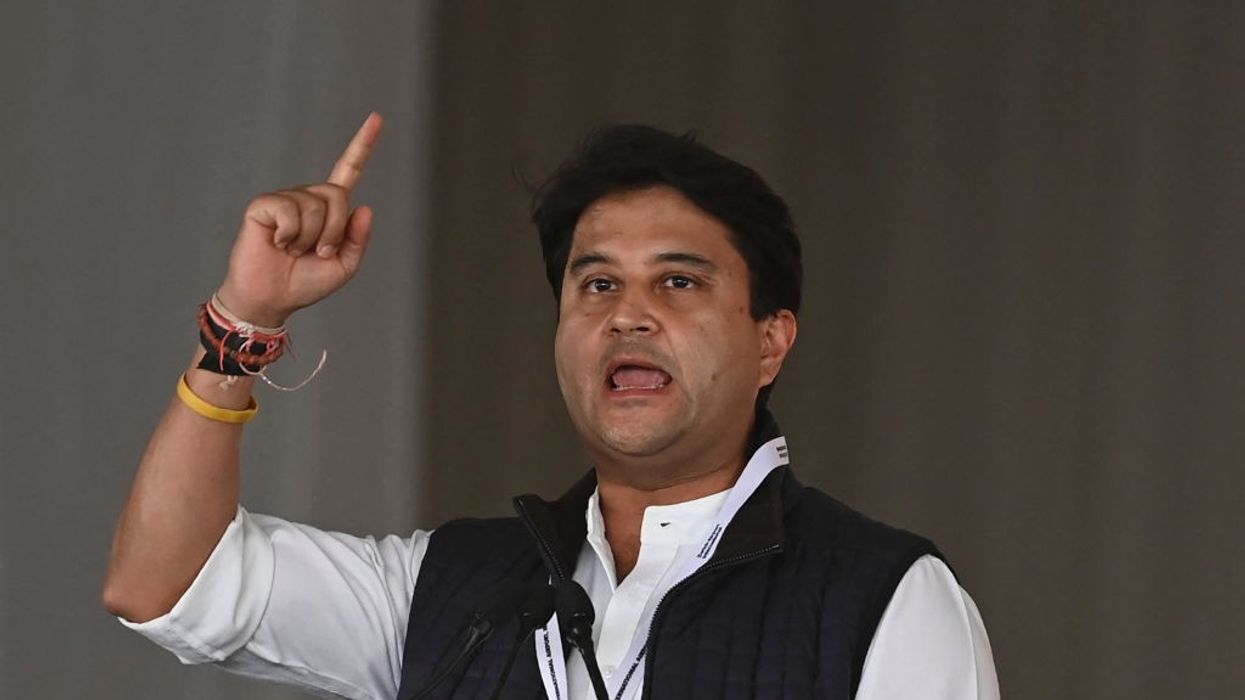

INDIAN aviation minister Jyotiraditya Scindia has said that the normalisation of international flights will depend on the Omicron scenario.
He added that concerned authorities will watch the situation as it unfolds.
"Keeping in mind the health of the people, we cannot dissociate ourselves from Covid. We are working closely with the health ministry. When we tide over Omicron, we can look at going back to normalcy even vis-a-vis international travel but I cannot give you the date today," Scindia said while speaking at a CII summit.
"It is not incumbent on me, there are host of other factors, other ministries that I have to coordinate with and watch the situation as it unfolds over the next couple of weeks."
Later last month, aviation regulator DGCA decided to restart scheduled commercial international flights to and from India from December 15. However, the decision was put on hold in less than a week in the wake of the emergence of the Omicron variant.
Recently, the watchdog said the flights will remain suspended till January 31.
Scheduled commercial international passenger flights remain suspended since March 23, 2020, due to the coronavirus pandemic.
Currently, the flights are being operated under bilateral air bubble arrangements with various countries in a restricted manner.
While talking about the domestic air traffic, Scindia said that it is ranging between 370,000 to 390,000 passengers per day. Pre-Covid, the highest was close to 420,000 passengers per day.
According to the minister, the domestic capacity was increased in a "very gradual and monitored process" and on October 18, the government allowed 100 per cent capacity for domestic airlines.
Scindia said that every country has different rules with regard to international travel right now.
"It depends on various countries' risk appetite and you cannot disagree with what each individual country determines its risk appetite is... that decision is best left to individual countries rather than for us to impose a worldwide sort of rules," he added.