
The team has developed a normative framework which highlights that the prevailing international law is barely adequate to protect the entire class of forcibly-displaced people.
The research has also been published in the reputed peer-reviewed journal WIRES Climate Change.
According to officials, with climate change intensifying the push to migrate, all asylum seekers have to be absorbed into host countries under the principle of 'non-refoulement'. This will ensure that refugees are not forced to return to their home countries to face harm.
Asylum seekers from vulnerable zones also must be absorbed in host countries in proportion to their greenhouse gas emissions. The researchers conclude that given the severity of the anticipated Global Environmental Changes and associated harms, taking early and appropriate action is vital. However, the question "did this person migrate because of climate change?" may never be fully answered, they said.
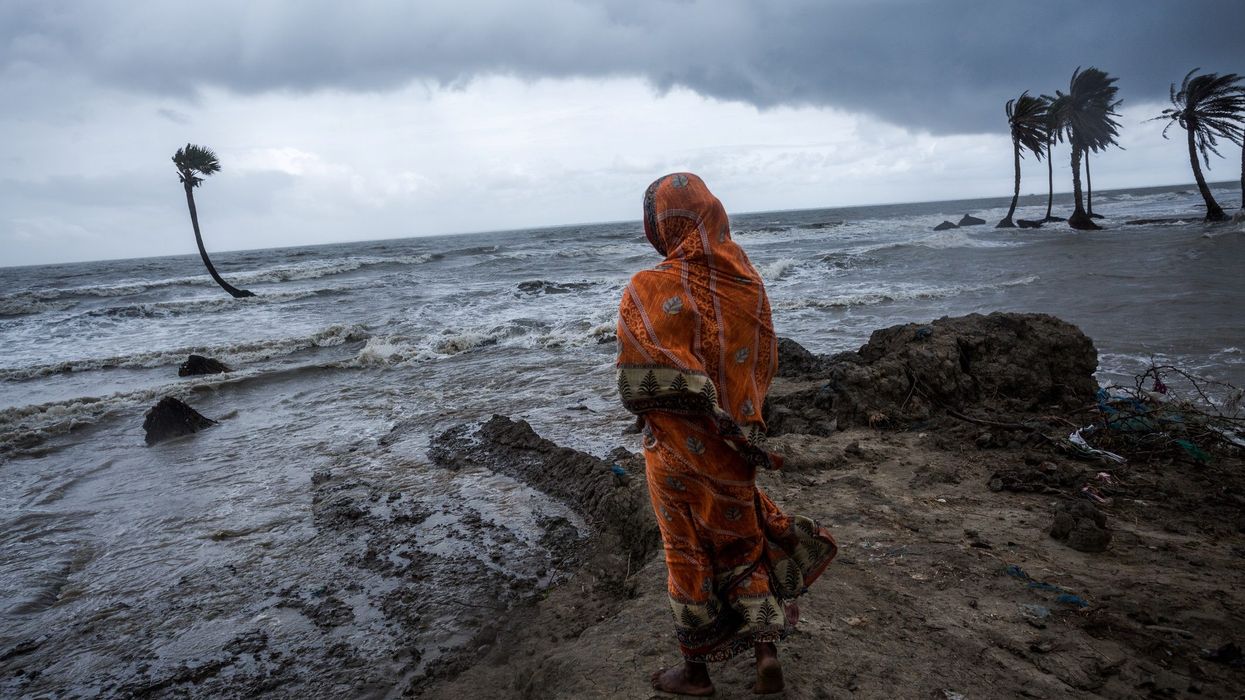
"In recent years, the increased risks of environmental hazards, including climate change, have intensified the push to migrate. One such case is the teeming slums of Bangladesh's capital Dhaka, where the residents are on the frontlines of a climate crisis.
"People living along the coast have been migrating to the Bangladeshi capital due to monsoon flooding and cyclones caused by rising sea levels. For these residents, the worsening climate change is not a faraway threat. It is a grim reality," Sudhir Chella Rajan, Department of Humanities and Social Sciences, IIT Madras, said.
"Climate scientists have known for more than a decade that tens of millions of people, if not more, will be forcibly displaced from some of the poorest countries as a result of climate change. If their countries are no longer viable homes though no fault of their own, the international community has a moral responsibility to provide refuge," he added.
The research says that all asylum seekers must be deemed worthy of refuge, even if they do not meet the narrower requirements of the Refugee Convention. Parties who want to protect climate exiles must honour all identifiable asylum seekers under a non-refoulement principle. The host countries may choose to formulate a protocol for developing shares that are proportionate to their cumulative emissions.
"There is an urgent need to ensure that people from countries that have emitted very little greenhouse gases are not left fending for themselves. Climate exiles or migrants have no legal standing. These are the kinds of issues that ought to be addressed in the climate negotiations track of Loss and Damage under non-economic losses," Sujatha Byravan, co-author of the research and an independent scholar, said.
The study points out that the Internal Displacement Monitoring Centre reported that 40.5 million people were newly displaced in 2020 and 30 million among these were forcibly displaced due to weather-related disasters.
"The research emphasises on identifying vulnerable zones based on scientific evidence. Low-lying states, countries with low lying delta regions, areas facing desertification or flooding, hill-slopes subject to erosion, are all vulnerable zones. The researchers say asylum seekers from vulnerable zones must be given rights to free movement and absorbed in host countries, in proportion to their greenhouse gas emissions or through a similar fair agreement," Byravan said.
Courtesy: PTI