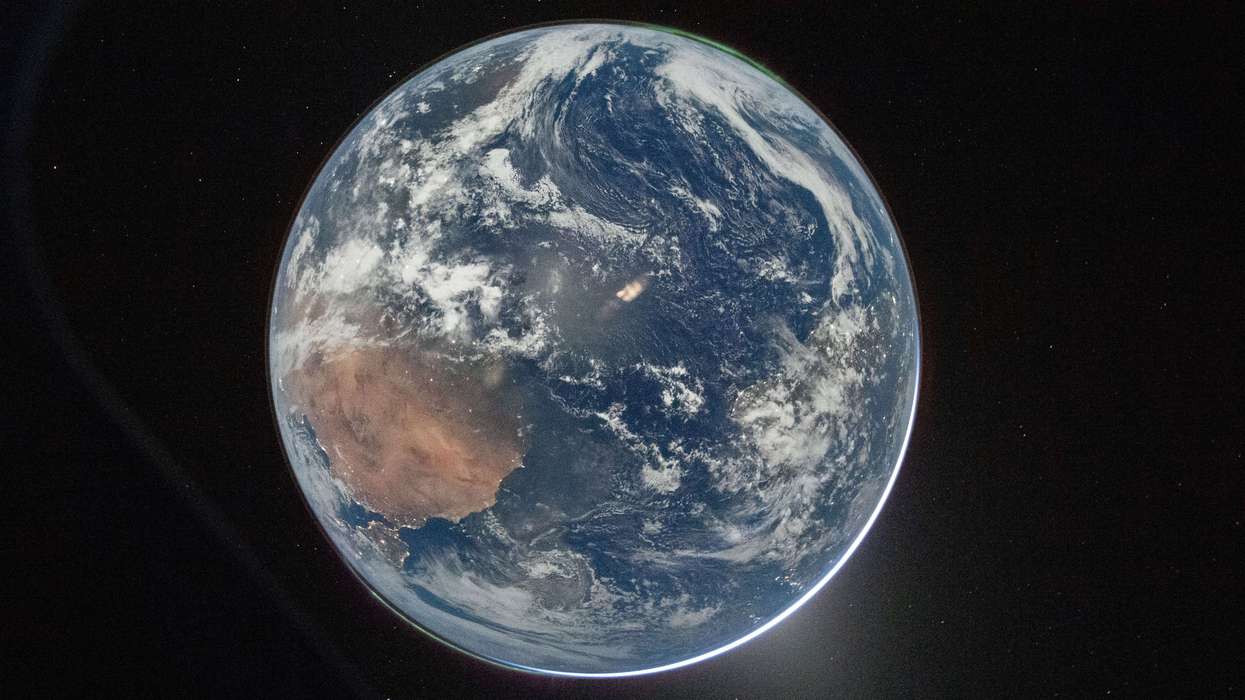

HOW beautiful planet Earth looks in the pictures taken from inside the Orion capsule in the Artemis II Moon mission, fragile and blue and all lonesome suspended in space.
And what a mess one man has made of it.
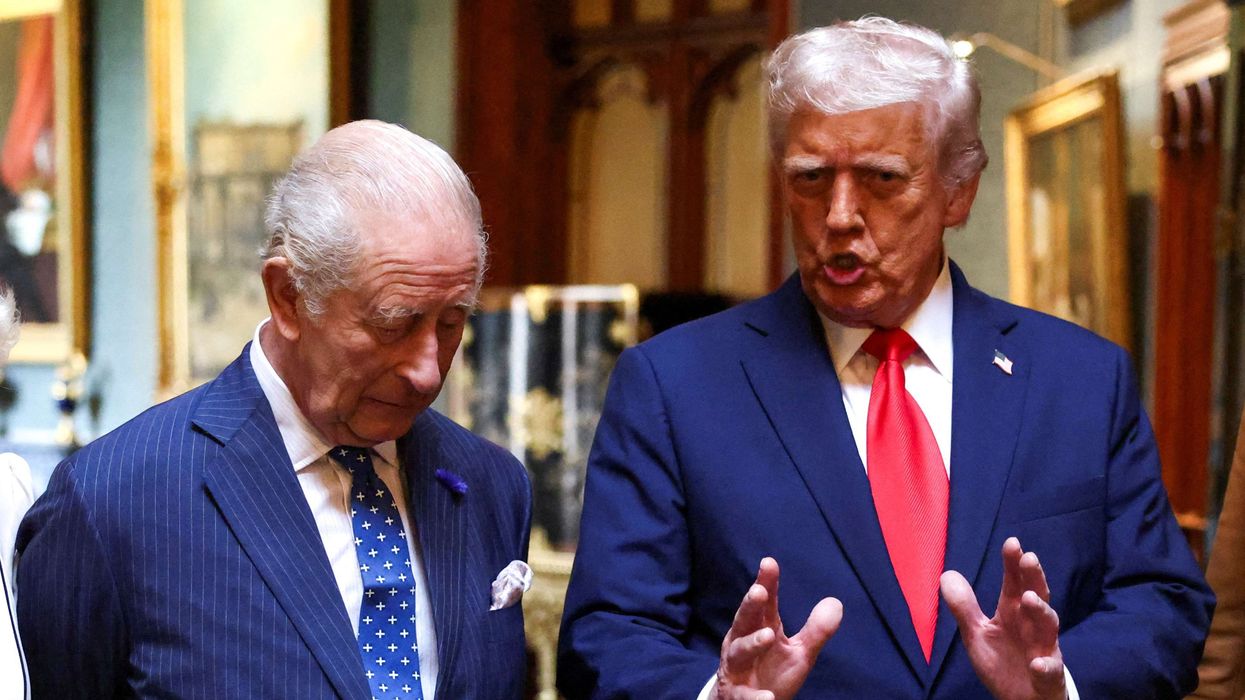
Others are responsible, too, but the maximum harm is being done by US president Donald Trump. His Iran war, aided by Israel, has plunged the whole world into turmoil.
Artemis II launched from Cape Canaveral in Florida on Wednesday (1) evening. The pictures released of Earth should give people everywhere pause for thought.
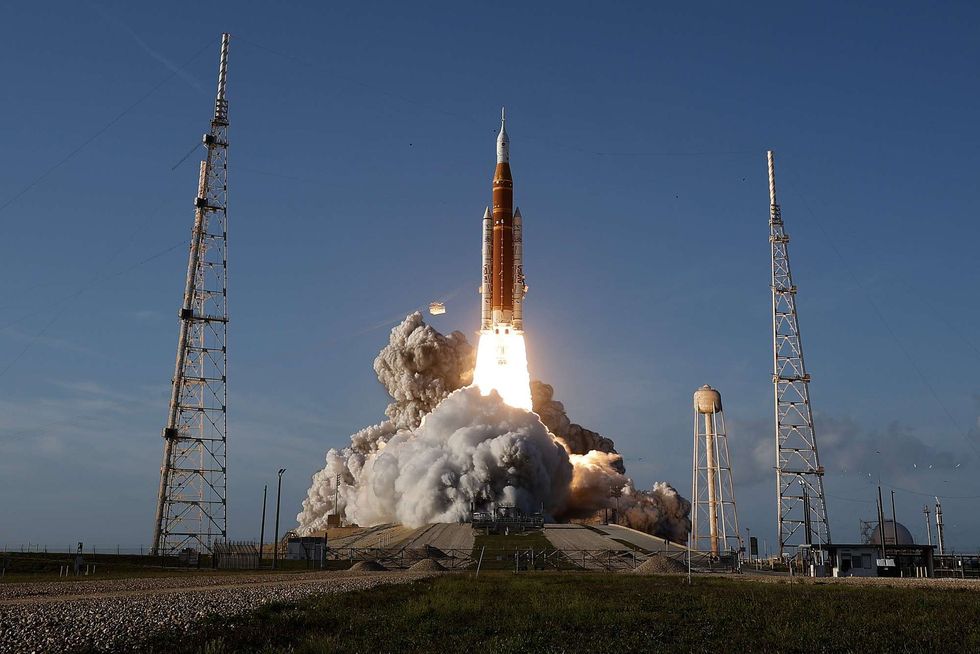 ArtemisII lifts off from Launch Complex39B at Kennedy Space Center lastWednesday (1)Chip Somodevilla/Getty Images
Commander Reid Wiseman described the view as “spectacular”, noting they could see the “entire globe from pole to pole”.
“The fact that four of us get to be out here just brings you to your knees,” he added.
He summed up the profound nature of the experience: “There are no words.”
Astronaut Christina Koch described seeing the Earth as “breathtaking”, specifically mentioning the planet “lit up bright as day” and the moon glow on it at night, along with beautiful sunsets. Jeremy Hansen, the mission’s only Canadian crew member, described feeling like the aircraft was “falling out of the sky back to Earth” when they came back towards the planet for an injection manoeuvre.
“On our first day in space, we saw some extraordinary things,” Hansen remarked during a news conference from space. “The Earth up close. By the time we had a bit of a nap and got up, the Earth was just so far away again. Then to come in for that transit or injection, we came all the way back to Earth again. We were out there at 60,000km, we came back to within 200km of the planet, and it just felt like we were falling out of the sky back to Earth.”
 And a still from Chaudhvin Ka Chand filmHD
The crew have been glued to the windows as they travelled towards the farl side of the Moon, taking in the “phenomenal” sight of Earth shrinking behind them.
Pilot Victor Glover reflected on seeing Earth as a single, unified entity, stating: “You look amazing, you look beautiful, and from up here you also look like one thing...you’re all one people. When we’re behind the Moon, out of contact with everybody, let’s take that as an opportunity. Let’s pray, hope, send your good thoughts and feelings that we get back in contact with the crew.”
Several other countries have ambitions to put human beings on the Moon in the 2030s.
Following the success of Chandrayaan 3’s landing near the lunar south pole in August 2023, India’s space agency has set out a goal of sending astronauts to the Moon by about 2040.
America’s space programme is successful because it has been able to employ the best scientists from around the world or the children and grandchildren of those who came as immigrants. It is a pity the astronauts’ observations about the fragility of the only planet known to mankind will be lost on Trump.
Will the Moon still retain its magic now that its sanctity has been breached, in a sense, in the cause of scientific progress?
My guess is that older Eastern Eye readers will still feel nostalgic about such golden oldies as Chaudhvin Ka Chand Ho, sung in the 1960 movie by Mohammed Rafi.