
PAKISTAN has stepped in as an intermediary between Iran and the United States to secure a temporary ceasefire and host talks aimed at ending the conflict in West Asia.
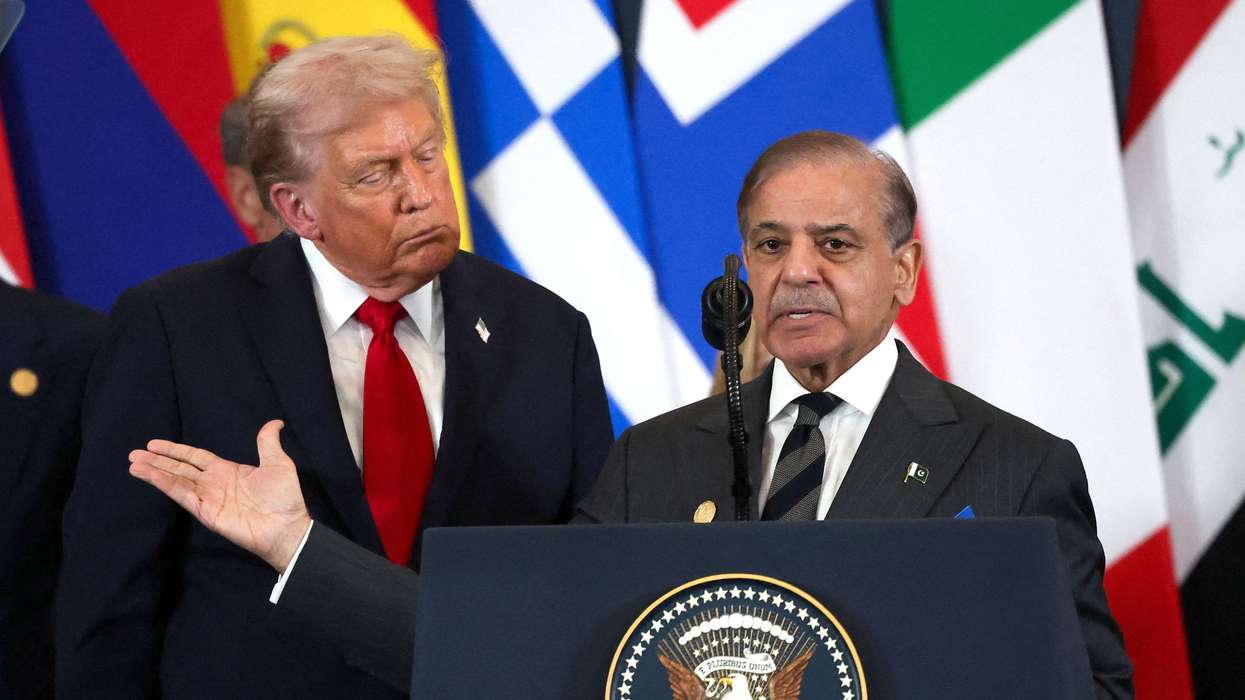
On Wednesday, prime minister Shehbaz Sharif said the United States and Iran -- and their allies -- had agreed to a ceasefire "everywhere" after mediation by his government.
Sharif said the two-week truce - which Trump and Tehran had announced earlier - would lead to talks in Islamabad.
"Pakistan achieved one of its biggest diplomatic wins in years," said South Asia expert Michael Kugelman in an X post.
"It also defied many skeptics and naysayers that didn’t think it had the capacity to pull off such a complex, high stakes feat."
What are Pakistan's ties to Iran?
"Pakistan has strong credentials as the only country in the region enjoying good relations with the US and Iran," said the country's former ambassador to Tehran, Asif Durrani.
Pakistan shares a 900-kilometre (560-mile) border in its southwest with Iran, along with historical, cultural and religious links.
Pakistan is home to the world's second-biggest Shia Muslim population after Iran.
Iran was the first country to recognise Pakistan after independence in 1947. Pakistan returned the favour for the Islamic republic after the 1979 revolution.
Pakistan also represents some Iranian diplomatic interests in Washington, where Tehran has no embassy.
How about the US?
Pakistan's army chief, Field Marshal Asim Munir, has built a personal rapport with US president Donald Trump.
Munir -- in a Western business suit rather than army fatigues -- visited Washington with Sharif last year after a flare-up in hostilities between Pakistan and India in divided Kashmir.
Sharif praised Trump's "bold and visionary" intervention, while Munir said the US leader deserved the Nobel Peace Prize for stopping an escalation between the nuclear-armed neighbours.
On Iran, Trump said Pakistan knows the country "better than most".
Personal relations have long influenced ties shaped by shifting strategic interests that have at times been strained.
Even as a non-NATO ally in the post-9/11 "war on terror", Pakistan faced US claims that it was harbouring militants responsible for attacks on coalition troops across the border in Afghanistan.
Relations strained further when US troops killed al-Qaeda chief Osama bin Laden on Pakistani soil in 2011 without informing Islamabad, and Pakistan faced accusations of complicity in harbouring the fugitive.
How about other regional players?
Pakistan and Saudi Arabia signed a strategic mutual defence agreement in 2025, strengthening ties but also limiting how far Islamabad could go in supporting Tehran.
Sharif and his government have worked to keep Riyadh aligned, and the prime minister recently visited for talks with Crown Prince Mohammed bin Salman.
Pakistan also maintains close ties with Beijing, which Trump told AFP helped bring Iran to the negotiating table.
Pakistan's foreign minister Ishaq Dar hosted a meeting with counterparts from Saudi Arabia, Turkey and Egypt last month to discuss de-escalation, and then travelled to Beijing for further talks.
China, which is Iran's largest trading partner, then joined its South Asian ally in calling for a plan to end the fighting, saying it supported "Pakistan playing a unique and important role in easing the situation".
What's in it for Pakistan?
Neutrality supports Pakistan’s economic interests, as it depends on oil and gas imports through the Strait of Hormuz and seeks to avoid being drawn into further conflict nearby.
Continued disruption would have affected fuel supplies, increased prices and led to further austerity measures for the government.
A permanent end to the war would support regional stability and Pakistan's international standing at a time when it is in conflict with neighbouring Afghanistan and less than a year after it traded strikes with India.
What role will Pakistan play next?
The Pakistani prime minister said he would welcome US and Iranian delegations to Islamabad from April 10.
"Iran will feel more comfortable in Islamabad which is why it accepted Pakistan's mediation," said Durrani, adding Pakistan could help resolve differences between the two sides.
If talks were direct, "then Pakistan may help the parties to fine-tune the language if there is a stalemate", he said, adding that officials could also act as intermediaries if the two sides do not meet face-to-face.
Pakistan does not formally recognise Israel, which said on Wednesday it supported Trump's decision to suspend bombing, but that the two-week ceasefire did not include Lebanon, where it has carried out ground and aerial operations against Iran-backed Hezbollah.
That contradicted Sharif's earlier statement that the ceasefire covered "everywhere including Lebanon".
(With inputs from agencies)
Tags: Pakistan diplomacy, Iran US ceasefire, West Asia conflict, Shehbaz Sharif, global politics