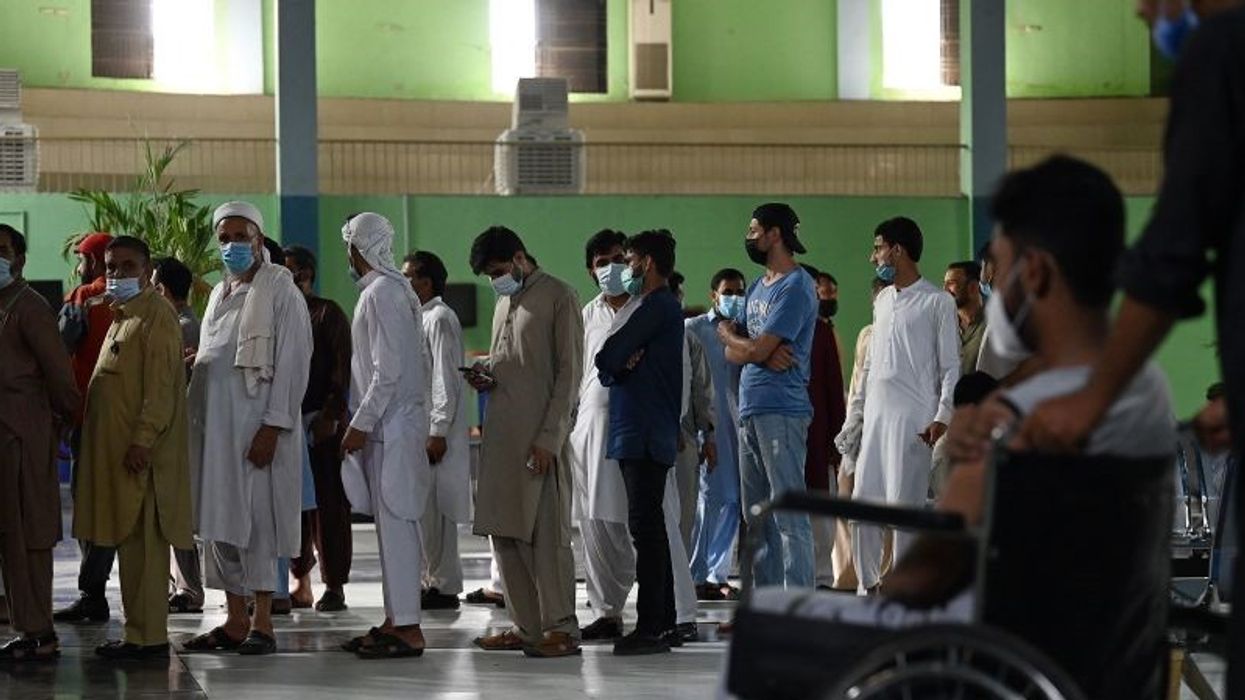

PAKISTAN on Thursday (24) a global institution like the WHO should decide which coronavirus vaccine is acceptable for travel across the world, instead of leaving the decision to individual nations.
Planning minister Asad Umar, who is also the head of the country’s Covid-19 response agency National Command and Operation Centre, tweeted that the World Health Organisation (WHO) should be given powers to decide on the vital issue.
“Vaccine acceptability decisions have to be taken by a global institution like WHO. Each country deciding which vaccine is acceptable for travel to that country is creating chaos. The health & well-being of world citizens cannot become hostage to global geo-strategic rivalries,” he said.
Pakistan's citizens travelling abroad have faced problems due to the country's dependence on China for its vaccines which are not accepted by many other countries. Most countries in the West accept Moderna, Pfizer and AstraZeneca jabs.
The latter two vaccines are preferably provided to Pakistanis going abroad for work or students studying in foreign universities.
Pakistan has administered more than 13.5 million doses of mainly Sinopharm, SinoVac and CanSino vaccines to its people. The country also received 1.2 million doses of AstraZeneca and 100,000 doses of Pfizer.